
You might be reading this after a long day. The kids are settled, the washing still needs doing, and you're wondering whether life could look different a year from now. Maybe you keep coming back to beauty careers because you want work that feels creative, practical and yours.
That pull matters.
For many adults, learning how to become a nail tech isn't only about nails. It's about proving to yourself that you can start again, build a skill, earn your own money, and show your children what courage looks like. If you've been out of education for a while, you don't need to feel embarrassed about that. You need a clear path, a realistic plan, and the belief that this goal belongs to you too.
Your Dream of a Creative Career Starts Here
You don't need to have it all worked out before you begin. Plenty of people start by thinking, “I love beautiful nails, but could I really do this for work?” The honest answer is yes, you can, if you're willing to learn properly and practise with care.
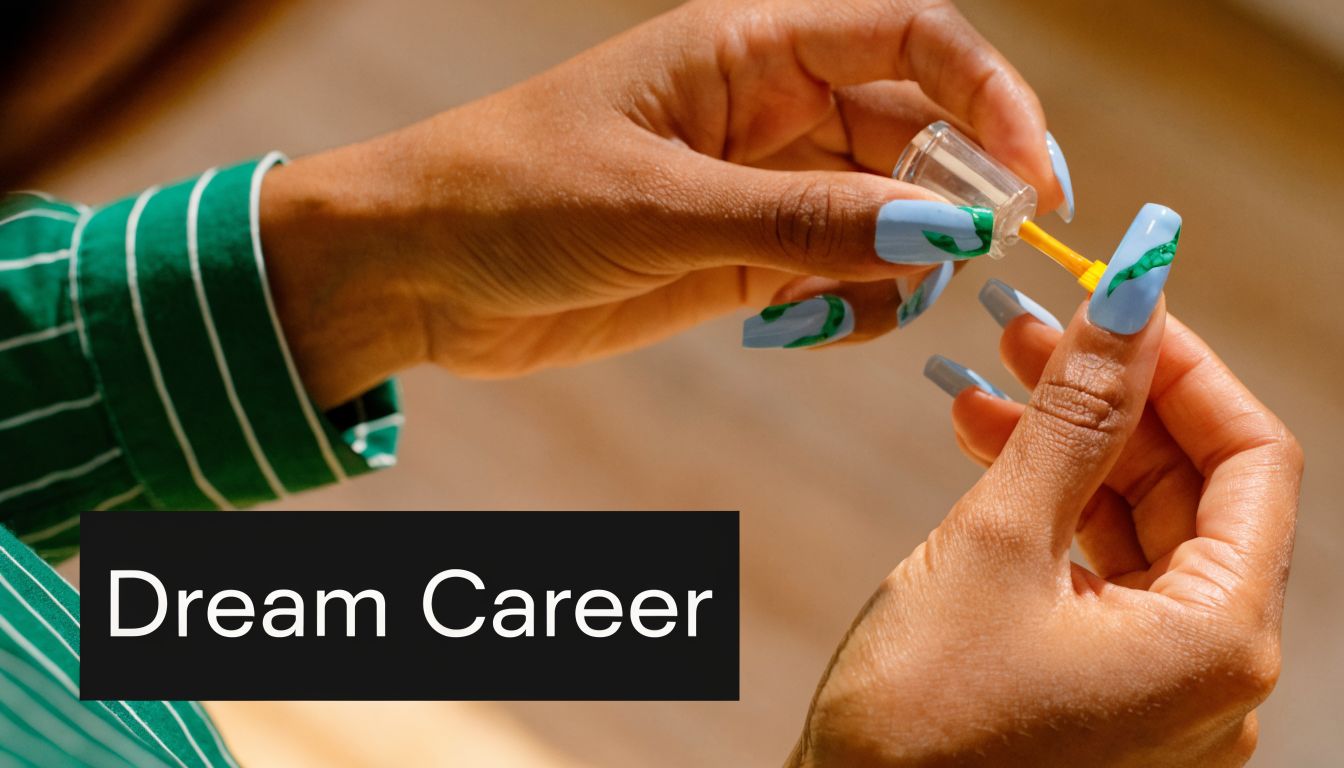
A nail career can suit people who need flexibility. Some want salon work. Some want mobile work they can fit around school runs. Some dream of building a home-based business over time. The shape of the career can change as your life changes, and that makes it a strong option for adults who need something more realistic than a rigid office role.
Why this career feels different
Nail work blends creativity, people skills and practical training. You aren't only learning to paint or shape nails. You're learning how to help someone feel polished, confident and cared for. That matters more than many people realise.
You also get something that many adults are craving. A skill you can point to. A service people value. A result you can see with your own eyes.
You don't have to be the most confident person in the room to start. Confidence often comes after the first few lessons, the first few practice sets, and the moment you realise you're getting better.
This can mean more than a new job
For some readers, this step is personal. You may want to earn more, be less dependent on others, or stop feeling stuck. You may want your children to see you studying, qualifying and moving forward.
That example stays with a family.
When adults return to learning, they often discover that education isn't just for school leavers. It's for parents, carers, workers, and people who once thought they'd missed their chance. Nail training can be one of those door-opening choices because it's hands-on, skills-led and directly connected to real work.
A better future doesn't always begin with a giant leap. Sometimes it begins with one course, one kit, one practice session, and one decision to back yourself.
Getting the Right Nail Technician Qualifications in the UK
You might be sitting at the kitchen table after the children are asleep, searching for answers and wondering one simple thing. What qualification do I need to become a nail tech in the UK?
That question trips up a lot of adult learners, especially because so much online advice is written for other countries. In the UK, there is no single national nail technician licence that everyone must hold before they can begin. What matters in practice is completing recognised training and being able to show that you can work safely, hygienically, and professionally. Employers, insurers, and local authorities may still expect proper training and safe practice standards, as explained in this UK-focused guide to becoming a nail tech without going to school.
A qualification works like a driving test for your career. It shows that you have learned the rules, practised the skills, and can be trusted to work on real clients with care.
For many beginners, the starting point is a recognised vocational course in nail services. You may see names such as VTCT, NVQ, or City & Guilds. Those labels can sound more complicated than they are. What you are really looking for is a course that teaches core nail skills, client care, hygiene, health and safety, and practical application in a way that employers and insurers respect.
If the different levels feel confusing, start there. Understanding what a Level 2 qualification means in the UK can make the whole training picture much clearer. For many learners, Level 2 is the stage where study becomes practical, job-focused, and closely tied to the work you will do.
What a recognised qualification gives you
A good qualification does more than hand you a certificate. It helps you build a foundation that is steady enough to support the career you want.
That foundation usually includes:
- Safe working habits: hygiene, infection control, and salon cleanliness
- Technical basics: manicure, pedicure, nail preparation, and product use
- Client care: consultation, communication, and professional conduct
- Anatomy and health knowledge: enough understanding to work carefully and spot when a service should not go ahead
- Practical assessment: proof that you can carry out treatments, not just answer theory questions
This matters for a very human reason. Clients are trusting you with their hands, their comfort, and often their confidence. Proper training helps you protect all three.
Qualifications are keys, not barriers
If you have been away from education for a long time, course names and qualification levels can stir up old doubts. You may worry that you are not academic enough, too busy, or starting too late.
Plenty of adult learners feel that way at first.
The good news is that nail training is usually practical and skills-based. You are learning by doing, repeating, correcting, and improving. That suits many people far better than abstract classroom study. Each lesson adds a small piece to the bigger picture, rather like laying bricks for a house. One brick on its own does not look life-changing. A full wall does.
This is why qualifications can change more than your job title. They give you evidence that you followed through, learned something valuable, and built a skill that can bring in income. For parents especially, that can carry real weight at home. Your children get to see what persistence looks like in real life.
What to check before you enrol
Not every course will give you the same value. A beginner-friendly nail course should be clear about what you will learn, how you will be assessed, and what the certificate helps you do next.
Look for these signs:
- A recognised awarding route: the training should connect to an established vocational framework or respected provider
- Hands-on assessment: you should be assessed on practical work, not theory alone
- Clear coverage of safety and hygiene: these topics are part of the job, not extras
- A defined outcome: the provider should explain whether the course prepares you for salon work, self-employment, or progression to higher-level training
A very short online-only course can be useful for theory or a first look at the industry. It often carries less weight if you need insurance, want salon work, or need proof of practical ability. If a course sounds quick and easy, ask exactly how practical skills are taught and assessed.
That question can save you time, money, and disappointment.
The right qualification helps you do more than start. It helps you feel ready to call yourself a professional, charge for your work with confidence, and build a future that feels more secure for you and the people who rely on you.
Choosing Your Perfect Training Path
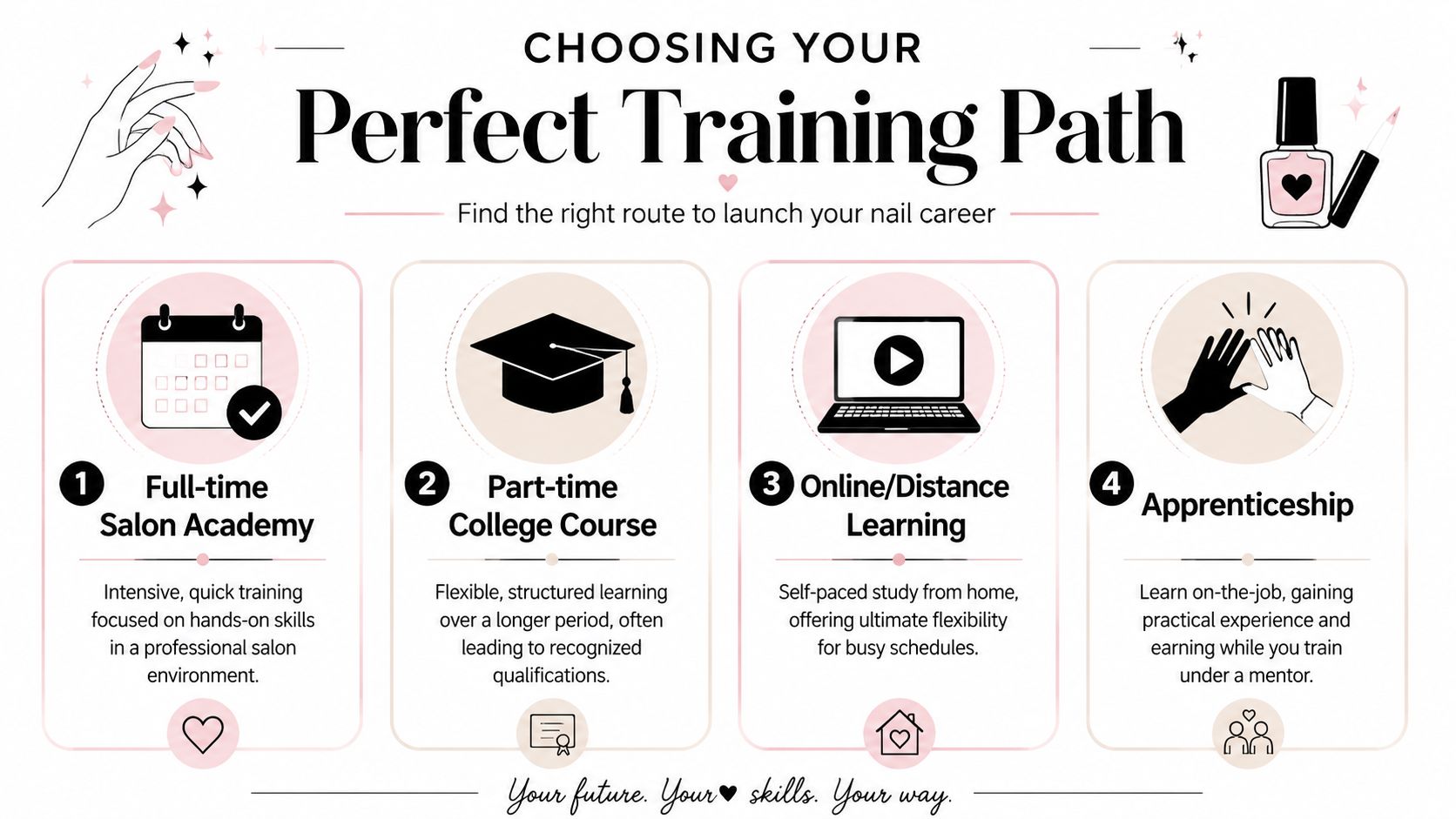
The best route is the one you can stick with. That matters more than choosing the most glamorous option on paper. If your life includes work, children, caring duties or a tight budget, your training needs to fit real life, not an ideal week that never happens.
Some people learn best with a timetable and a tutor in the room. Others need the freedom to study after bedtime or early in the morning before the house wakes up. Both are valid.
Four common ways to train
| Training path | What it suits | What to watch for |
|---|---|---|
| College course | Learners who want structure, routine and recognised study | Travel time and fixed class hours |
| Private academy | People who want focused beauty training and faster practical immersion | Check how recognised the training is |
| Online or distance learning | Busy adults who need flexibility at home | Make sure practical assessment is included somewhere |
| Apprenticeship | Learners who want workplace experience and mentoring | Availability may depend on local employers |
Each route can work. The key is matching the course to your life.
A simple way to decide
Ask yourself these questions:
- How much flexibility do I need? If your schedule changes often, online theory may help.
- Do I need face-to-face support? If confidence is your biggest barrier, in-person teaching can feel reassuring.
- Can I travel regularly? A great course across town may become hard to maintain if transport is tricky.
- Do I need to earn while learning? An apprenticeship may appeal if that is your priority.
- Will I get hands-on assessment? This is one of the most important checks of all.
A useful option for many adults is a blended path. The step-by-step route often looks like this: choose a course mapped to a recognised qualification framework, complete theory on anatomy, infection control and client consultation, log supervised practical hours in manicure, pedicure, gel and acrylic systems, then secure public liability and professional indemnity cover before working with clients, as outlined in this practical UK guide to becoming a nail tech.
That same guidance also notes that, for adult learners, a blended model is often the most efficient. Theory can be studied online, followed by observed practical assessment in a real or simulated salon environment. If flexible study matters to you, it helps to compare accredited online courses in the UK and then check where practical elements fit in.
When online study is helpful and when it isn't enough
Online learning can be brilliant for theory. You can study anatomy, health and safety, consultation and product knowledge from your kitchen table. You can pause, replay and learn at your own pace.
But nail work is tactile. You need to hold tools correctly, prepare the nail safely, apply products evenly, and build speed without losing care. That's why practical observation matters.
Short online-only study can be a useful starting point. It usually shouldn't be your whole plan if you want to work professionally.
The path that fits family life is often the strongest one
Some adults worry that a slower route means they're falling behind. They aren't. A course completed steadily around childcare and work is still a course completed. A qualification gained while raising a family is not “less than”. It often shows even more determination.
Choose the path that lets you keep going. Consistency beats panic every time.
Building Your Skills and Creative Confidence
The early stage of training can feel awkward. Your first painted nail might flood the cuticle. Your first file shape might look uneven. Your first set might take far longer than you expected. That's normal.
Skill in nail work grows through repetition. You learn by doing, correcting, and doing it again with a steadier hand.
Start small and let progress build
A gentle way to begin is to practise in layers.
- First step: Work on basic nail preparation, neat polish application and tidy finish.
- Next: Move on to simple gel application, clean shaping and consistent filing.
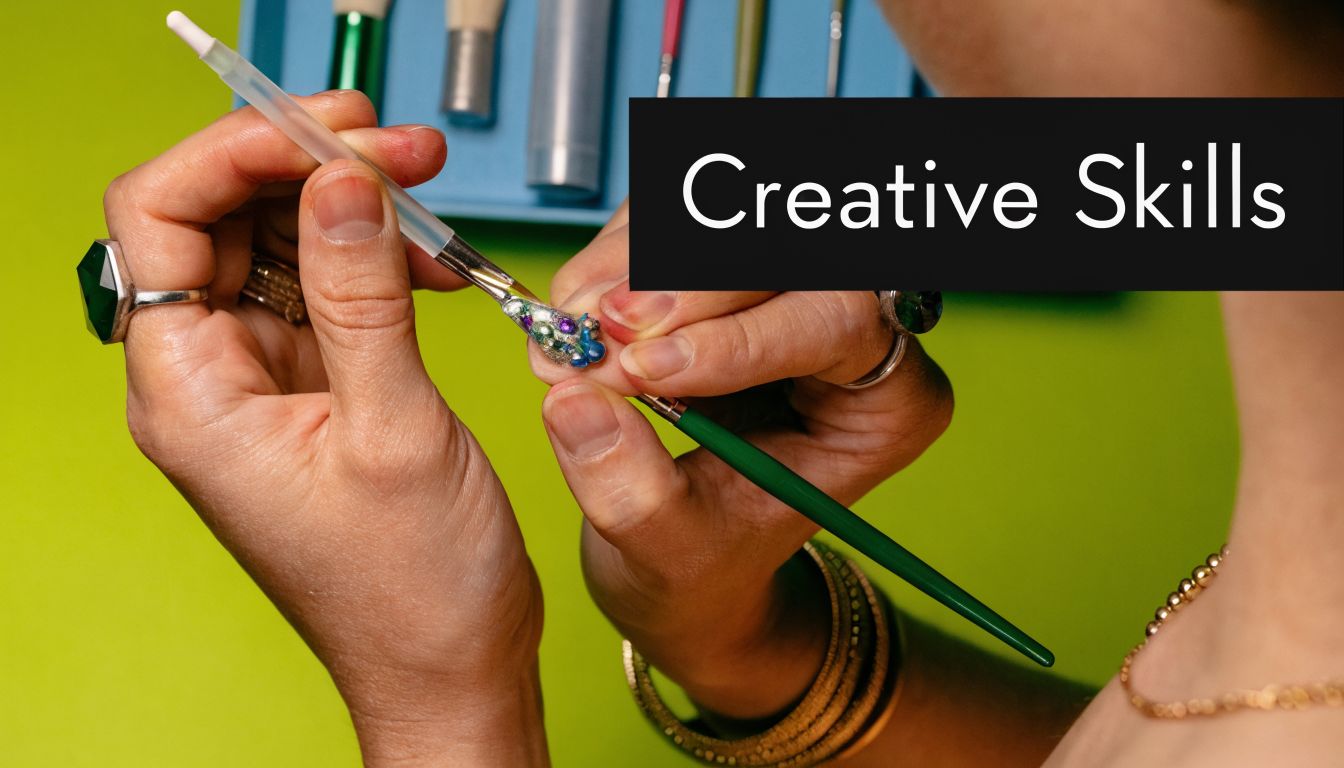
- Then: Try beginner nail art such as dots, lines, glitter placement or small gems.
- Later: Build confidence with more detailed looks and longer appointments.
Friends and family can be helpful practice models once you're ready. They often enjoy supporting you, and you gain valuable experience working on different nail shapes, skin tones and preferences.
Your portfolio begins before you're “good enough”
Many learners wait too long to photograph their work because they think a portfolio should only show perfect nails. That's not true. A portfolio is a record of growth.
Take clear photos from the beginning. Use natural light if you can. Keep the background plain. Save pictures of your neatest work and notice what improves over time. You might see cleaner cuticle work, smoother colour application or stronger design balance. Those little changes are proof that you're learning.
A portfolio doesn't only attract future clients. It reminds you that your effort is turning into ability.
This video can give you extra visual inspiration while you're practising techniques and building your eye for detail.
Mistakes are part of professional growth
A confident nail tech isn't someone who never gets things wrong. It's someone who notices problems, fixes them, and keeps improving.
You might place a rhinestone badly. You might smudge a top coat. You might need to redo a full hand on a practice model. None of that means you're failing. It means you're training.
Try keeping a simple notebook with short reflections after practice:
- What went well
- What felt difficult
- Which tools helped
- What you want to improve next time
That habit can change the way you see yourself. Instead of saying, “I'm rubbish at this,” you start saying, “My shaping is improving, but I need more practice with product control.” That's the voice of a professional in the making.
Becoming a Professional You Can Be Proud Of
A client sits down, shows you a photo, and places their hands in yours. In that moment, your work is about more than colour and shape. It is about trust.
That is the true shift into professionalism.
Beautiful nails may catch someone's eye first, but safe practice, clear communication, and reliable routines are what make them book again. These habits are the frame around your creativity. Without the frame, even lovely work can feel uncertain. With it, your service feels calm, skilled, and dependable.
Safe practice is part of the service
As noted earlier, proper nail training covers far more than polish application or design. It teaches you how to work cleanly, notice contraindications, protect client wellbeing, and carry out services with care from start to finish.
Those behind-the-scenes skills are part of the treatment itself. A tidy station, clean tools, and a careful consultation tell a client, "You are in safe hands."
Strong habits usually include:
- Cleaning and handling tools properly: Tools need to be cleaned, stored, and used in a way that reduces risk between clients.
- Client consultations: Good questions help you spot allergies, sensitivities, or nail conditions that may affect the service.
- Client records: Clear notes help you remember products used, preferences, and anything important from previous appointments.
- Patch test awareness: Some products and treatments call for extra safety steps, and you need to know when they apply.
- Workstation hygiene: An organised setup protects both you and your client, and it shows pride in your work.
These routines may feel small at first. They are not small. They are the habits that help you build a career your family can feel proud of too.
Insurance supports your confidence
Insurance can sound dry when you are excited about nail art and new skills. Many beginners feel that way.
Still, insurance matters because it protects the business you are building. Public liability and professional indemnity cover can help if something goes wrong, and they also show salons, landlords, and clients that you take your role seriously.
It helps to see insurance as part of your toolkit, like your lamp or files. You hope not to need it often, but having it in place lets you work with more confidence and less worry.
Professional pride grows from routine
Professionalism does not depend on having a luxury salon or a huge social following. It grows through standards you keep every day.
You disinfect tools properly. You change table coverings. You store products safely. You wash your hands at the right times. You explain aftercare in simple language. You start appointments on time. None of those actions are flashy, but together they create the feeling clients remember.
That is how trust is built. One appointment at a time.
For many adult learners, this stage changes more than work habits. It changes self-image. You stop seeing yourself as someone who is only practising, and start seeing yourself as someone people can rely on. If confidence still feels wobbly, support can help. These courses to improve confidence can strengthen that inner side of your professional growth.
And that matters. Your children notice when you keep going. Your family feels the difference when your skills become income, structure, and self-belief. Becoming a nail tech is not only about learning services. It is about proving to yourself that you can build a steady, creative future with your own hands.
Launching and Growing Your Nail Career
Once you have training, practice and professional habits in place, your new career starts to feel real. Your effort then begins to turn into income, options and long-term direction.
There isn't only one version of success in this field. Some people love the energy of salon work. Others prefer the freedom of mobile appointments or a home setup that works around family life. The best path is the one that supports your goals and your responsibilities.
Your first working options
The National Hair & Beauty Federation guidance described earlier notes that nail technicians often work as employed staff, self-employed or mobile technicians, or salon renters. Those different setups give you room to build a career in a way that fits your confidence level and home life.
You might begin with one of these routes:
- Salon employment: Good if you want experience, teamwork and a ready-made client environment.
- Mobile services: Helpful if you need flexibility and want to build your own client base gradually.
- Home-based setup: Useful if you want lower travel time and a business shaped around your routine.
- Chair or space rental: Better once you feel confident managing your own clients and workflow.
How to find your first clients or role
Start with what you already have. Your portfolio, your local network and your consistency all matter.
Try simple actions such as:
- Share your work clearly: Post clean photos of your best sets on social media.
- Ask for practice referrals: Happy friends and family often know someone who wants a reliable local nail tech.
- Speak professionally: Reply politely, confirm appointments clearly and explain aftercare well.
- Keep learning: New techniques can help you widen your service list over time.
The UK beauty sector is large enough to offer real room for growth. The Office for National Statistics reports that there were 57,000 people employed as beauty therapists and related workers in 2023, which gives a useful sense of the wider career ladder nail technicians can enter, as noted in Milady's discussion of becoming a nail tech.

Growth isn't only about money
Of course, earning matters. It matters to your home, your confidence and your future choices. But growth can also mean standing taller, speaking with more belief, and showing your children what steady effort can build.
If confidence has been a struggle, support around mindset can help as much as support with study. Some adults find it useful to explore courses that improve confidence alongside career planning, because self-belief often grows step by step, just like practical skill.
The first paying client is important. The bigger milestone is becoming the kind of person who trusted themselves enough to begin.
A nail career can keep developing. You can add new treatments, sharpen your artistic style, build a loyal client base, or move into wider beauty or education pathways later on. What starts with one course can become a stable working life and a powerful example for your family.
If you're ready to take that first step back into learning, Next Level Online College supports adult learners across the UK with flexible online study, recognised qualifications and caring guidance that fits around real life. If you've been doubting yourself, this could be the place where confidence starts to grow again.