
You may be looking at a science degree prospectus late at night, wondering how you'll ever get there. Perhaps your A levels are missing, your old qualifications no longer meet the entry rules, or family and work have made study feel like something meant for other people. The Access to Higher Education Diploma Science can give you a clear, supported route back into education and towards university.
This guide explains what you'll study, how assessment works, which study pattern may suit your life, and how funding can work. Most significantly, it shows why this qualification is more than an academic requirement. It can help you rebuild confidence, set an example for your children and move towards work that feels meaningful.
A Brighter Future Starts with a Single Step
Sarah has spent years caring for her family while working shifts in a healthcare setting. One evening, she opens a university prospectus and finds a course that catches her attention, perhaps nursing, biomedical science or radiography. The excitement lasts only a moment before the doubts arrive. She hasn't studied science recently. She's unsure what “Level 3” means, worries about assignments and wonders how she'll manage around school runs and work.
That reaction is common among adult returners. University websites often assume you already understand A levels, UCAS points, laboratory reports and academic referencing. If you're starting again, that language can make a possible future seem closed before you've taken the first step.
The Access to Higher Education Diploma was created for learners in exactly this position. It's a Level 3 route for people who don't have the traditional qualifications usually used for university entry, and it's widely recognised by UK universities. The Science pathway gives you subject knowledge and study habits that can support applications for degrees such as nursing, biomedical science, radiography, chemistry and other science or healthcare subjects. You can read more about the qualification's role as a progression route through the Access to Higher Education programme.
The cost may also be less frightening than you expect. In England, eligible learners aged 19 and over can usually use an Advanced Learner Loan to pay their fees. If they later complete an eligible higher education course, such as an undergraduate degree, the remaining Access loan balance is written off, as explained by the Quality Assurance Agency's funding guidance.
A useful way to see it: the diploma isn't a test of whether you're already ready for university. It's the bridge that helps you become ready.
You don't need to solve everything tonight. The rest of this guide takes you through the subjects, credits, assessment methods, study choices, funding and application process. By the end, you should have a practical route from hesitation to a plan you can discuss with a provider.
What the Access to Higher Education Diploma Science Really Is
Start with the qualification's place in the UK system. The Access to Higher Education Diploma Science is a QAA-recognised Level 3 qualification, designed to prepare adults for higher education. The Quality Assurance Agency has managed the Access scheme since 1997, which gives the diploma an established place in UK progression routes. You can check the regulator's role and current information on the QAA Access to Higher Education statistics page.
“Level 3” means the course sits at the same broad level as qualifications such as A levels, but the learning experience is different. Rather than studying a traditional school-based programme, you work through a focused adult-entry course built around university preparation. Many learners complete it over a year, while part-time students may take longer.
Who benefits from this route
The diploma can suit several kinds of adult learner:
- Career changers who want to move into healthcare, laboratory work or another science-related profession.
- Parents returning to learning after caring for children and managing family responsibilities.
- Healthcare assistants who want to explore nursing, biomedical science or another clinical degree.
- Adults with older qualifications that no longer match the entry requirements for their chosen university course.
- Learners without A levels who need a recognised academic route into higher education.
The important point is what happens in practice. You learn how to read scientific information, explain ideas clearly, complete assignments and manage deadlines. Those skills matter because university admissions teams need evidence that you can cope with academic study, not just enthusiasm for a subject.
A diploma also helps you make better decisions before you commit to a degree. You can compare course requirements, check whether your subjects match your target universities and assess and adjust university strategy as you learn more about your options.
Why recognition matters
A QAA-recognised Access Diploma isn't a general adult-learning certificate. It's a regulated progression award that universities across the UK commonly understand. However, each university and degree sets its own entry conditions, so you should always check the exact requirements before enrolling.
That check protects you from choosing a course that sounds suitable but doesn't contain the science content your preferred degree expects. A good provider should help you compare the diploma with university requirements and explain where GCSE English, maths or additional experience may also be needed.
What You Will Study and How You Will Be Assessed
A science diploma normally combines subject learning with academic skills. The full structure is 60 credits, often made up of 45 graded Level 3 subject credits and 15 ungraded study-skills credits. One published science course example divides the subject content into 21 biology credits, 15 chemistry credits and 9 psychology credits, alongside the study-skills element, as shown in the BCOT Access to HE Science course information.
Credits are a way of showing the size of each learning unit. They aren't marks by themselves. A module with more credits usually takes more time and carries more weight in your final profile, while graded credits contribute to the result universities may consider.
Biology builds the foundation for people-focused degrees
Cell Biology can introduce cells, tissues and biological processes. Human Physiology can help you understand how body systems work and interact. Those topics connect naturally with Nursing, Midwifery, Biomedical Science, Physiotherapy and Paramedic Science.
For example, if you're interested in nursing, physiology helps you begin thinking about the cardiovascular, respiratory and digestive systems. If biomedical science appeals to you, cell biology gives you a starting point for understanding disease processes and laboratory investigation.
Chemistry supports clinical and laboratory routes
Atomic Structure and Organic Chemistry develop a different kind of thinking. You learn how matter is organised, how substances behave and how chemical reactions can be explained. These subjects can support progression towards Pharmacy, Chemistry, Biomedical Science and some Applied Science degrees.
Chemistry can feel difficult at first, especially if you haven't used formulas for years. Tutors normally build ideas in stages, so you can practise each part before combining them. The aim isn't to make you memorise a page of symbols. It's to help you reason through a problem and communicate your method.
Other modules connect science to real practice
Statistics may support Psychology, Biomedical Science, Nursing and Physiotherapy, where students need to interpret research and health data. Physics for Life Sciences can be useful for Radiography, Physiotherapy, Physics and some medical technology pathways.
| Access Module | Likely Degree Pathways |
|---|---|
| Cell Biology | Biomedical Science, Biological Sciences, Nursing |
| Human Physiology | Nursing, Midwifery, Physiotherapy, Paramedic Science |
| Atomic Structure | Chemistry, Pharmacy, Biomedical Science |
| Organic Chemistry | Pharmacy, Chemistry, Applied Science |
| Statistics | Psychology, Nursing, Biomedical Science, Physiotherapy |
| Physics for Life Sciences | Radiography, Physics, Physiotherapy |
Assessment is usually built around coursework
You may complete short written assignments, academic posters, presentations, laboratory reports, research tasks and timed tests. The exact pattern varies by provider, but many online Access courses assess learners through coursework rather than relying on formal examination periods. This can reassure returners who feel anxious about sitting in a large exam hall.
The assessment method also has a purpose. A lab report helps you practise recording evidence. A presentation develops clear communication. Referencing teaches you how to use sources responsibly. Study skills therefore work alongside science content, helping you enter a degree with a stronger sense of control.
Study Modes That Fit Around Your Real Life
The right study mode depends less on what sounds impressive and more on how your week works. A parent with regular childcare may manage scheduled daytime classes. Someone working shifts may need recorded lessons and flexible deadlines. An adult who lacks confidence may prefer regular face-to-face contact and the chance to ask questions immediately.
Online learning can work well if you need to study from home. Many courses use recorded lectures, live tutorials and tutor-marked assignments. You'll need to organise your own time, but you won't have to travel for every session. Before choosing this route, ask how practical science work is delivered and what support you'll receive with difficult topics.
Part-time evening study gives you a fixed routine while leaving daytime hours available for work or caring. It can offer useful contact with other adult learners, although late classes may be tiring after a full working day. In-person daytime courses provide a more traditional classroom experience, with regular access to tutors and local facilities, but the timetable may be harder to fit around employment.
| Feature | Online | Part-time evening | In-person day |
|---|---|---|---|
| Flexibility | Strong choice for changing schedules and home study | Fixed evenings create routine | Fixed daytime timetable |
| Tutor contact | Live tutorials, messages and marked work | Regular classroom support | Frequent face-to-face contact |
| Family commitments | Easier to study around home responsibilities | May protect daytime family time | Childcare may be needed during lessons |
| Social contact | Depends on online groups and tutorials | Regular contact with classmates | High level of classroom interaction |
| Practical work | Ask how laboratory activities are arranged | Often depends on provider facilities | May offer local practical access |
| Travel | Little or no regular travel | Travel in the evening | Regular commute |
A simple test can help. Write down your work hours, caring duties, travel time and the periods when you concentrate best. Then ask providers how much live attendance they expect, how quickly tutors reply and whether you can pause or rearrange learning when life changes.
You can also compare the structure of an online Access to Higher Education course with local college options. The best choice is the one you can sustain, not the one that looks easiest on paper.
Fees, Loans and How Funding Works in the UK
Money worries can stop capable learners before they begin. A clear funding plan makes the decision less frightening.
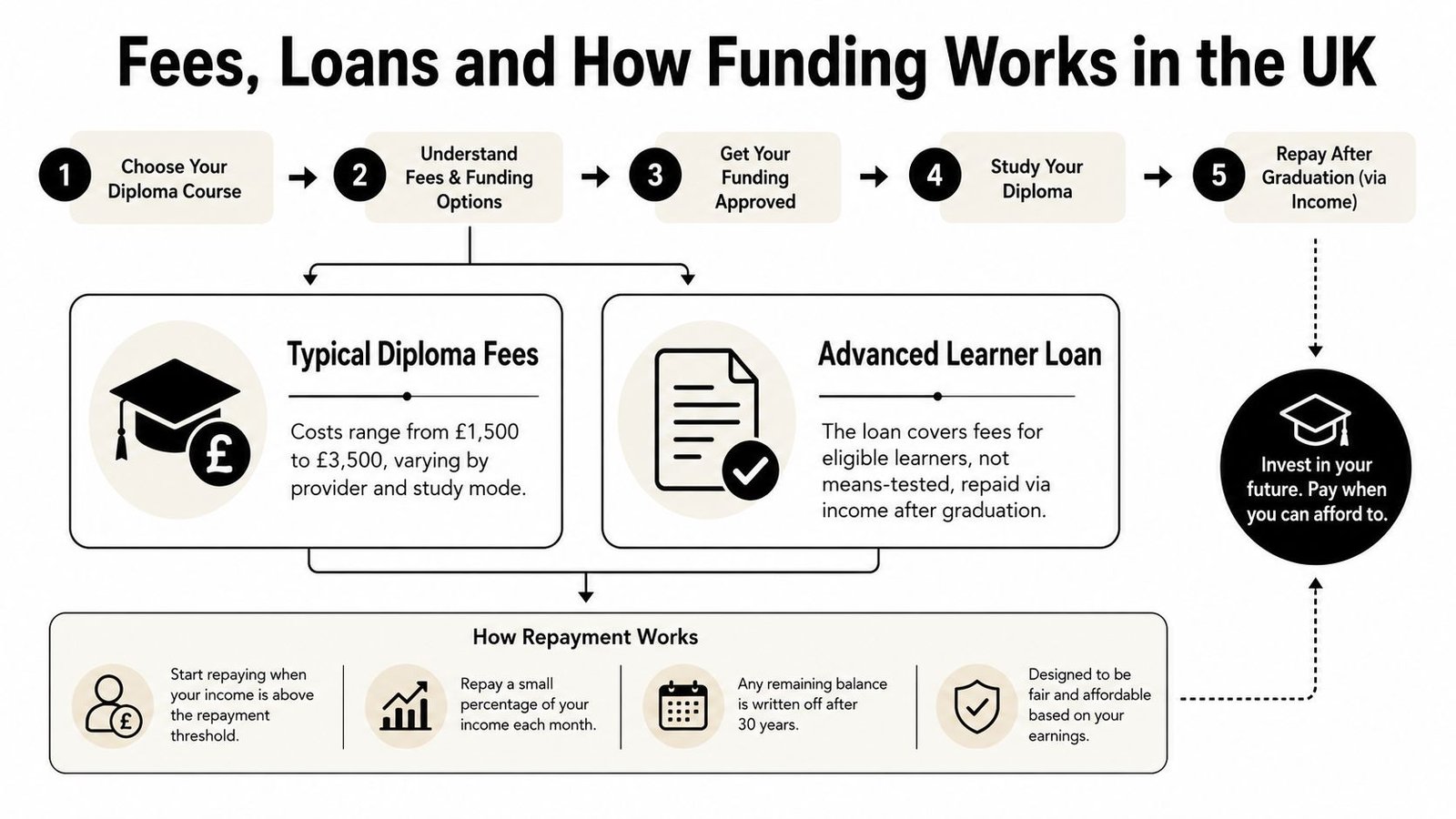
Published course prices vary by provider and study mode. A typical Access to Higher Education Diploma may cost between £1,500 and £3,500, according to the funding process information supplied for this guide. Ask whether the price includes assessment, tutor support, learning materials and any practical activity.
The loan route
In England, eligible learners aged 19 and over can usually apply for an Advanced Learner Loan to cover tuition fees. The loan isn't generally based on household income, but eligibility depends on the course, provider and your circumstances. Check the current rules with the provider and Student Finance England before making an application.
Repayment doesn't begin because you enrol. It's linked to your income after you move into eligible work, and the detailed repayment rules can change. The Advanced Learner Loan guidance can help you understand the process before you apply.
Why completing the degree matters
The important feature for many adult science applicants is the write-off mechanism. If you take an eligible Access loan and later complete an eligible higher education course, such as an undergraduate degree, the remaining Access loan balance is written off. The QAA explanation of the Access Diploma sets out this relationship between Access study and later degree completion.
That doesn't mean you should borrow without checking the conditions. Confirm that your chosen diploma qualifies, that your intended degree meets the rules and that you understand any other university finance, living-cost or maintenance arrangements.
The funding journey usually looks like this:
- Choose a suitable course: Confirm the provider, qualification and eligibility.
- Check the loan rules: Ask which fees the loan covers and what evidence you need.
- Apply through the correct finance service: Follow the provider's current instructions.
- Complete the diploma: Keep up with assignments and contact support early.
- Progress to an eligible degree: Check the write-off conditions before enrolling.
A written budget can also help. List travel, equipment, childcare and lost work time, not just tuition. Once you can see the complete picture, the route often feels more manageable.
Applying, Entry Requirements and Your Path to a Science Degree
A strong application begins before you complete the form. Start by naming the degree you want, then work backwards to identify the qualification and subjects it requires.
Follow a clear application route
Most providers will guide you through a process similar to this:
- Make an initial enquiry: Explain your target degree, previous study and available study time.
- Check your qualifications: Ask whether your GCSEs, Functional Skills or other certificates meet the entry rules.
- Discuss subject fit: Confirm that the science content matches your intended university pathway.
- Attend an interview or guidance meeting: Use this opportunity to discuss confidence, support and workload.
- Review funding: Check fees, loan eligibility and payment arrangements.
- Enrol and create a study plan: Put assignment dates, tutorials and family support into your calendar.
Providers commonly ask for GCSE English and maths at grade 4 or above, or an equivalent Functional Skills qualification. Requirements vary, and some universities ask for particular GCSE subjects or grades, especially for healthcare degrees. Always check the exact course page rather than assuming the diploma alone will cover every condition.
The UK university entry requirements guide can help you understand the questions to ask, but your chosen university remains the final authority.
Check the provider, not just the advert
Ask whether the diploma is QAA-recognised, how assessment is managed and what happens if you need extra support. You should also ask for clear progression information. National data confirms that Access to HE is a major adult-entry route, but available figures aren't usually broken down fully by individual science pathway or by every university outcome, as discussed in the Access to HE Science specification.
Useful questions include:
- University links: Which universities have accepted this qualification for the degree I want?
- Subject content: Does the course include the biology, chemistry, physics or maths I need?
- Assessment: How are assignments marked, and how can I improve my work?
- Support: Can I speak to a tutor, mentor or wellbeing adviser?
- Study pattern: How much live attendance is expected?
- Progression: What help is available with applications and personal statements?
Career advice can also help if you're choosing between several routes. A resource on how DeTalks supports career clarity may help you think through your interests, strengths and longer-term goals.
| Module | Typical university degrees |
|---|---|
| Biology | Nursing, Biomedical Science, Biological Sciences |
| Chemistry | Pharmacy, Chemistry, Biomedical Science |
| Physics | Radiography, Physics, Applied Science |
| Maths | Psychology, Biomedical Science, Physiotherapy |
Don't choose modules only because they sound respectable. Choose a pathway that connects with the degree and career you can see yourself working towards. A clear match will make assignments more meaningful and help you explain your motivation during the university application process.
Your Questions Answered and Your Next Step Forward
Will universities accept an online Access to HE Diploma?
Many universities recognise Access Diplomas delivered online, but acceptance depends on the awarding arrangement, course content and individual degree requirements. Ask both the provider and your target university to confirm that the qualification meets the entry rules. Don't rely on a general statement that a course is “accepted everywhere”.
How recent do my qualifications need to be?
There isn't one rule for every university or degree. Some admissions teams may focus more closely on recent study for competitive healthcare courses, while others will consider your work experience and evidence of current academic ability. Your Access Diploma can show that you've refreshed your study skills, but check the university's current policy.
Can I resit GCSEs alongside the diploma?
Often, learners can study GCSE English or maths, or an equivalent Functional Skills qualification, alongside an Access course. The workload can be demanding, so ask about the timetable and whether the provider offers suitable support. A careful plan is better than taking on too much and feeling overwhelmed.
Does the diploma guarantee an NHS training place or a skilled visa route?
No. The qualification can support an application to relevant university degrees, including healthcare routes, but it doesn't guarantee admission, employment, NHS sponsorship or visa eligibility. Those decisions depend on the university, employer and current immigration rules.
Will part-time study delay my degree?
It may change when you finish the diploma, but it doesn't remove your progression route. A slower pace can be the sensible choice if it lets you remain in work, care for your family and complete assignments properly. Universities can advise how your study timeline fits their next intake.
Returning to education can feel personal. You may worry about disappointing your family, being older than other students or proving that you still belong in a classroom. Those feelings don't mean you're incapable. They show that the decision matters to you.
Your children may remember more than your final result. They may remember you studying at the kitchen table, asking for help instead of giving up and taking your future seriously. That example can build family pride while you work towards a fulfilling career where your science knowledge supports patients, communities or vital research.
Take one practical step this week. Pick two science modules that interest you, shortlist two online providers and book a guidance call before fear has time to settle back in. Ask about recognition, subject content, support, fees and the route into your chosen degree.
Next Level Online College offers online Access to Higher Education Diplomas with structured coursework, subject support and guidance for adult learners preparing for university. Visit Next Level Online College to explore the Science pathway and book a conversation about your entry requirements, study pattern and next step.