
You can spend months feeling stuck, then one day a job advert flashes past and it lands hard. The role sounds like a good fit, the pay looks better, and then the list of requirements knocks the wind out of you. Maybe it asks for GCSEs, an A Level, a Level 3 qualification, or experience you've never had the chance to build.
That moment can sting, especially when you're already juggling work, children, money worries, and the pressure to keep everything going. It doesn't mean you've missed your chance. It usually means you need a clearer route, one that starts where you are and leads somewhere better.
Career change courses are those routes. They can be short online courses, Functional Skills, GCSEs, A Levels, Access to HE diplomas, or vocational qualifications that help adults move towards a new job, a promotion, or university. In the UK, that idea became much more visible when the government launched the National Retraining Scheme in 2017 with £64 million behind it, as part of a wider move towards flexible adult upskilling and retraining for changing labour-market needs, especially as automation and digitalisation reshape work UK government retraining context.
That matters because adult learning is already part of life for many people, but it's often squeezed around everything else. The Department for Education's Adult Participation in Learning Survey 2022 found that 43% of adults in England had taken part in learning in the previous 12 months, while 57% had not, with time, cost, and confidence among the main barriers adult learning participation data. So if you've felt nervous about going back, you're not failing. You're normal.
A good course should feel like a bridge, not a wall. It should help you build skills, confidence, and a future your children can be proud of too.
What Are Career Change Courses and Why They Matter
A mother once told me she kept seeing the same sort of advert on her phone after the school run. Every version seemed to ask for more than she had, and each one made her wonder whether she was already too late. That feeling is common, but it is not a verdict on your ability.
Career change courses are learning routes that help you move from one kind of work to another. Some are short and practical, some are more academic, and some lead into a recognised UK qualification. They matter because adult life is not lived in a classroom bubble. It is lived around shifts, childcare, tired evenings, and bills that still arrive on time.
Why adults choose them
People usually begin for one of three reasons. They want to earn more, do work that feels more meaningful, or qualify for a job that is currently out of reach. Often, all three motives sit together.
The UK has also treated retraining as a serious public need, not a private extra. The National Retraining Scheme was launched in 2017 to help adults retrain for changing labour-market needs, and it was built around employer partnership, unions, and the Confederation of British Industry UK retraining milestone. That matters because it shows retraining is part of how adults stay connected to work as jobs change around them.
For many learners, the biggest relief is that study does not have to mean pressing pause on life. A parent can study after bedtime. Someone working shifts can fit in an online module. A carer can build towards a new future in small steps. Flexible adult learning respects the life you already have while helping you move towards the one you want.
A good course should feel like a bridge, not a barrier. It should help you build skills, confidence, and a future your children can be proud of too.
The UK Qualification Ladder Explained Simply
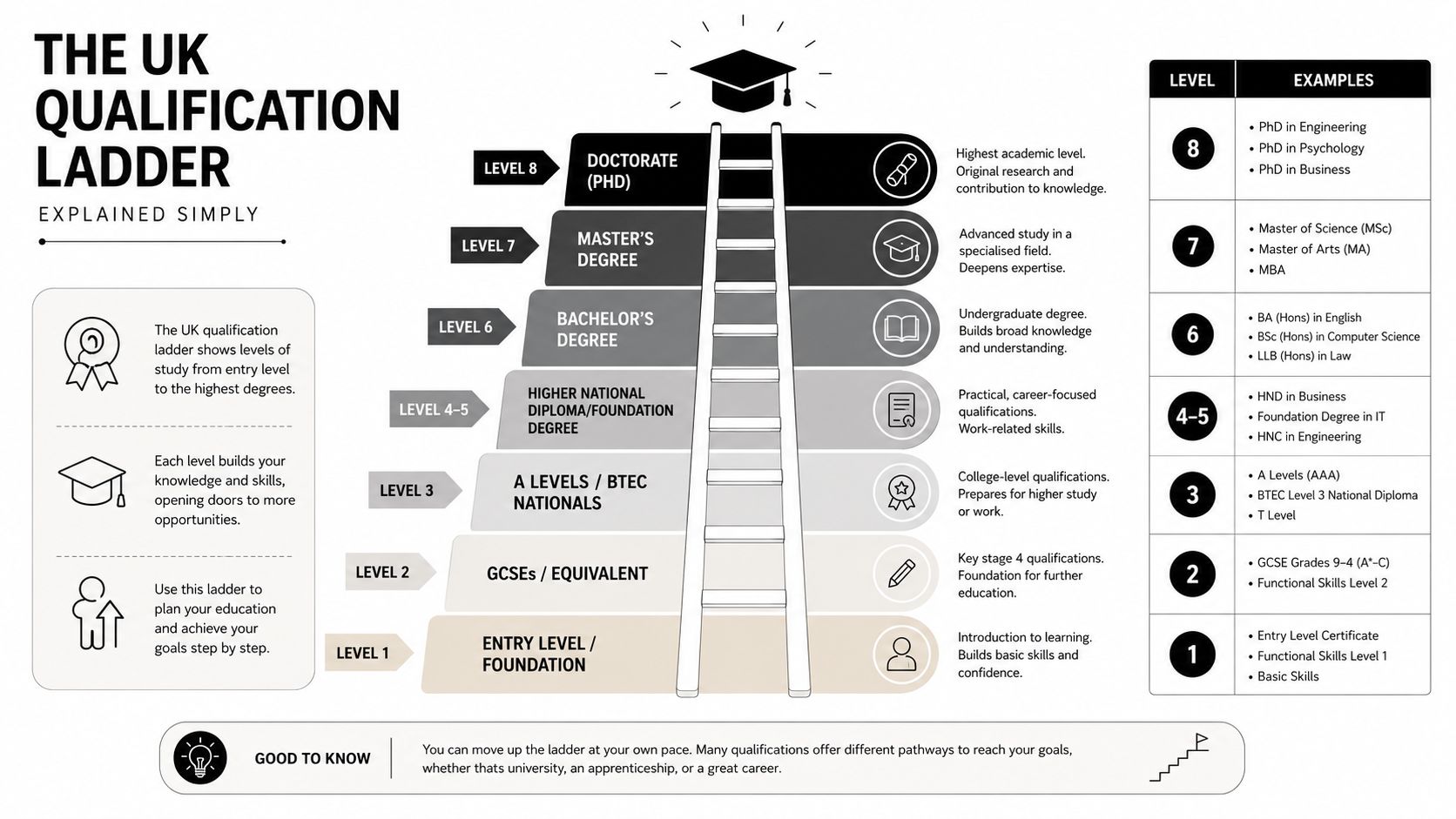
Think of UK qualifications like a ladder. You do not leap from the bottom rung to the top in one go, you climb one sensible step at a time. That is good news, because it means the right course depends on where you are now, not where someone else started.
Functional Skills and GCSEs
Functional Skills in English and maths are often the first useful rung for adults who need to rebuild confidence. They are especially helpful if you want to apply for jobs that ask for basic communication, reading, writing, or numeracy. GCSEs do a similar job, but they carry a stronger academic signal and are often used when someone wants to reach the next stage of study.
For a lot of people, this is the “clear the path” stage. If your school experience was bumpy, these qualifications can help you feel safer with learning again. They also make your next step easier, because many employers and colleges use English and maths as baseline requirements.
A Levels and Access to HE
A Levels are the more academic route, and they usually matter when you want to move towards university or a profession with formal entry requirements. The Access to Higher Education Diploma is designed for adults who want to progress to university, and many universities accept it in place of A Levels. The official Access to HE route is a Level 3 qualification, normally completed in one year full time, and it is widely used by adults returning after a break Access to HE overview.
If university is your goal, that diploma can be a brilliant bridge. For a clearer pathway, you can also read the guide to studying an Access to HE diploma online, which shows how adults often make that step work around real life.
Short vocational and professional courses
These are the practical, job-focused options. They suit learners who want to move into a specific role more quickly, or who already know the field they're aiming for. In data work, for example, independent guidance says to start with Python, SQL, and data visualisation, then build 2 to 3 documented projects, because employers want proof that you can do the work, not just say you've studied it data analysis pathway guidance.
Simple rule: if you need a doorway, choose a practical course. If you need a bridge to university, choose a qualification with recognised progression.
Matching Courses to Your Career Change Goal
Choosing a course gets much easier when you stop asking, “What sounds impressive?” and start asking, “What job am I aiming for?” That one question changes everything. A course should fit the destination, the same way you would choose shoes for a journey, not for a photo.
Compare the main options
| Course Type | Typical Length | Best For | Leads To |
|---|---|---|---|
| Functional Skills | Short to medium | Building English and maths confidence | Entry to further study or jobs needing basics |
| GCSEs | Medium | Getting stronger academic foundations | A Levels, apprenticeships, and more formal routes |
| A Levels | Medium to longer | University entry or academic careers | Degree study and professional pathways |
| Access to HE Diploma | Around one year full time | Adults aiming for university | Degree entry, especially after a break |
| Short vocational course | Short | Fast move into a specific job area | Entry-level roles, interviews, and portfolio work |
A teaching assistant who wants to become a primary school teacher might use GCSEs first, then A Levels or Access to HE depending on what they already have. That is a ladder, not a leap. A retail worker who wants to move into healthcare administration may be better served by Functional Skills plus a vocational certificate that proves office and communication competence.
Match course type to ambition
If you want to qualify for university, Access to HE is often the clearest route for adults. If you want to meet entry requirements, GCSEs or Functional Skills may be the missing step. If you want to change into a specific role quickly, short vocational study can give you the practical language and confidence to apply.
The key is not to overbuy the course. A massive qualification is not always the right answer if your next role only needs a narrow set of skills. On the other hand, a very short course may feel useful but still leave you stuck if the job market expects a stronger signal from your CV.
For adults who want flexible study around family life, a helpful starting point is the online adult education route overview, because the format matters just as much as the subject.
How to Choose the Right Course for You
When you are weighing up a career change, the pressure for a perfect answer can be strong. A better target is a course that fits your life now and still gives you a clear next step.
Start with four simple questions
Ask yourself what job you want, what skills you already have, how much study time you can give each week, and how soon you need to earn or progress again. Those questions cut through the noise. They turn a large set of options into something practical you can compare.
If you already have strong communication skills but your maths confidence is shaky, that gap tells you where to begin. If you can only study in short bursts after work, a course with bite-sized delivery may suit you better than a heavy academic timetable. If university is the goal, work backwards from the entry route instead of guessing.
Check the provider carefully
A good course provider should make the next step clear. Look for recognised awarding bodies, clear tutor support, flexible online delivery, and a route that leads somewhere useful. If a course sounds appealing but the progression is hard to see, keep looking.
Confidence check: a course should tell you what it helps you do next, not just what it contains.
Keep your home life in view
Family commitments matter. So do confidence, transport, and computer access. Adults often do best when the course respects those realities instead of pretending they do not exist.
Support makes a real difference here. A course with guidance can feel very different from one that leaves you alone with a screen. If you want a UK option that keeps progression and support central, the adult education courses online page is a useful place to compare how a flexible route is set out.
Funding and Support Options in the UK
Money worries stop many adults before they even begin. That is painful, because plenty of people assume study is out of reach when the system offers specific routes to help.
The main funding routes
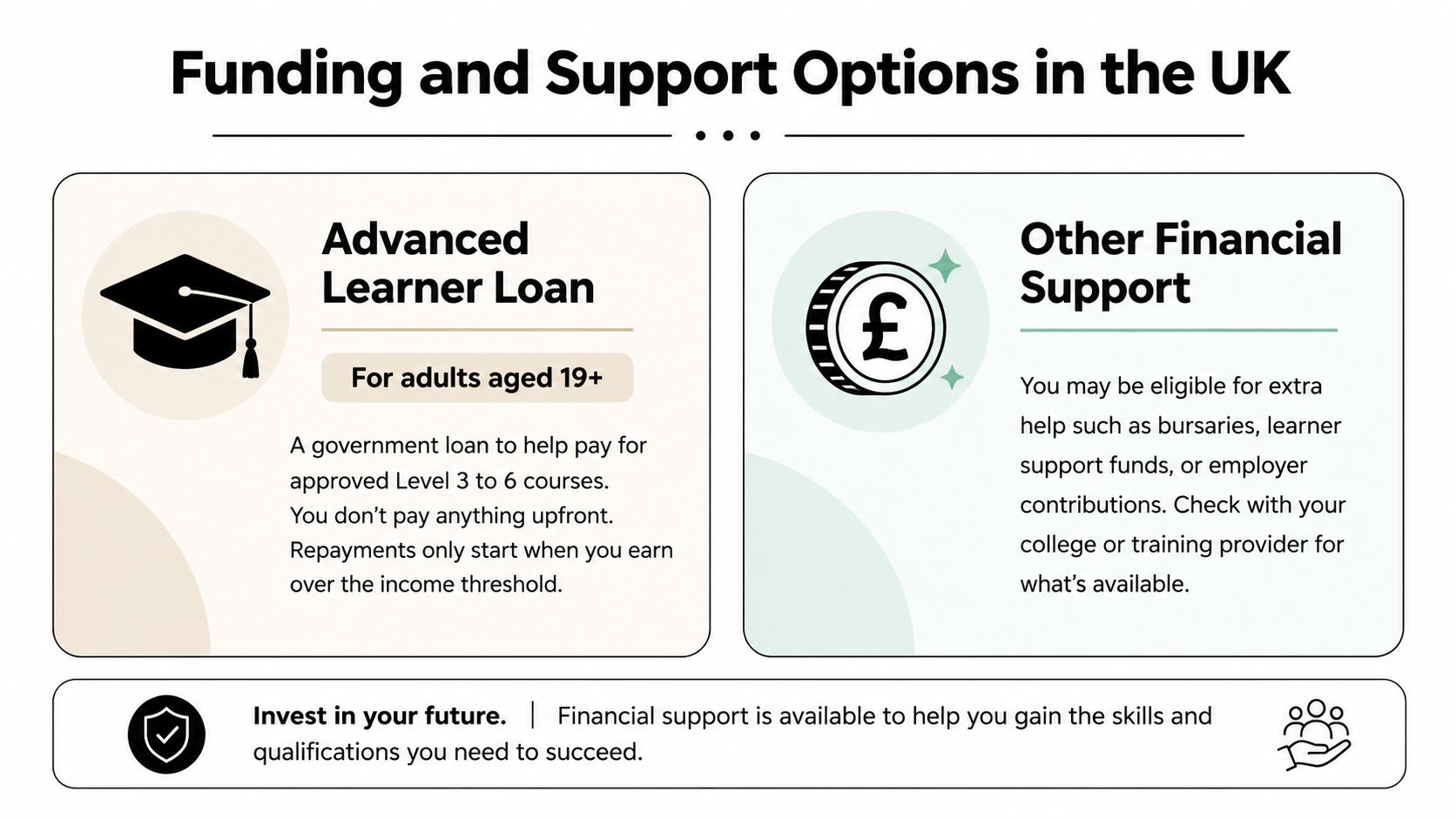
In England, adults aged 19+ can usually take a Level 3 qualification through the Advanced Learner Loan system, and the loan is written off if the learner later completes an eligible higher education degree. The official rules say learners do not pay anything up front, and repayment only starts once income is above the repayment threshold Advanced Learner Loan details. That can be a lifeline if you need an A Level, Access to HE, or another Level 3 route before university or a new profession.
There is also the Lifetime Skills Guarantee. It makes eligible adults in England aged 19 and over able to study their first full Level 3 qualification free of charge Lifetime Skills Guarantee overview. For a first-time adult learner, that can remove the biggest barrier entirely.
What support can look like in practice
Some learners use employer sponsorship, especially if the new qualification helps the business as well as the individual. Others use instalment plans or bursaries where they are available. The important thing is not to assume the price you first see is the final cost.
A course adviser can often help you check which option fits your situation. If you are choosing a Level 3 route, it is worth asking directly whether the course is covered by the loan system, whether you meet the free-study conditions, and how repayment would work in real life. You can also review the Advanced Learner Loan information page if you want a clearer sense of how adult funding is usually explained.
Money rule: do not let one price tag make the decision for you. Check the funding route first, then judge the course.
Real Learners, Real Career Changes
One parent I think about often started with basic English and maths because she wanted to stop feeling nervous every time a form arrived. She had spent years putting everyone else first, so going back to learning felt strange at the start. But once she had the basics in place, the next step became a nursing associate pathway, and that shift did more than improve her CV, it changed how she saw herself.
A second learner was an office worker who felt boxed in by the same tasks every week. He had the patience for study, but not the confidence to jump straight into a degree. An Access to HE diploma gave him a route into university, and he used that bridge to move towards psychology, which had been on his mind for years.
Small wins matter
The best part of those journeys was never just the final offer or the new title. It was the smaller moments. The first assignment submitted. The first tutor message that made the work feel possible. The first time a child or partner said, “You're really doing this.”
A third learner came from retail and wanted into IT support. He began with a short vocational course and online study, because he needed something practical and fast. That gave him vocabulary, confidence, and proof that he could handle the basics, which is often what gets people from hesitation into interviews.
These stories matter because confidence usually grows after action, not before it. Adults often wait to feel ready, but readiness often arrives halfway through the journey. That is why the right course is not just about content, it's about momentum.
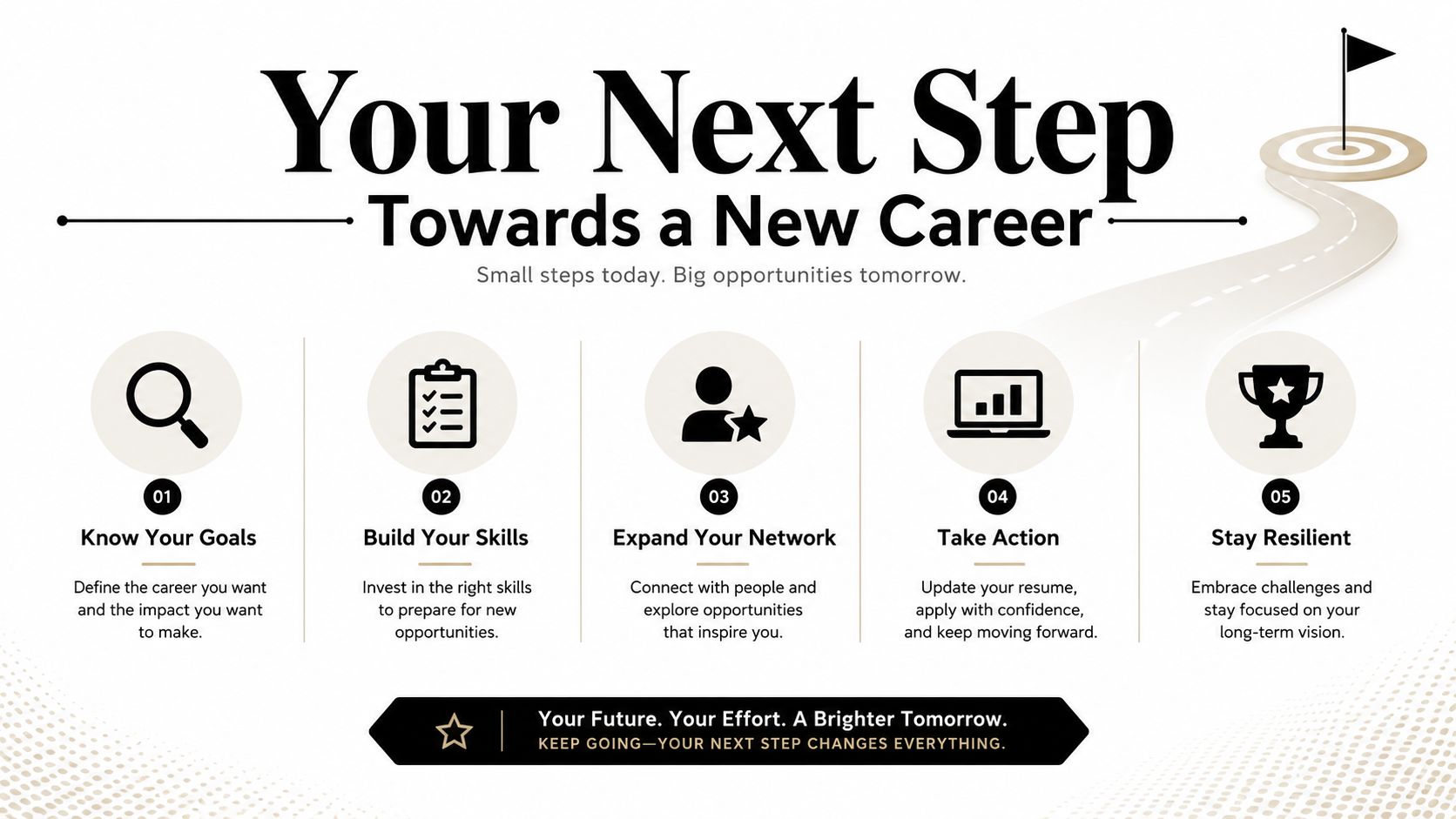
Your Next Step Towards a New Career
Career change courses work best when they act like stepping stones. One small qualification can lead to the next, and the next can lead to a job, a promotion, or university. You do not need to solve your whole future tonight.
Choose one target role. Write down the skills you already have. Then pick the qualification level that closes the gap instead of stretching you in the wrong direction.
This week, do just three things. List your strengths, choose one career goal, and ask a trusted provider what route fits your time, money, and family life. Your decision to study is already a powerful example for your children, because it shows them that learning is brave, useful, and worth doing.
A CTA for Next Level Online College. If you're ready to take one clear step towards a new career, speak to Next Level Online College today and find a course path that fits your life, builds your confidence, and helps you move towards the future you and your family deserve.