
You might be reading this after the children have gone to bed, with a cup of tea nearby, wondering if it's too late to change your future. Maybe you want better work. Maybe you want to prove something to yourself. Maybe you want your family to see you succeed and think, “If they can do it, so can I.”
Those feelings matter. So does the quiet worry that often comes with them. You might be asking yourself whether you’re clever enough, organised enough, or confident enough to study again. Many adults feel exactly that way before they begin.
Online course access is the doorway in. It’s the moment education stops being something far away and starts becoming part of your real life, in your own home, at your own pace. It’s not just a login. It’s the first practical step towards new qualifications, better options, and the kind of future that can lift a whole family.
Your First Step to a Brighter Future
A lot of adults return to education for one personal reason. They want life to open up again.
That might mean getting English or maths sorted at last. It might mean taking GCSEs so university becomes possible. It might mean building a new career after years of putting everyone else first. Whatever has brought you here, your starting point is valid.

Why this step matters
When people hear the phrase online course access, it can sound technical. It isn’t. In everyday life, it means having a safe, simple way to reach your lessons, your resources, your tutor support, and your next goal.
For many adult learners, that first login carries a lot of emotion. It can feel exciting and scary at the same time. That’s normal. Starting again often feels big before it feels manageable.
You’re also far from alone. The move to flexible online learning has grown massively, with UK undergraduate distance learning enrolments jumping by 105% in just two years after the pandemic, according to these UK online learning figures. That tells us something important. More adults are choosing flexible study because it fits real life.
You don't need to feel ready for the whole journey. You only need to be ready for the first small step.
What this can mean for your family
When a parent, carer, or working adult studies, children notice. They see persistence. They see homework happening at the kitchen table. They see that learning doesn’t stop when school ends.
That example can be powerful.
Here are some of the changes adult learners often hope for when they seek online course access:
- A stronger future at work so they can apply for better roles
- A route to university if they missed that chance earlier in life
- Greater self-belief after years of saying “I’m not academic”
- Pride at home because their children can see them trying, learning, and growing
A simple way to think about it
You don’t have to think of access as technology. Think of it as permission to begin.
Once that door opens, you’re not standing outside education anymore. You’re in it. You can log in before work, after dinner, or at the weekend. You can study in short bursts. You can keep moving, even if life is busy.
That’s how big changes often begin. Unassumingly. One decision at a time.
What Online Course Access Really Means for You
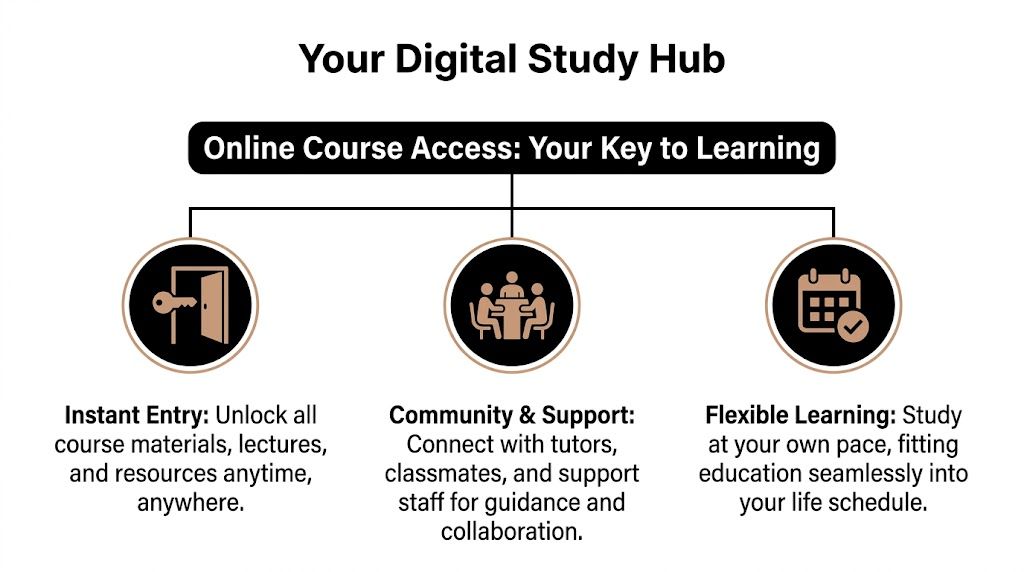
The easiest way to understand online course access is to imagine it as getting the keys to your own friendly library. It isn’t a huge building with confusing corridors. It’s a neat digital study space built to help you find what you need.
Inside, your lessons are organised. Your tasks are in one place. Your support is there when you need it. You don’t have to guess where to start.
Your welcome comes first
Before anything else, there’s usually a clear confirmation that you’re enrolled. Think of this as your official welcome.
This part matters more than people realise. It tells you that your place is secure and that your course is real, structured, and ready for you. If you’ve ever doubted whether education still has room for you, that welcome can feel like a turning point.
You may also want to check whether the qualification you’re choosing is recognised and properly quality-assured. A good place to understand that is this guide to accreditation for online courses.
Your login is your key
Your login details are your personal key. They open the digital door to your study area.
Once inside, you’ll usually find things like:
- Lesson materials such as videos, notes, worksheets, or reading tasks
- Assignments so you know what to complete and when
- Tutor contact points for questions, feedback, and guidance
- Progress tracking so you can see what you’ve already done
Some learners worry that if they aren’t “good with computers”, they won’t cope. But most online platforms are designed to be clear and tidy. If you can open emails, tap links, and watch videos, you already understand much of the basic flow.
Practical rule: If a platform helps you find your next lesson in a few clicks, it’s doing its job well.
Access usually means flexibility
One of the best parts of online course access is that it often gives you room to study around your life, not the other way round.
That can mean early mornings before the house wakes up. It can mean revising on your lunch break. It can mean spending an hour on a Sunday catching up. For adult learners, this flexibility often turns education from “impossible” into “possible”.
A simple comparison helps:
| Part of access | What it means in real life |
|---|---|
| Enrolment confirmation | You know you’ve got your place |
| Platform login | You can enter your online study space |
| Course availability | Your materials are there when you need them |
| Content unlocks | New lessons and tasks appear as you move forward |
Not everything appears at once
Sometimes learners expect every single part of a course to appear immediately. Sometimes it does. Sometimes content is released in stages.
That isn’t there to catch you out. It’s often there to help you focus. Instead of feeling buried under everything at once, you can work through one clear part at a time. That structure can make studying feel calmer and more achievable.
In simple terms, online course access means you have a place to learn, a way to enter it, and a clear path through it. That’s all. No mystery. No hidden trick. Just organised support waiting for you.
The Simple Tools You Need to Get Started
Many adults worry about the technology side before they worry about the studying side. That’s understandable. But in most cases, the tools you need are much simpler than you think.
You probably already use the kind of skills online learning asks for. If you can send a message, open a website, or watch a video, you’re not starting from zero. You’re starting with more than enough to begin.
What you’ll usually need
The basics are often familiar:
- A laptop, desktop, or tablet that lets you read course materials and complete tasks
- An internet connection steady enough for videos, messages, and downloads
- An email address so you can receive updates and sign in
- A quiet corner where you can focus when you study
That quiet corner doesn’t need to be perfect. It could be the kitchen table, a bedroom desk, or a spot in the living room when things settle down. What matters is that it becomes a place your mind starts to connect with progress.
You don’t need to be “techy”
A lot of learners say things like, “I’m useless with computers,” when what they really mean is, “I’m nervous about doing something new.”
Those aren’t the same thing.
Online learning platforms are there to help you, not test your technical skill. Most of the time, you’ll be clicking into lessons, reading instructions, watching teaching videos, and uploading work in a guided way. If you want a simple overview of how online study is set up, this page on how it works gives a helpful picture.
A better way to judge your readiness
Don’t ask yourself, “Am I good enough with technology?”
Ask these questions instead:
- Can I open emails and follow a link?
- Can I type a short message?
- Can I watch a video online?
- Can I learn one new step at a time?
If the answer is yes to most of those, you’re in a much better position than you may think.
Most adult learners don’t need a perfect set-up. They need a workable one and the confidence to begin.
The most important tool isn’t a device
It’s your mindset.
You don’t need to know everything on day one. You don’t need to feel fearless. You only need the willingness to keep going when something is new. That’s what builds confidence. Not waiting until fear disappears, but taking small steps while it’s still there.
A device helps you access the course. Belief helps you stay with it.
How Your Study Journey Unfolds Over Time
When adults return to learning, they sometimes think they must rush. They feel behind already, so they want to make up for lost time. But good study rarely works that way.
A qualification is more like a steady path than a sprint. You log in, complete one lesson, then another, then another. Over time, those small pieces join up into real change.
The first few weeks
At the start, many learners spend time getting used to the rhythm. They learn where the lessons are. They work out when they study best. They discover how to fit learning around children, shifts, and normal life.
That early stage matters. It’s when online course access stops feeling unfamiliar and starts feeling routine.
A typical pattern may look like this:
- You log in for the first time and look around your study area.
- You complete your first module and realise you can do more than you thought.
- You begin asking questions when something isn’t clear.
- You build momentum through regular, manageable study sessions.
The middle part is where confidence grows
This is often where significant transformation happens. Not because every week feels easy, but because you begin proving things to yourself.
You might start with Functional Skills because you want stronger foundations in English or maths. Later, you may feel ready for GCSE study. After that, university can stop feeling like a dream and start feeling like a route.
That path matters because each stage builds on the last. One qualification can lead naturally into the next.
Some learners don’t need more ability. They need a pathway that helps them see what comes next.
Why long-term progress is worth it
Investing in yourself this way has real rewards. Completing an online Access to HE course leads to a 72% progression rate to university, and UK adult learners who gain new qualifications report an average salary uplift of £12,000 within a year, according to this research on online education trends.
Those numbers matter, but so do the everyday changes behind them. Better qualifications can help you apply for roles that once felt out of reach. They can help you speak with more confidence at work. They can help you show your children what persistence looks like.
A journey with different seasons
Some weeks you’ll feel focused and sharp. Other weeks life will be messy.
That doesn’t mean you’re failing. It means you’re human.
Here’s a simple way to think about your study journey over time:
| Stage | What it often feels like |
|---|---|
| Starting | Nervous, hopeful, uncertain |
| Settling in | More organised, less afraid |
| Building progress | Proud, stretched, determined |
| Completing | Relieved, stronger, ready for more |
When you look at it this way, online course access isn’t just entry to a platform. It’s entry to a structured future. One lesson can lead to one qualification. One qualification can lead to university, a better role, or a whole new direction.
Gaining and Troubleshooting Your Course Access
The first login can feel surprisingly emotional. For some people, it’s the first time in years they’ve done something just for their own future. That matters.
Most of the practical steps are straightforward. Once you know what to expect, the process usually feels much less daunting.
What usually happens first
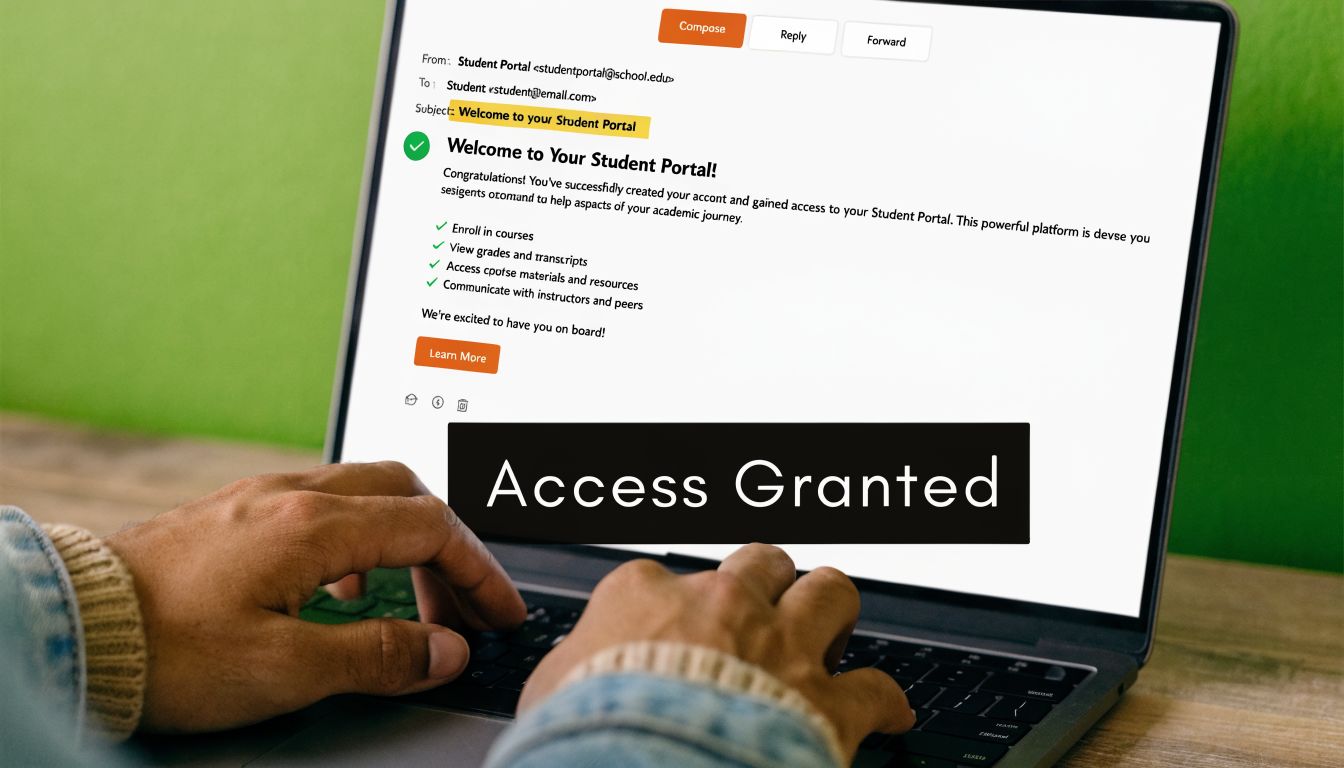
You’ll often receive a welcome email with the details you need to begin. That might include your username, a temporary password, a link to the student portal, and guidance on what to do first.
Read that message slowly. There’s no prize for rushing. Many problems happen because people click quickly and miss one small instruction.
A calm first-login routine often looks like this:
- Open the email on the device you plan to study on so it’s easy to switch between the message and the login page
- Use the exact login details provided because passwords are case-sensitive
- Change your password to something memorable but secure
- Save the portal link in your bookmarks so you can find it quickly next time
If something goes wrong
Small issues are common. They don’t mean online learning isn’t for you.
Here are a few examples:
- Forgot your password. Use the password reset option and follow the email instructions.
- The page won’t load properly. Refresh the page or try another browser.
- You can’t find your welcome email. Check your spam or junk folder.
- A video is buffering. Pause it for a minute, then restart, or lower the video quality if that option is available.
Most of these are minor bumps, not major barriers.
If one step doesn’t work straight away, stop, reread, and try again. Calm beats panic every time.
When your internet isn’t perfect
This is a real issue for some learners, especially outside towns and cities. We know that not everyone has perfect internet, with about 12% of rural UK homes still lacking superfast broadband, according to research on reaching underserved populations in online learning. That’s one reason good online course access should take real-life conditions seriously.
If your connection is patchy, these ideas can help:
- Download materials when your signal is stronger if your course allows this
- Study at quieter times of day when fewer people in the house are online
- Use text-based resources first when video is harder to stream
- Keep a simple offline notebook so you can still make progress when the internet dips
A short walkthrough can also help make the process feel more familiar:
Keep your confidence while you solve the problem
Troubleshooting can trigger old feelings. You may think, “I knew I wouldn’t manage this.” Try to catch that thought early.
A password issue is not a sign that you aren’t capable. Slow broadband is not proof that education isn’t for you. These are practical issues, and practical issues can be worked through one step at a time.
That mindset matters. Adult learners often succeed not because everything runs perfectly, but because they keep moving when something small goes wrong.
How We Support You Every Step of Your Journey
Online learning works best when it feels human. A learner doesn’t just need a screen and a set of tasks. They need reassurance, structure, and someone to turn to when confidence drops.
That’s especially true for adults returning to education after a long break. Many are balancing work, childcare, caring duties, and household pressures all at once. In that situation, support isn’t a bonus. It’s part of what makes progress possible.
Academic help when you need it
Good support starts with clear teaching and access to people who know the subject well. When you get stuck, you should be able to ask a question and receive guidance that helps you move forward.
That support can include:
- Subject tutors who explain difficult topics in plain language
- Feedback on your work so you know what’s going well and what to improve
- Study guidance to help you plan your week and stay organised
- Preparation help for assessments and next steps
If you want to see what strong learner guidance can look like, this page on expert tutor support gives a useful overview.
Emotional support matters too
Adult learners often carry more than books and notes. They carry responsibilities, memories of past struggles, and fears about failing in front of the people they love.
Juggling life and study can be tough, and 35% of mature students report anxiety from the pressure. Dedicated wellbeing advisors have been linked with completion rates rising by over 30% for adult learners, as noted in the earlier evidence discussed from the rural access and support research.
That matters because stress can make even simple study tasks feel heavy. A caring check-in, a reminder that you’re making progress, or support when life becomes overwhelming can keep a learner from giving up on a hard week.
Support isn't about doing the work for you. It's about helping you keep going when life gets loud.
Motivation can be built
Confidence doesn’t appear all at once. It grows through action, feedback, and encouragement.
A supportive learning environment often helps adults by:
| Kind of support | Why it matters |
|---|---|
| Onboarding help | Makes the first steps feel manageable |
| Tutor guidance | Turns confusion into understanding |
| Wellbeing support | Helps you cope with pressure and anxiety |
| Regular encouragement | Keeps motivation alive during busy periods |
Sometimes the biggest breakthrough is not a grade. It’s the moment a learner stops saying, “I can’t do this,” and starts saying, “I’m getting there.”
Support also makes study feel affordable and practical
For many adults, the barrier isn’t only confidence. It’s also money, timing, and the fear of committing to something they can’t fit into family life.
That’s why practical support matters as much as emotional support. Clear payment options, realistic schedules, and honest advice about workload can make a qualification feel possible rather than overwhelming. Learners deserve to know where they stand and what kind of commitment they’re making.
When support is handled well, online course access becomes more than entry to lessons. It becomes entry to a community that expects you to succeed and treats your goals with respect.
Your Questions Answered About Online Learning
Even after you understand the basics, it’s normal to have practical questions. Adult learners often want to know how study works in everyday life, not just in theory.
Here are some of the questions that come up most often.
Can I study on my phone
You may be able to do some parts of your course on a mobile phone, such as checking messages, reading short updates, or watching some lesson content. But for serious study, a laptop, desktop, or tablet is usually much easier.
That’s because you may need to type longer answers, read larger documents, or move between different resources. A bigger screen can reduce stress and make study sessions more comfortable.
What if I have dyslexia or another learning difficulty
You should never assume that online learning isn’t for you because you learn differently. Many adult learners have dyslexia, attention difficulties, or other needs that affect how they study.
The most important thing is to tell your provider early. That gives them the chance to explain what help is available. Support may include adjusted materials, extra guidance, or alternative ways to approach parts of the course.
What are reasonable adjustments
Reasonable adjustments are changes that help learners access education more fairly. The exact support depends on the course and the learner’s needs, but the idea is simple. The course should work hard to remove avoidable barriers.
That might mean extra time in some situations, different formats for materials, or clearer support around organisation and communication. If you think you may need adjustments, ask about them before or at the start of your course.
What if I work full-time
Many adults who study online are working. The key is not to find huge blocks of free time. It’s to build a routine from the small spaces you do have.
You might study for short sessions in the evening, use one weekend morning, or fit learning around shift patterns. A realistic plan is better than an ambitious one you can’t maintain.
What if I fall behind
Falling behind happens. Children get ill. Work gets busy. Life changes.
What matters is what you do next. Don’t disappear in silence if you can help it. Reach out, explain what’s happened, and ask what your next best step is. Many study problems become much easier once they’re shared.
A short pause in progress doesn't erase your ability. It only means you need a fresh plan.
Are online qualifications taken seriously
Recognition matters, especially if you want to progress to further study, university, or a better role at work. That’s why it’s important to check the qualification itself, the awarding arrangements, and whether the course is suitable for your goal.
Don’t feel shy about asking direct questions before you enrol. A good provider should be able to explain clearly what the qualification is, who it’s for, and where it can lead.
Can employers support staff with online learning
Yes. Employers can help by giving staff predictable study time, encouraging open communication, and recognising that flexible learning can fit around work more easily than classroom-only study.
For employers, online learning can be useful because staff can continue working while developing their skills. For learners, employer support can make steady progress much easier.
How do I know if now is the right time
Many adults wait for the perfect time to begin. Often, that perfect time never arrives.
A better question is this. Do you have a strong reason to change your future, and can you commit to one small step at a time? If the answer is yes, that may be enough to start.
You don’t need to become a different person before returning to education. You return to education so you can grow into the person you want to be.
If you're ready to take that first step, Next Level Online College offers flexible online courses for adult learners across the UK, including Functional Skills, GCSEs, A Levels, and Access to HE diplomas. With recognised qualifications, expert tutors, and caring support built around real life, it’s a practical place to start building a future you and your family can feel proud of.