
You might be reading this while juggling a lot. Work that doesn't feel right anymore. School runs. Bills. That quiet wish to do something meaningful and build a future your children can look up to.
If that's you, you're not behind. You're not too late. And you're not the only adult wondering whether a fresh start in education could lead to a job that matters.
A Pupil Support Assistant role can be one of those paths. It puts you close to children who need patience, encouragement, and practical help every day. It can also be a first step into a bigger career in education. For many adults, that's powerful. You're not only changing your own future. You're showing your family what courage looks like.
Could This Be the Rewarding Career You're Looking For
Sarah is in her thirties. She wants work that means something, but she also needs a role that fits around family life. She doesn't want to sit at the end of another week feeling drained and unsure why she did it. She wants to come home knowing she helped someone.
That's the feeling many desire when they look at becoming a pupil support assistant.
In this role, you might help a child settle into the classroom, support someone who finds reading hard, or give calm encouragement when a pupil feels overwhelmed. Small moments matter. A child who joins in because you helped them feel safe. A pupil who reads a line aloud for the first time. A teacher who can focus better because you've helped prepare resources and support learning.
Why this role feels different
Some jobs pay the bills but leave you feeling disconnected. A pupil support assistant role is often different because your effort has a human result. You can see the difference you make.
That matters if you want work you can be proud of.
Sometimes the most powerful career move isn't the loudest one. It's the one that lets you help others while rebuilding your own confidence.
Many adults worry they aren't academic enough, experienced enough, or confident enough to start again. That's normal. Returning to learning after a break can feel intimidating, especially if school wasn't easy the first time.
Why adult learners often suit this work
Schools need people who are calm, observant, kind, and reliable. Those aren't tiny qualities. They're major strengths.
You may already use them every day:
- Patience at home: helping children with routines, homework, or worries
- Communication in real life: speaking clearly, listening properly, staying calm
- Resilience under pressure: handling busy mornings, family needs, and unexpected problems
- Care for others: noticing when someone is struggling and stepping in kindly
If you've spent years supporting other people, that experience counts. It may not be written on a certificate yet, but it still has value.
A career change into education can also become a turning point. You start earning respect in a new field, building qualifications, and showing your children that growth doesn't stop in adulthood. That example can stay with them for life.
What a Pupil Support Assistant Really Does
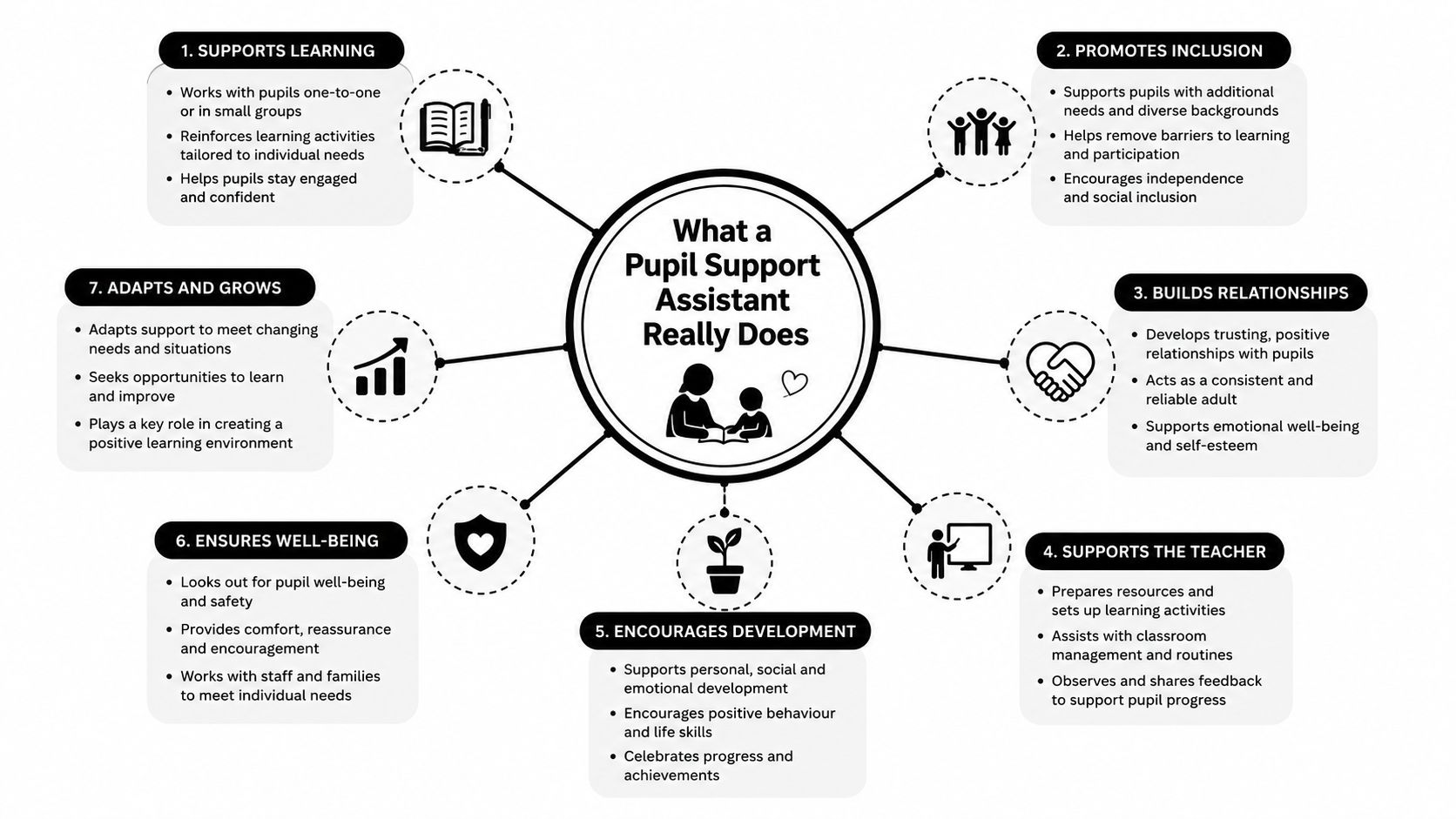
A pupil support assistant helps children take part in school life and learning. The heart of the job is support, but good support doesn't mean doing everything for a child. It means helping them build the skills and confidence to do more for themselves.
Supporting learning in practical ways
One important part of the role is helping pupils access lessons. That might mean breaking an activity into smaller steps, repeating instructions in a simpler way, or helping a child stay focused long enough to finish a task.
The role requires delivering adaptive teaching strategies to help pupils with Additional Educational Needs access the curriculum. It also involves working with teachers to provide targeted support that improves students' academic, social, and emotional skills, as described in this overview of learning support assistant responsibilities in UK schools.
Imagine scaffolding around a building. The scaffold supports the structure while it grows strong. It isn't the building itself, and it isn't meant to stay forever. In the same way, a pupil support assistant gives the right support at the right time so the child can become more independent.
Supporting wellbeing and confidence
Children don't learn well when they feel lost, anxious, or upset. That's why this job isn't only about worksheets and reading books.
A pupil support assistant often becomes a steady, friendly presence. You might greet a nervous child in the morning, help them settle after a difficult break time, or encourage them to join group work. These moments can change how safe a child feels at school.
Practical rule: Good support helps a pupil join in, not step back.
Supporting the teacher and the classroom
You also help the classroom run smoothly. That can include setting up resources, tidying learning spaces, supervising activities, and keeping useful records. In some roles, you'll also communicate with staff and sometimes with outside services by following school procedures carefully.
Here are three simple ways to understand the job:
| Part of the role | What it can look like |
|---|---|
| Learning support | Helping with reading, phonics, maths, or small group tasks |
| Emotional support | Encouraging a child, calming worries, building trust |
| Classroom support | Preparing materials, organising activities, assisting the teacher |
When people first hear the job title, they sometimes imagine only "helping out". However, the role is much more skilled than that. You're helping create a classroom where more children can succeed.
A Day in the Life of a Pupil Support Assistant
The school day starts before the children arrive. You walk into a classroom that's quiet for a few minutes, then full of movement. You check the plan with the teacher, lay out reading books, sort maths resources, and make sure the room is ready.
Then the pupils come in. Coats off. Bags away. Questions already starting.
Morning lessons and small wins
During the first lesson, you might sit with a small group working on English. One child needs extra time to sound out words. Another rushes and misses key instructions. You don't give answers. You slow things down, repeat the task clearly, and help them keep going.
Later in the morning, a pupil starts to lose focus. You notice before the lesson falls apart for them. A quiet reminder, a simple prompt, and a bit of reassurance can be enough to bring them back in.
That's one of the important parts of the job. You learn to spot what a child needs in the moment.
Break times and relationships
At break or lunch, your role doesn't disappear. You may supervise the playground, support children who find social time tricky, or help settle a disagreement before it grows.
Some pupils find the classroom easier than the playground. Others are the opposite. As a pupil support assistant, you often see the whole child, not just the lesson version of them.
A typical day may include:
- Quiet preparation: getting visual aids, worksheets, or practical resources ready
- Lesson support: helping pupils understand tasks without taking over
- Short check-ins: noticing mood changes and helping children reset
- Shared teamwork: speaking with the teacher about what worked and what didn't
Afternoon support and home time
The afternoon might bring a creative lesson, group work, or a reading session with a child who needs extra encouragement. Some days feel smooth. Some don't. Children are human, and schools are busy places.
What makes the role manageable is that you aren't expected to know everything at once. You learn routines, you follow guidance, and you build confidence through practice.
A good school day isn't perfect. It's full of little adjustments that help children keep moving forward.
By home time, you've probably done more than one kind of work. You've supported learning, behaviour, confidence, and classroom organisation. That's why many people find the role engaging. No two days feel exactly the same, but the purpose stays clear.
The Qualifications and Skills You Need to Shine
Many adults look at school jobs and think, "I couldn't do that." Often, that's fear talking, not fact.
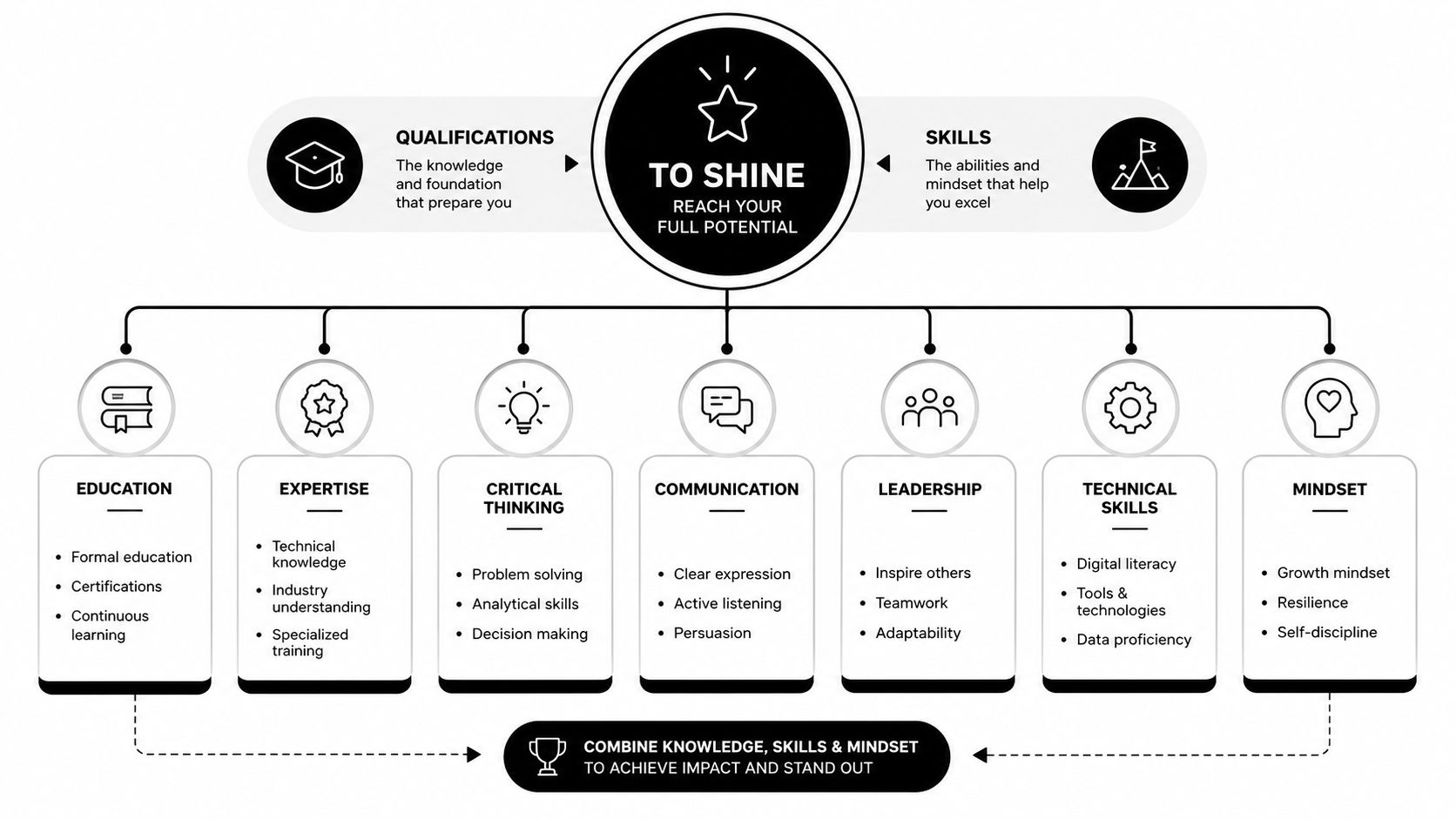
A strong pupil support assistant needs a mix of personal strengths and formal qualifications. The good news is that both can be built. Some you may already have. Others can be gained step by step.
The strengths you may already bring
Schools value people who can stay calm, be flexible, and communicate well. If you've raised children, cared for family, worked with the public, or handled busy routines, you may already have strong transferable skills.
These are especially useful:
- Patience: children learn at different speeds
- Clear communication: instructions must be simple and kind
- Observation: small changes in mood or behaviour matter
- Reliability: schools need adults they can trust every day
- Resilience: some days are busy, noisy, and emotionally demanding
Don't dismiss life experience because it wasn't gained in a formal office or classroom. Real responsibility still counts.
The qualifications schools often look for
The technical benchmark for this role is often a Level 2 Award in Support Work in Schools or GCSE Grade 4/C in English and Maths, while the Level 3 Award in Supporting Teaching and Learning in Schools is increasingly important for more complex SEN work, as outlined in this guide to education qualifications and support roles in the UK.
If you're unsure what Level 2 means, this plain-English explanation of what a Level 2 qualification is can help you understand where it sits and why it matters.
England's school workforce shows why this path is worth taking seriously. The number of teaching assistants in England has more than trebled since 2000, rising from 79,000 full-time equivalent roles in 2000 to about 260,000 by 2016, and by 2018 the figure had reached 263,900. Teaching assistants made up a quarter of the school workforce, with around two-thirds in primary schools, 18% in secondary schools, and 15% in special schools, according to analysis of teaching assistant growth and school spending in England.
Why qualifications are a confidence tool
Qualifications don't only help you apply for jobs. They also help you believe you belong in the room.
Earning a qualification as an adult can do two things at once. It can open a career door and rebuild the confidence that life may have worn down.
If you need English or maths first, that's okay. If you need to start at Level 2 before moving on, that's okay too. Progress is still progress. Plenty of adults begin with the basics, gain momentum, and go much further than they first thought possible.
Your Path to Becoming a Pupil Support Assistant
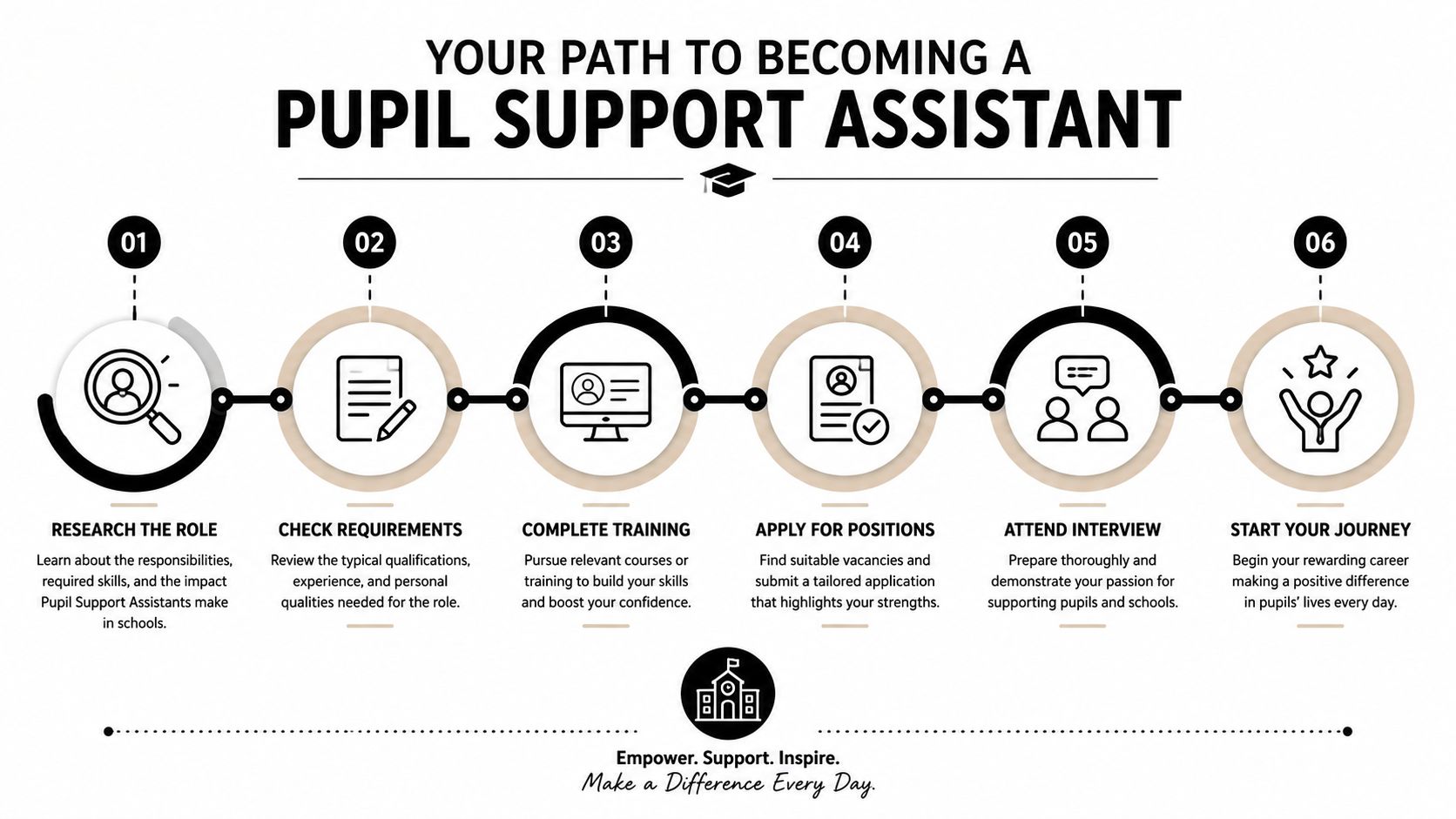
There isn't just one route into this work. That's helpful if your life is already full and you need options that fit around your family, current job, or confidence level.
What matters most is choosing a path you can keep going with.
Route one through experience
Some adults start by volunteering in a local school or helping in settings where children learn and play. This gives you a feel for the environment before you commit to a full career change.
It can also help you answer important questions. Do you enjoy the pace? Are you comfortable around groups of children? Does the school environment suit you?
Route two through training first
Others prefer to get qualified before applying. This can feel safer if you want structure and a clear sense of progress.
Training matters because the role works best when support is well planned. When deployed in targeted small-group interventions, well-trained pupil support assistants can help a child make an extra four to six months of academic progress in a single year, according to the Education Endowment Foundation's summary of teaching assistant interventions and learner progress.
That shows why learning the job properly matters. You're not studying for a piece of paper. You're learning how to make support effective.
Route three through a longer education journey
For some people, this role is also a stepping stone. You may want to work in schools now, then move later into teaching, early years, pastoral care, or another specialist area.
If university feels like a distant idea, don't rule it out. The UK government has pledged to introduce a Lifelong Loan Entitlement that will give adults funding for four years of post-18 education with more flexible use across course types, as discussed in this overview of adult education policy and the Lifelong Loan Entitlement.
A route such as an Access to Higher Education Diploma in Early Years Education can make that bigger goal feel more realistic later on.
Here is a simple action plan:
- Check your starting point: accurately assess your English, maths, and confidence levels.
- Choose your route: volunteering, training, apprenticeship, or a mix.
- Build evidence: keep notes of childcare, support, or education-related experience.
- Apply steadily: don't wait until you feel perfect.
The best route is the one you can start.
Pay Hours and Your Future Career Progression
Most adults don't choose a career on passion alone. You also need to think about hours, stability, and where the role could lead.
That's sensible. A job should support your values and your household.
What the working pattern can offer
One reason school support roles appeal to parents and career changers is the rhythm of the day. School hours and term-time patterns can suit family life better than many other sectors.
Of course, every school is different. Some roles include meetings, preparation time, or extra responsibilities. But many adults like the structure because it feels more predictable than shift work or late-evening roles.
Why strategy matters more than effort alone
This job is rewarding, but impact doesn't come from merely staying close to a child all day. A key challenge is to narrow gaps of learning, and success depends on strategy. Unstructured support can sometimes make pupils over-reliant, while targeted interventions are highly effective, as explained in the Education Endowment Foundation's guidance on making the best use of teaching assistants.
That's important for your future too. The more you understand effective support, the stronger your professional reputation becomes.
Schools value support staff who know when to step in, when to step back, and how to help a child grow in confidence.
Where this career can lead
A pupil support assistant role doesn't have to be the end point. It can be the beginning of a bigger journey.
Possible next steps include:
- Higher level support roles: taking on more responsibility in classrooms
- Specialist SEND work: building deeper knowledge of additional needs
- Pastoral or wellbeing roles: supporting behaviour, attendance, or emotional development
- Teacher training later on: using work experience as a launch pad
If you're drawn to understanding behaviour, emotions, and development, careers linked to psychology-related roles in education and support work may also interest you over time.
There is a wider reason to think carefully about progression. Adult learners often face real barriers in education. In the first six months of the 2025/26 academic year, 316,200 adult learners aged 19 and over took part in essential skills courses such as English and maths, according to official further education and skills participation data. That shows how many adults are rebuilding foundations later in life.
At the same time, part-time mature student entry into higher education fell by 57% between 2010-11 and 2019-20, from 149,000 to 64,000, according to the Office for Students' report on opportunity and choice for mature students. So if you keep going, you're doing something brave and important.
Crafting Your CV and Acing the Interview
A lot of adults freeze at this stage. They think, "I haven't worked in a school, so what do I even put on my CV?" More than you think.
The trick is to translate what you've already done into language schools understand.
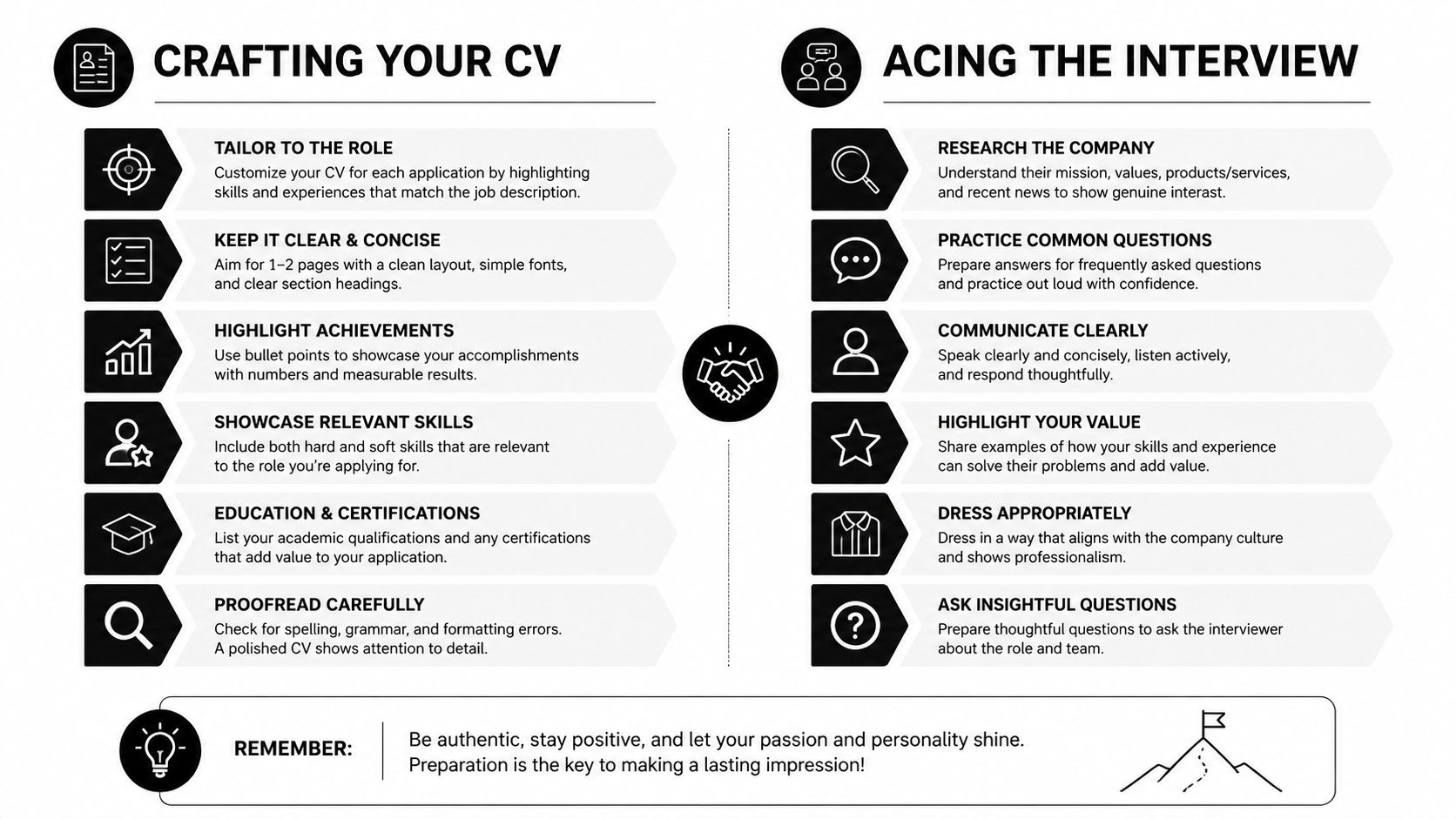
How to make your CV stronger
You don't need to pretend you've had a different life. You need to show the professional value in your real one.
Try reframing experience like this:
- Parenting and care: write about routine-setting, communication, and emotional support
- Customer-facing work: mention patience, teamwork, record-keeping, and problem-solving
- Voluntary help: include reading support, youth groups, sports clubs, or community work
- Home management: refer to organisation, time management, and staying calm under pressure
A short personal statement can help too. Keep it honest. Say that you're moving into education because you care about helping children learn, grow, and become more confident.
Interview answers that feel modern and thoughtful
Schools increasingly want support staff who help pupils become independent, not dependent. The modern pupil support role is shifting away from being a "shadow" for one child towards fostering independence. In an interview, talking about how you'd help a pupil build their own skills and confidence will impress schools more than stating you want to provide 1:1 help, as reflected in this learning support assistant job description.
That one idea can lift your interview answers.
Here are strong themes to use:
| Interview question | Strong direction for your answer |
|---|---|
| Why do you want this role? | Focus on helping children grow in confidence and access learning |
| How would you support a struggling pupil? | Talk about patience, breaking tasks down, and working with the teacher |
| How would you handle behaviour challenges? | Emphasise calm consistency, clear boundaries, and understanding the reason behind behaviour |
| What makes a good support assistant? | Mention teamwork, observation, reliability, and encouraging independence |
A simple way to prepare
Write down three examples from your own life where you helped someone learn, calm down, or succeed. They don't have to come from a school.
Interview reminder: Schools aren't only hiring qualifications. They're hiring judgement, warmth, consistency, and trust.
If nerves are your biggest hurdle, practise your answers aloud. Keep them simple. You don't need fancy words. You need clear examples and a calm, thoughtful attitude.
One more truth matters here. Adult learners who begin postsecondary study at age 25 or older have persistence rates under 50%, compared with 80% for those starting at age 20 or younger, according to this piece on adult learner persistence and progression. If you've kept going despite fear, doubt, or time pressures, that says something strong about you already.
If you're ready to build confidence, gain recognised qualifications, and move towards a future that makes you and your family proud, Next Level Online College offers flexible online courses designed for adult learners across the UK. Whether you need English, maths, GCSEs, A Levels, or an Access to HE diploma, you can study around real life with expert support and a clear path forward.