
Functional Skills English Level 2 is widely treated as equivalent to a GCSE English Language grade 4, formerly grade C, and that's the standard answer employers, colleges, and most university courses use. It sits at Level 2 on the UK framework, the same level used for many school-leaver benchmarks, so it can open real doors when you need to move forward.
If you're asking this, you're probably standing at a crossroads. Maybe you're trying to help your child see that learning really does matter. Maybe you're aiming for a better job, a promotion, or a course that could lead to university and a more secure future for your family. That pressure can feel heavy, especially when you're already juggling work, home, and the quiet worry that you're “behind”.
Understanding What Functional Skills English Level 2 Is Really About
A woman I once supported had spent years telling herself English “wasn't her thing”. She could read work emails, help her child with school letters, and speak clearly on the phone, but the idea of a formal qualification made her feel small. What changed wasn't her ability, it was understanding that Functional Skills English Level 2 is built for exactly those real-life moments.
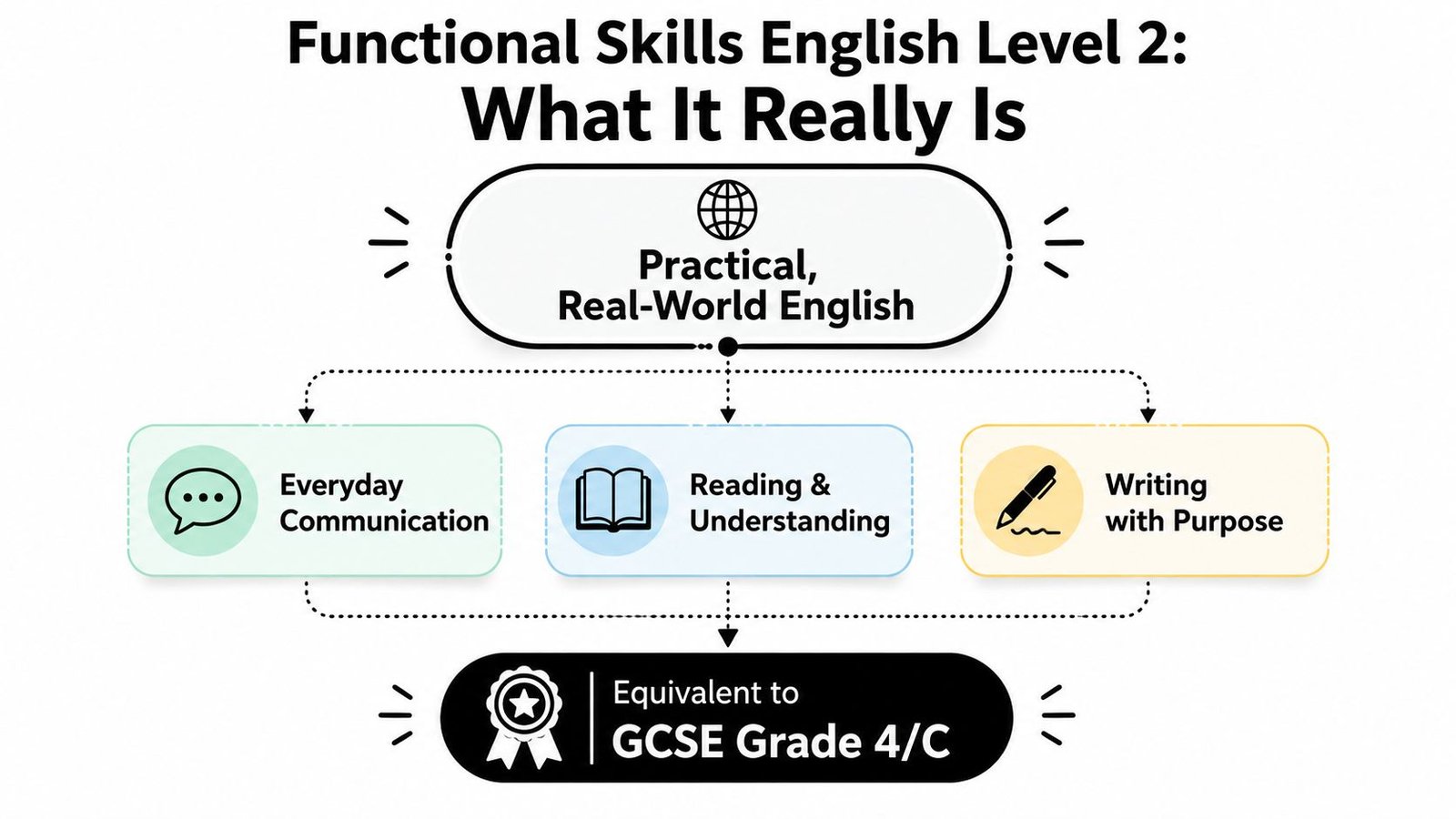
This qualification focuses on the English you use, not piles of theory. It looks at reading, writing, speaking, listening and communication in practical settings, which is why the government describes it as a Level 2 qualification on the national framework, placed alongside GCSE grades 9 to 4 at the same level government qualification levels. That's also why it's commonly used for entry, recruitment, and progression.
What Level 2 means in plain English
Think of qualification levels like a ladder. Level 1 is one step, Level 2 is the stronger middle step that opens more doors, and higher levels take you further up. Level 2 doesn't mean “basic” in a bad way, it means you've reached a recognised standard that employers and education providers understand.
You may see this as a practical bridge if GCSE English wasn't the right route for you before. The qualification is not a shortcut that cuts corners. It is a proper, regulated standard that proves you can use English confidently in everyday life.
Practical rule: if a course, employer, or apprenticeship asks for “GCSE English at grade 4 or equivalent”, Functional Skills English Level 2 is usually the qualification people mean.
If you want a supportive online route that explains the course clearly, you can also look at Functional Skills Level 2 at Next Level Online College.
How Functional Skills English Level 2 Maps to Other Qualifications
This is the part many are really searching for. The clean answer is that Functional Skills English Level 2 is treated as equivalent to GCSE English Language grade 4, formerly grade C, because both sit at Level 2 on the Regulated Qualifications Framework. The UK government's comparison of qualification levels shows Functional Skills Level 2 and GCSE grades 4 to 9 on the same level qualification comparison, and the government's qualification framework places GCSEs and Functional Skills together at Level 2 government qualification levels.
Functional Skills English Level 2 equivalences at a glance
| Qualification | Equivalent Level | Practical Meaning |
|---|---|---|
| GCSE English Language grade 4 | Level 2 | Usually the same entry standard people mean when they ask for a pass |
| GCSE English Language grade C | Level 2 | Older wording for the same broad benchmark |
| Regulated Qualifications Framework Level 2 | Level 2 | A nationally recognised standard for school-leaver level achievement |
| Apprenticeship English equivalent | Level 2 | Often accepted where the course asks for GCSE English or equivalent |
In everyday terms, this means your certificate is not a separate, lesser thing on the side. It is part of the official UK system, and apprenticeship guidance only counts Functional Skills qualifications regulated by Ofqual as acceptable English or maths equivalents, which reinforces that this is a recognised route, not a second-class one.
Why the comparison matters
If you're filling in a job application, speaking to a college, or checking apprenticeship entry rules, the level is what matters first. The name of the qualification matters too, but the key question is whether it meets the required standard. For many adult learners, that's the moment the pressure drops, because the paperwork finally has a clear answer.
Simple way to remember it: Functional Skills English Level 2 is the practical qualification, GCSE English Language grade 4 is the school-based benchmark, and both sit at the same national level.
That said, the phrase “equivalent” does not mean every institution will treat it exactly the same in every situation. The next section covers where it works well and where you need to check carefully before you enrol.
Where This Qualification Is Accepted and Where to Check First
Functional Skills English Level 2 is widely accepted by employers, further education colleges, and many training providers, especially when they ask for GCSE English grade 4 or equivalent. That makes it a strong option for adults who want to move into work, retrain, or keep progressing without going back through a full GCSE timetable. For many people, that flexibility is the difference between staying stuck and moving forward.
Here's the honest part. Acceptance is not universal, and pretending otherwise helps nobody. Independent UK guidance notes that some universities, selective employers, and regulated professions may still prefer or explicitly require GCSEs, and the Department for Education says Functional Skills are not equivalent to GCSEs in breadth of content Prospects guidance on Functional Skills. That matters if you're aiming for a course or career with strict entry rules.
Check the route before you enrol
| Destination | Functional Skills Level 2 often works? | What to do |
|---|---|---|
| Many jobs | Yes | Read the person specification carefully |
| Further education colleges | Yes | Ask admissions if they accept it for English entry |
| Apprenticeships | Often yes | Check the exact apprenticeship standard |
| Selective universities | Sometimes | Email admissions before you apply |
| Regulated professions | Sometimes not | Confirm with the regulator or training provider |
If you're aiming for university, it's smart to check the exact admissions policy first. A quick email to the admissions team can save you a lot of stress later, and you can link your question to university entry requirements for adult learners if you want to understand the wider context of English requirements.
A simple message works well:
“I hold Functional Skills English Level 2. Can you confirm whether this meets your English language entry requirement for the course I'm applying to?”
That one question can stop months of guessing. It also shows you're serious, organised, and ready to take the next step.
Real Outcomes and What the Numbers Show
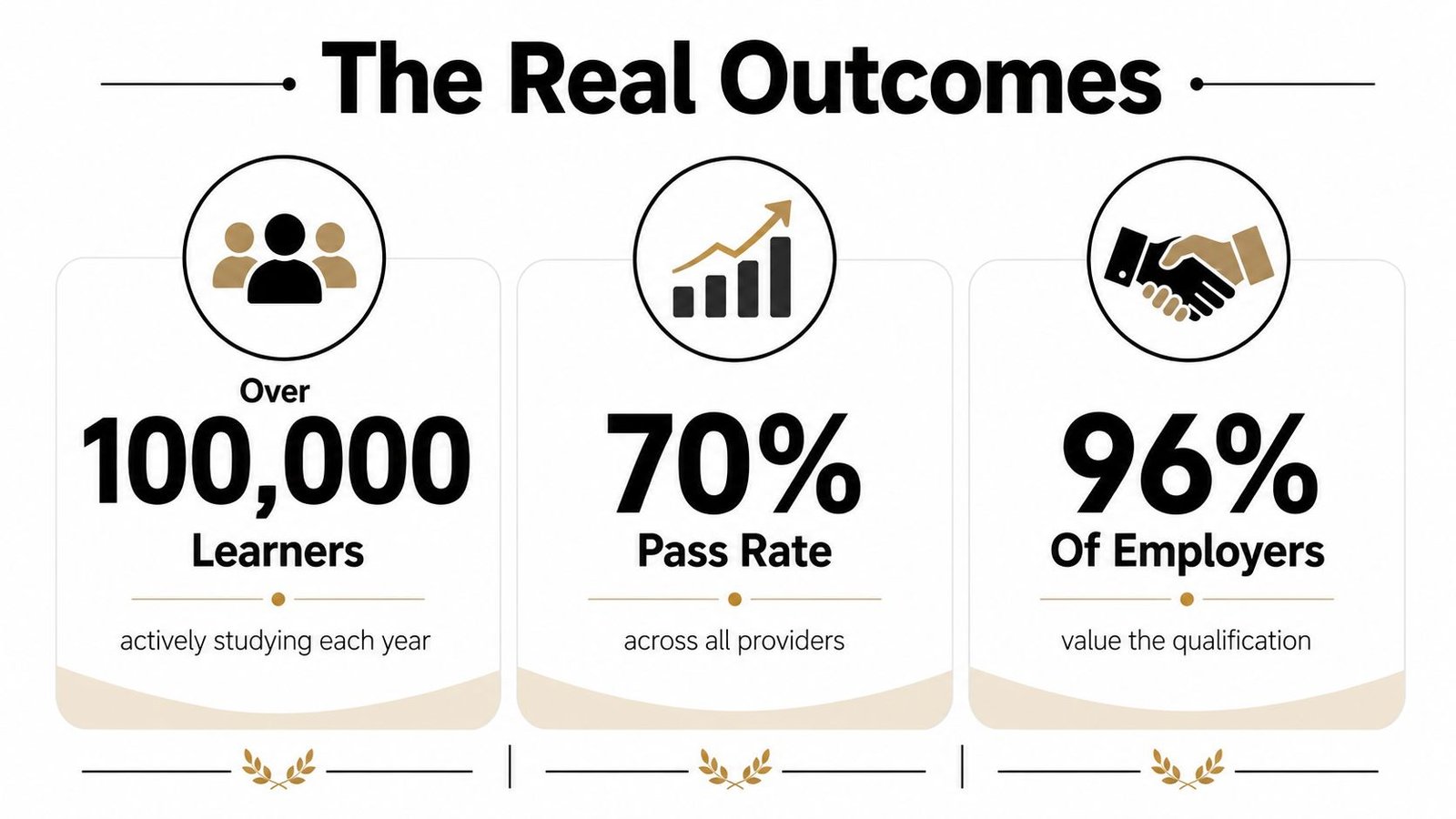
If you worry that Functional Skills English Level 2 is a second-class alternative, the figures offer a more balanced picture. In June 2025, AQA's Functional Skills results data recorded 8,362 entries, 2,577 pass outcomes, and an average pass mark of 53.5% for English Level 2 Ofqual Functional Skills results data. This is an established route that many learners use, rather than a qualification sitting on the margins.
Why the figures matter
The number of entries reflects a practical choice. Adults with jobs, caring responsibilities, or difficult experiences of school are choosing a shorter, focused route that can support their next application. Passing does not require perfect English. It requires the reading, writing, speaking, listening and communication skills the qualification assesses.
That does not mean every organisation accepts it in the same way. Some universities, employers, or regulated careers may still ask specifically for GCSE English, so checking the requirement before enrolling remains sensible. Acceptance can depend on the course, provider, or professional rules.
The qualification is also being maintained rather than left behind. NCFE announced improvements to its Functional Skills qualifications, with English Reading and Writing at Levels 1 and 2 available from 14 November 2025 NCFE updates. For learners, that suggests an active pathway that continues to respond to current needs.
The figures in plain English
- People use it. The recorded entries show sustained learner participation.
- A pass is realistic. The 53.5% average pass mark shows that perfection is not the standard.
- The route remains current. Qualification updates show continued development.
You are not choosing a shameful substitute. You are choosing a focused route that may reach your goal faster, provided the destination accepts it. That distinction helps you plan with confidence.
How Adult Learners Are Using This Qualification to Transform Their Lives
For an adult learner working as a kitchen porter in hospitality, Functional Skills English Level 2 can support a move into a senior support worker position. The certificate does not create the opportunity by itself, but it can provide the English evidence an employer or training provider requires. For another learner, passing the qualification may satisfy the entry condition for an Access to Higher Education Diploma and make university study a realistic next stage.

The government's subject content explains that the qualification assesses reading, writing, speaking, listening and communication for entry to apprenticeships, jobs and further study in England Functional Skills English subject content. In practical terms, it works like a key on an application checklist. Once the required English evidence is in place, a learner can focus on the next part of the application.
That does not make Functional Skills a second-class choice. For adults returning to education, it can be a focused route that recognises current ability without requiring a full return to school. Acceptance still varies, so the intended course, employer or profession must be checked before relying on the qualification.
The human side people don't always say out loud
A parent who passes may feel the change long before using the certificate. They might speak more confidently at work, tell their children, “I did it,” or regain trust in their ability to learn. Those small moments can matter as much as the formal result.
Speaking assessments can feel especially difficult when confidence has been shaken by years away from study. Learners who need practical support can explore how to boost English speaking confidence alongside their course preparation.
The qualification can also change a person's direction at work. A warehouse assistant may apply for a supervisory role, while a care worker may use the result when seeking further training. A parent may show a child that a setback can be part of the story rather than its ending.
Your certificate is not just proof of English. It can show that you kept going when giving up would have been easier.
Taking Your Next Steps with Confidence
Once your acceptance is confirmed, the next decision is practical: choose a course that fits the way you learn and the time you have available. Look for a recognised awarding body, clear lesson structure, marking guidance, and access to tutor support. A provider should give you a route to practise, review mistakes, and prepare for the assessment, not just send worksheets and leave you alone.
Past papers can make the exam feel less mysterious. Use Functional Skills English past papers and preparation to become familiar with question styles, practise under realistic conditions, and identify the skills that need more attention. Treat an incorrect answer as a signpost, not a verdict on your ability.
A sensible plan for busy adults
- Choose a suitable provider. Check the awarding body, course structure, assessment arrangements, and support included.
- Set a realistic timetable. Fit short study sessions around shifts, childcare, and busy weeks. Regular practice is easier to maintain than occasional long sessions.
- Use support early. Ask for help with reading, writing, speaking, listening, or exam technique as soon as a difficulty appears.
- Review your progress. Keep a simple record of completed tasks, feedback, and topics to revisit before the assessment.
Next Level Online College offers a flexible online route with preparation resources and exam support for learners who need study to fit around adult responsibilities. The right course should leave you clearer about what to practise and confident enough to keep going.
You do not need to feel ready for every part before beginning. Choose one manageable task, complete it, and let each small success build the next.
Frequently Asked Questions from Adult Learners
Is Functional Skills English Level 2 harder than GCSE?
Not in a simple yes or no way. It's different, because it focuses on practical English rather than broad academic study. Many adults find that difference makes it feel more manageable, especially if they're returning to learning after a break.
Is it accepted everywhere?
No qualification is accepted everywhere. It is widely accepted by many employers, colleges, and training routes, but some universities, selective employers, and regulated professions still want a GCSE. Always check the exact rule for your target course or job.
How long does it take?
That depends on your starting point, how much time you can study, and the support you get. Flexible online study can move at your pace, which is one reason adults often choose this route.
What help is available?
Good providers usually offer structured lessons, practice questions, marking guidance, and tutor support. If you've been out of education for a while, that support can make the difference between feeling overwhelmed and feeling ready.
Will this really help my future?
Yes, if it matches the requirement you need. It can support access to work, apprenticeships, further study, and, for many learners, a stronger sense of self-belief too.
If you're ready to turn this into a real step forward, visit Next Level Online College and explore a flexible Functional Skills route that fits around work, family, and everything else you're carrying. One clear decision today could be the start of a calmer, stronger future for you and the people who look up to you.