
Some evenings feel heavier than others. You finish work, sort the children out, sit down for a moment, and feel that quiet pull in your chest. You want more. More security, more pride, more choice, and a future that feels bigger than just getting through the week.
You might be thinking about the job you're in now. It pays the bills, but only just. Or maybe you've always wanted to go further in education but life got in the way. Many adults carry that feeling for years. They're capable, caring, hardworking people, but they've never had the right path, the right support, or the confidence to start.
That's where workforce development programs can change everything. Not as a business buzzword. As a real route into better skills, better qualifications, and a life that feels more hopeful for you and your family.
Your Fresh Start Is Closer Than You Think
A lot of adult learners start in the same place. They're not lazy. They're not behind. They've just spent years putting everyone else first.
You may have told yourself that education is for younger people. You may worry that you've missed your chance. Then your child asks about homework, careers, or university, and something shifts. You want to show them that learning doesn't stop when school ends. You want them to see courage in action.
That matters more than you might think.
When a parent studies, children notice. They notice the notebook on the table, the lesson squeezed in after dinner, and the effort it takes to keep going. They see what determination looks like. You stop being the person who “might have done more one day” and become the person who did.
When feeling stuck starts to hurt
Sometimes the hardest part isn't money, though that matters. It's the feeling of being underestimated. You know you could do more if someone gave you a proper chance.
Workforce development programs can be that chance. In plain terms, they help adults build useful skills for work and life. That might mean improving English or maths, gaining GCSEs, studying A Levels, or taking a direct path towards university and a new profession.
You don't need to have it all figured out before you begin. You only need to be willing to take one step.
For some people, the first step is small. It might be looking at flexible adult education courses online and realising that study can fit around family life. For others, it's saying out loud for the first time, “I think I could do this.”
A better future can start quietly
Fresh starts rarely look dramatic. Often, they begin with a simple decision made in a tired kitchen on an ordinary evening.
You choose not to give up on yourself.
You choose to believe that a better job, more confidence, and even university could still be ahead of you. That choice can change how you see yourself. It can also change what your children believe is possible for their own lives.
What Are Workforce Development Programs Really
The term sounds formal, but the idea is simple. Workforce development programs help people gain the skills, knowledge, and qualifications they need to move into work, improve at work, or change career direction.
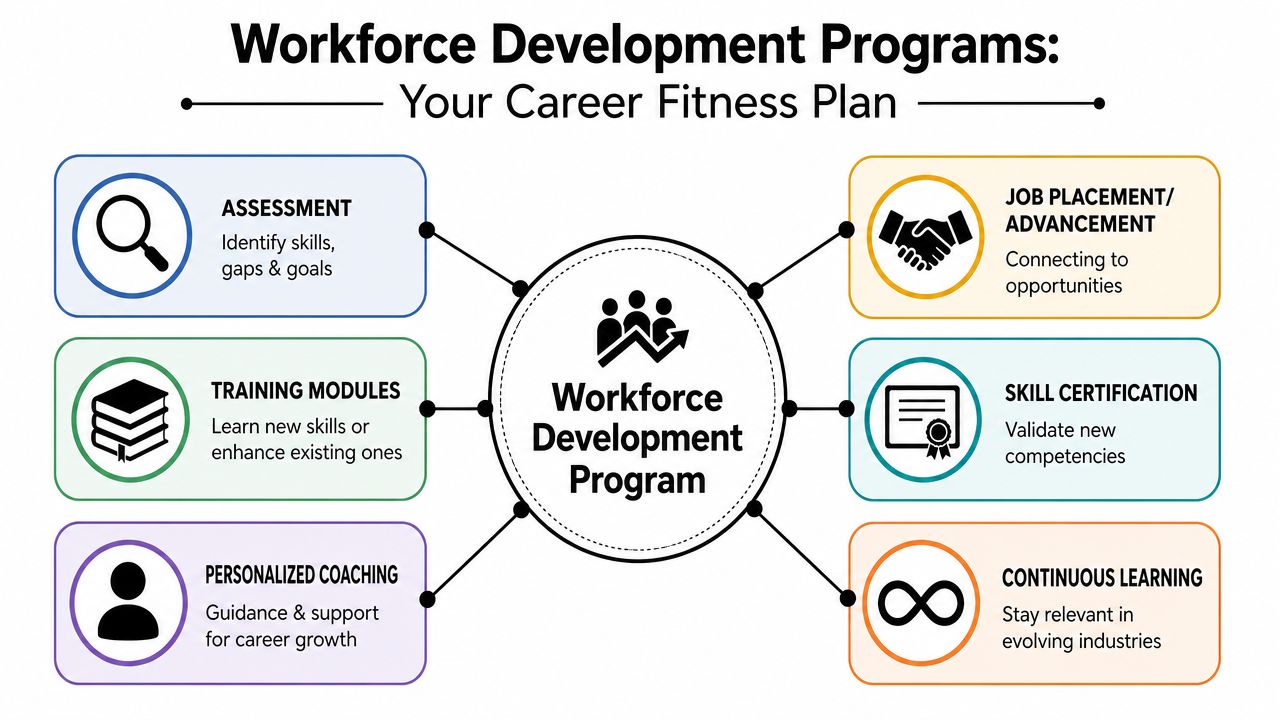
Workforce development programs are akin to a fitness plan for your career. A fitness plan assesses your current condition, identifies areas for improvement, and outlines the steps to reach your goals. Similarly, these programs apply this approach to learning and employment.
Your career fitness plan
A good programme usually includes a few core parts:
- Starting point check. You look at your current skills, qualifications, and goals.
- Learning that fills the gap. You study what's missing, whether that's English, maths, digital skills, or a higher qualification.
- Support from real people. Tutors, mentors, and study guidance help you keep going.
- A clear next step. The aim isn't just to learn for the sake of it. It's to move forward into better opportunities.
That's why these programmes feel practical. They aren't built around abstract theory. They're built around where you want life to go next.
They're not only for people already in big careers
Many adults hear the phrase and assume it's mainly for office workers on company training schemes. It isn't.
These programmes can help if you're:
| Situation | Helpful learning path |
|---|---|
| You left school with few qualifications | Functional Skills, GCSEs |
| You want university later in life | A Levels, Access to HE |
| You need confidence before changing career | Foundational courses with tutor support |
| You want a promotion | Regulated qualifications linked to progression |
Some adults need to start with the basics. That's not failure. It's foundation work. If your English or maths has held you back, improving those skills can open doors that once felt shut.
Practical rule: pick the shortest honest route to your goal, not the route that sounds most impressive.
Why this matters in the real world
In the UK, businesses deliver 19.6 million training sessions annually, yet one in 25 employees (4%) remains not fully proficient in their role, showing that lots of training activity still doesn't close real skill gaps. The same source says inefficient and compliance-heavy training costs UK businesses £416 million each year, with over 21 million working hours spent on basic and mandatory training that could be made more efficient, and nearly £415 million in annual training costs produce no clear return according to Skillcast's analysis of the UK workforce development gap.
That tells us something important. The right learning matters more than just more learning. Adults need training that leads somewhere useful, builds confidence, and connects clearly to better work.
How These Programs Create Brighter Futures
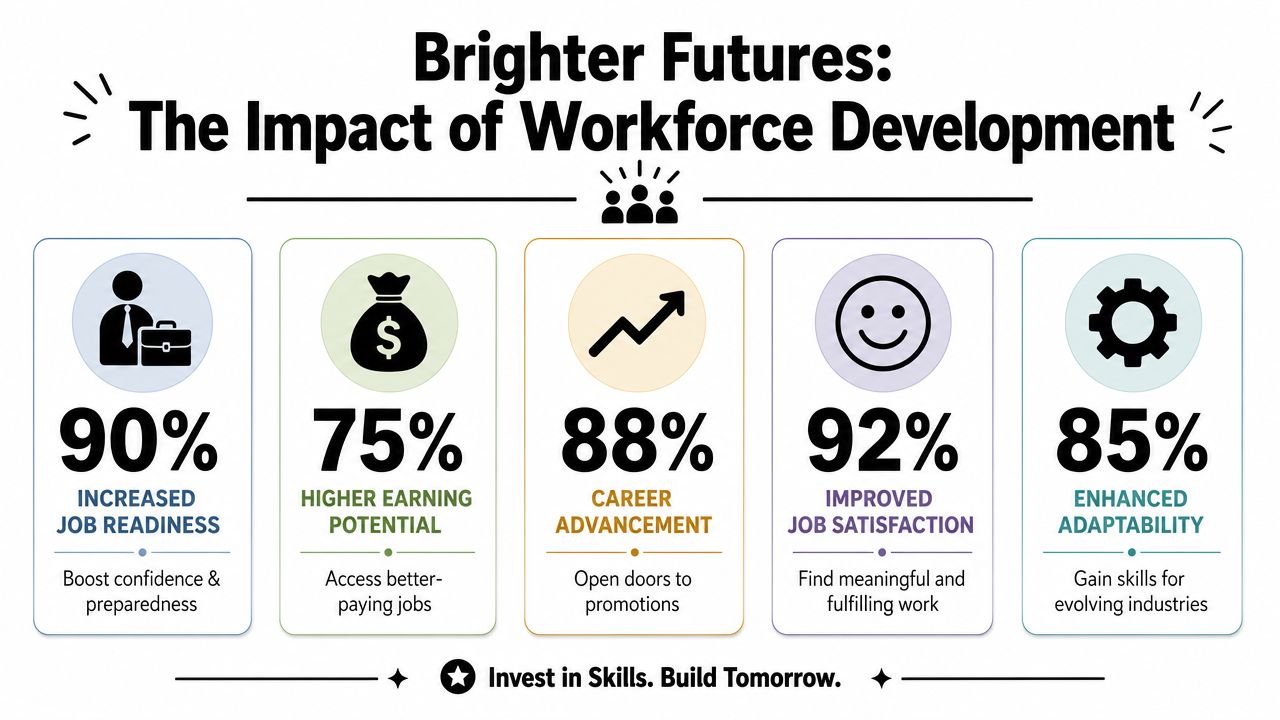
A better qualification can change your CV. It can also change how you walk into a room, how you speak about yourself, and what your family sees when they look at you.
That's why workforce development programs matter so much. They don't only prepare people for jobs. They help people rebuild belief.
Better income starts with stronger skills
Many adults return to learning because they need more financial breathing space. They want work that pays better, feels steadier, and offers room to grow.
That goal is realistic because the UK needs skilled people. Over one-third of all job vacancies in the UK in 2022 were due to skills shortages, a significant increase from previous years, according to the Skills England report on skills shortages and vacancies. When adults gain new qualifications, they put themselves in a stronger position to move into roles employers are struggling to fill.
That can mean more than a pay rise. It can mean less stress at home, more options for your children, and the relief of not feeling trapped.
To see how higher study can fit into that journey, many adults start by exploring practical routes into universities.
Here's a short video that captures the wider value of training and skills growth:
Confidence grows when you prove yourself right
Low confidence often comes from old stories. “I'm not academic.” “I left it too late.” “Other people can do this, but I can't.”
Studying gives you evidence against those stories.
You complete one assignment. Then another. You understand a topic that used to confuse you. You pass an exam you were scared to sit. Bit by bit, your self-image changes. You stop seeing yourself as someone who missed their chance and start seeing yourself as someone who followed through.
- Small wins matter. Finishing a module can be the first time in years you've felt proud of your own progress.
- Children notice the difference. They see you working steadily, not giving up, and taking your future seriously.
- Confidence spills into other areas. Many adults speak up more at work, apply for roles they used to avoid, and make decisions with more calm.
“You don't become confident before doing something hard. Confidence often arrives because you did something hard.”
Your family gains a role model
For many adult learners, this is the deepest reason of all. They want to make their family proud.
Not through perfection. Through persistence.
When your children see you studying, they learn that setbacks don't define a person. Effort does. They learn that growth is possible at any age. They learn that education isn't just something people do when they're young. It's something people use to build a life with purpose.
That example stays with them.
Finding the Right Learning Path for You
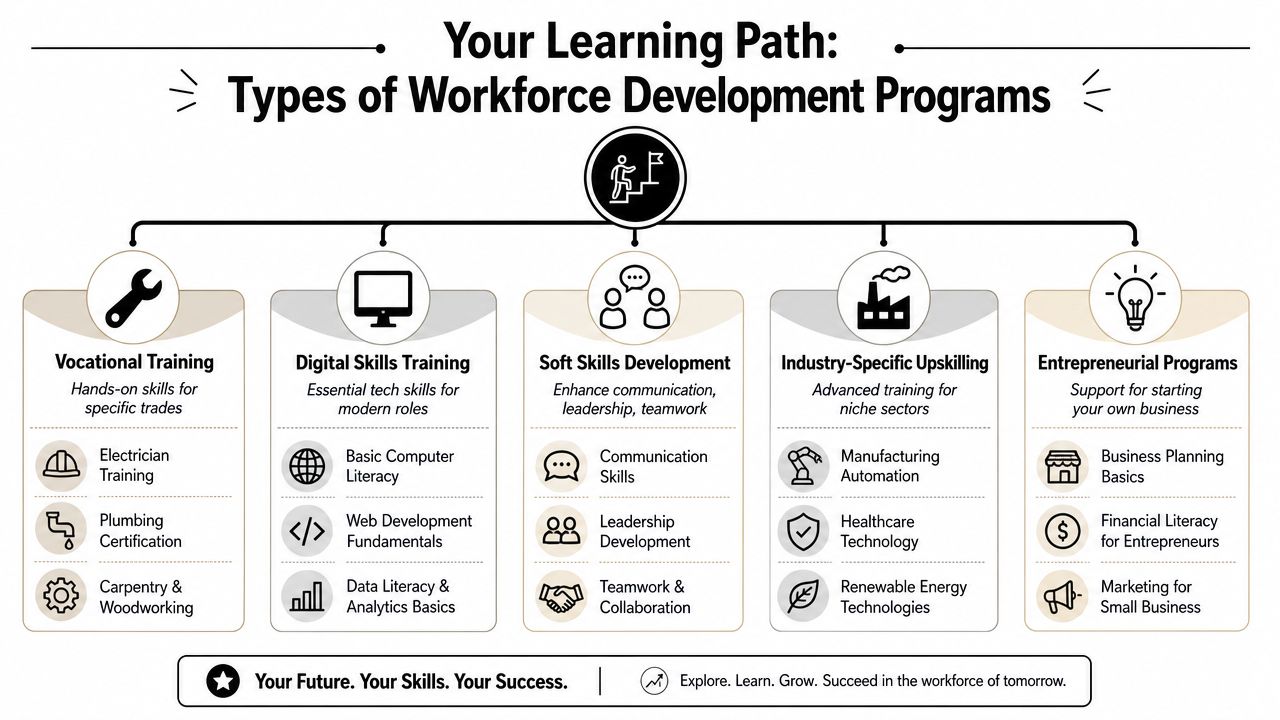
The right path depends on where you're starting, not on what anyone else is doing. Some adults need to rebuild from the ground up. Others already know their destination and just need the qualification that gets them there.
The good news is that there isn't one single route. There are several, and flexible online learning has made them easier to fit around work and family life.
If you need a strong foundation
For some learners, the right starting point is Functional Skills or GCSE-level study in English and maths. These qualifications can help with confidence, everyday life, job applications, and progression to higher study.
This route often suits adults who:
- Left school early
- Didn't get the grades they needed
- Want to feel more secure before moving up to the next level
Starting here can feel humbling. It can also be one of the wisest choices you make.
If you're aiming higher education or a career shift
If university is the long-term goal, A Levels and Access to Higher Education Diplomas are often key routes. They give adults a recognised path into degree study and into careers that need formal entry qualifications.
UK evidence shows that technical graduates holding qualifications like Higher National Diplomas or foundation degrees have stronger employment outcomes, indicating that regulated courses such as A Levels and Access to Higher Education diplomas are a critical path for adult learners to enter high-growth industries, as noted in HEPI's overview of the graduate technical workforce.
That matters if you're thinking about careers where qualifications carry real weight, such as health, education, business, technology, or public service.
Flexible learning fits real life
Adult learners often worry that education will take over the whole house. Good online study shouldn't work like that. It should fit around your life with structure, but also with breathing room.
A useful way to think about your options is this:
| Your situation | A path that may suit you |
|---|---|
| You need entry-level confidence | Functional Skills |
| You need recognised school-level qualifications | GCSEs |
| You need a standard route towards university | A Levels |
| You want a direct adult route into degree study | Access to HE Diploma |
Many adults prefer distance learning courses in the UK because they can study early in the morning, during lunch breaks, or after the children are asleep. That flexibility can turn education from “impossible” into manageable.
The best course is the one you can keep showing up for.
Your First Steps to Getting Started
Starting can feel confusing because every provider sounds positive on their website. What matters is whether the course is right for your goal and whether the support is strong enough to help you keep going when life gets busy.
That's especially important because not everyone can wait for help from work. In the UK, 48% of organisations have not provided any training to their employees in the last year, meaning millions of workers must take the initiative to gain the skills needed for career progression and confidence, according to Ciphr's employee training statistics.

What to look for in a provider
When you compare options, keep your eye on a few basics.
- Recognised qualifications. Make sure the course leads to something employers and universities understand and respect.
- Flexible structure. Check whether you can study around shifts, school runs, and family life.
- Real tutor support. A strong course should offer human help, not just log-in details.
- Clear progression. You should be able to see what comes after the course, whether that's work, promotion, or further study.
A provider should make the journey clearer, not more intimidating.
Questions worth asking before you enrol
Some questions can save you stress later. Write them down and ask directly.
Will this qualification help me reach my next goal?
If you want university, check entry requirements. If you want a promotion, check what your sector expects.How is the course delivered?
Find out how lessons, assignments, feedback, and exams work in practice.What support is there when I struggle?
Adult learners don't need judgement. They need guidance, patience, and clear answers.
A sensible check: if a provider makes support sound vague, ask for details. Who helps you, how often, and in what way?
Keep the first step small
You don't have to commit your whole future in one afternoon. Start by choosing a direction.
That might mean deciding whether you need foundation skills, school-level qualifications, or a university access route. Then compare providers carefully. Read course pages slowly. Make notes. Ask questions.
A steady start is often stronger than a dramatic one.
Real Stories of Transformation
One adult learner might be a parent in a low-paid role who always wanted to work in healthcare. She left school years ago and assumed university wasn't for people like her. At first, she worries that she's forgotten how to study. Her children see her revising at the table anyway.
She begins with a clear pathway, keeps going through doubt, and earns the qualification she needs to move forward. The biggest moment isn't only the result. It's the change in how she talks about herself. She no longer says, “I'm just trying.” She says, “I'm working towards my future.”
Another learner may already be employed but keeps missing out on progression because of one missing qualification, often maths or English. That can wear a person down. You start to feel that your effort doesn't count.
Then comes the pass. A result on paper, yes, but also relief. Pride. Proof.
What changes after success
The practical outcome might be a new role, a university place, or access to further study. The emotional outcome can be even bigger.
- Shame starts to lift. Old school memories lose their power.
- Family pride grows. Children and partners see the result of your hard work.
- Your future feels active. You're no longer waiting for life to improve by chance.
Success for adult learners often begins long before the certificate arrives. It begins when they stop ruling themselves out.
These stories are representative, but they're common because adult learners often bring something powerful to education. They know why they're there. They've lived enough life to understand what this chance means. That focus can carry them a long way.
Your Questions Answered
A few worries stop people from enrolling again and again. Most of them sound sensible on the surface, but they don't have to be the end of the story.
Am I too old to go back to learning
No. Adult learning is built for adults. In fact, the UK labour market has changed a lot over time. Employment rates for older workers have risen strongly, with the rate for those aged 50 to 64 increasing from 50.8% to 65% and for those aged 65 to 69 rising from 11.3% to 26% between 2000 and 2023, according to the OECD report on career mobility and longer working lives in the United Kingdom.
That tells a hopeful story. People are learning, working, changing direction, and staying active in the workforce later in life.
How can I fit study around children and work
You do it by choosing a course that respects your reality. Flexible online learning lets many adults study in shorter blocks and build a routine that fits around home life.
You don't need perfect days. You need a pattern you can repeat.
A simple weekly rhythm often helps:
- Pick fixed study times so you're not deciding from scratch every day
- Use small pockets of time for reading or revision
- Tell your family your goal so they understand why this matters
Are online qualifications respected
If the qualification is recognised and regulated, it can absolutely hold real value. What matters is the quality and status of the course, not whether you studied while sitting in a classroom or at your kitchen table.
What if I'm not academic
Many adults who say that are really saying something else. They mean they lost confidence, had a hard time at school, or never got proper support.
That's very different from lacking ability.
Is there really a point in retraining now
Yes. There is strong demand for better skills. Looking ahead, by 2030, an estimated 20% of the UK workforce, or 6.5 million people, will be significantly underskilled for their jobs, creating a major opportunity for adults who retrain and upskill to fill these in-demand roles, according to Oxford College's summary of UK skills gap statistics.
That's a projection, but it points in a clear direction. Skills will matter even more. Adults who act now give themselves more options later.
If you're ready to take that first step, Next Level Online College offers flexible online learning designed for adult learners across the UK. With recognised qualifications, supportive tutors, and clear routes from Functional Skills and GCSEs to A Levels and Access to HE Diplomas, it's a place where you can rebuild confidence, work towards university, and create a future that makes you and your family proud.