
Some evenings feel heavier than others. You've finished work, sorted tea, checked messages, maybe helped with homework, and then that old thought pops up again. “I'm capable of more, but I never got the qualifications.”
That feeling can stay with you for years. It can show up when you look at a job advert, when your child asks for help with schoolwork, or when you think about university and quickly talk yourself out of it. Not because you aren't clever. Because life got in the way, confidence took a knock, or school never brought out your best.
The good news is that your story doesn't end there.
A Functional Skills Level 2 online course can give you a real second chance. It fits around adult life in a way school never did. You can study from home, learn step by step, and build skills that matter in everyday life, work, and further study. More than that, you can prove something important to yourself. You can still do this.
Your Time to Shine Is Now
You might be the person who always puts everyone else first. The parent who makes sure the bills are paid, the uniforms are washed, and the family keeps moving. But somewhere underneath all that responsibility, there's still a part of you that wants more.
Maybe you want a better job. Maybe you want to train for something meaningful. Maybe you want to stop feeling nervous every time a form asks for English or maths. Those are real feelings, and they matter.
What matters just as much is this. You are not “too late”. You are not “not academic”. You are not stuck.
A fresh start feels different
Adult learners often carry old school memories like a weight. A teacher's comment. A disappointing result. A feeling of being left behind. When you return to learning as an adult, you don't come back as the same person. You come back with grit, life experience, and a reason.
That reason can be powerful.
- For your children: You want them to see that learning matters.
- For your future: You want access to work that pays better and feels worthwhile.
- For yourself: You want to feel proud when someone asks what you've achieved.
You don't need to be the person you were at school. You only need to be the person who is ready now.
A qualification isn't just a certificate. For many adults, it becomes proof that they can finish something important. That they can push through fear. That they can create a new example for the people watching them at home.
Why online study helps real life
Online learning suits busy lives. You can study in the morning before work, in the evening after the children are asleep, or at weekends when the house is quieter. That flexibility can make the difference between giving up before you begin and finally moving forward.
And when you start moving forward, something changes. You stop seeing education as a closed door. You start seeing it as a key in your own hand.
What Are Level 2 Functional Skills Really
The words can sound formal at first. Functional Skills Level 2 is simpler than it sounds.
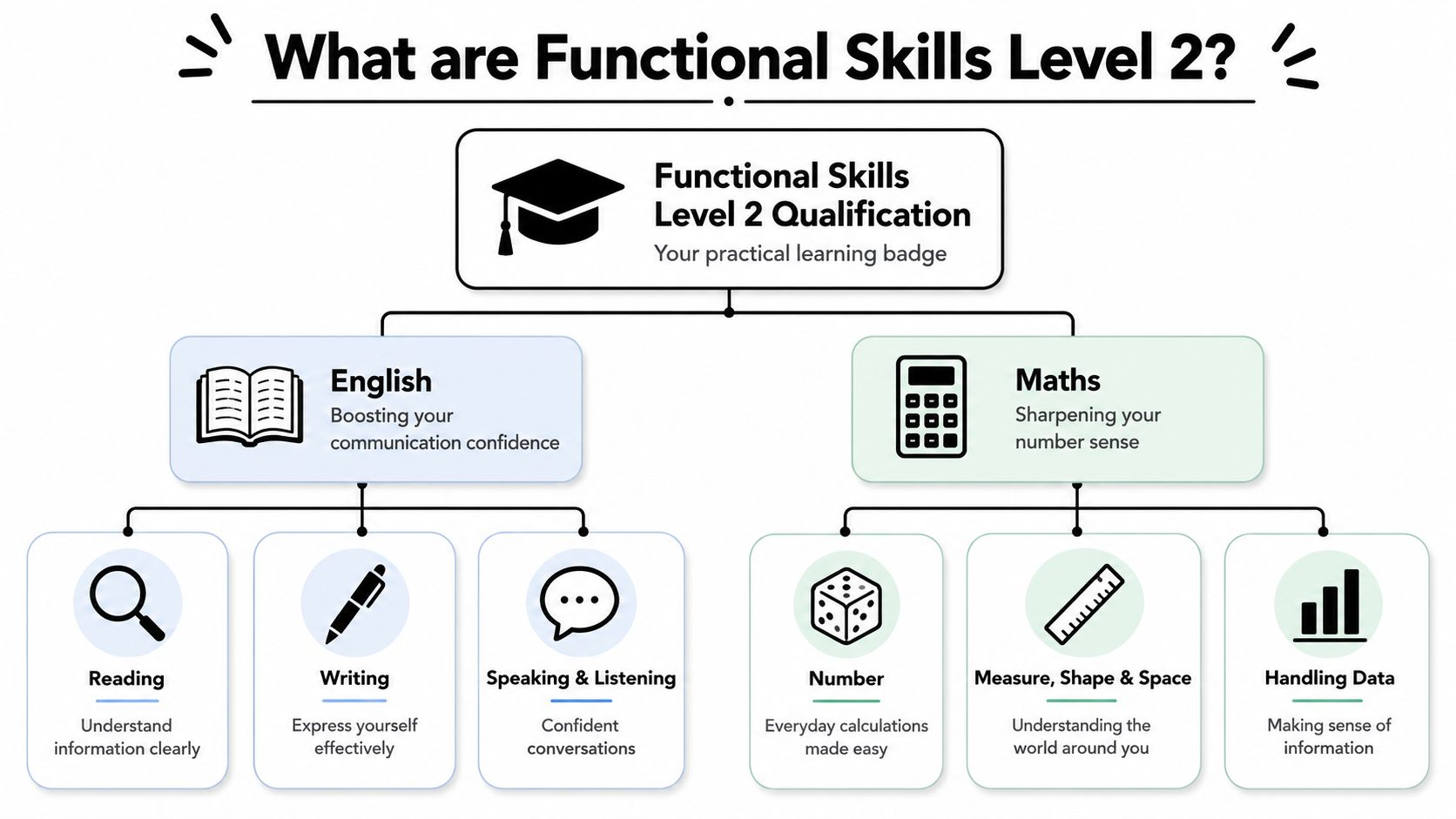
It means practical qualifications in subjects like English and maths that help you use these skills in real life. Filling in forms. Writing emails. Understanding numbers. Solving everyday problems. These aren't classroom-only skills. They're life skills.
Functional Skills Level 2 in English, Maths, and ICT is nationally recognised in the UK as equivalent to a GCSE grade 4 (C), which makes it an important benchmark for further education and many job routes, as explained in this guide to Functional Skills Level 2 equivalence in the UK. If you want a simple explanation of how this compares with school qualifications, this page on what Functional Skills Level 2 is equivalent to is useful.
What Level 2 means in plain English
Think of Level 2 as a strong, trusted standard. It tells employers, colleges, and training providers that you can handle the basics well. Not in a perfect textbook way, but in a practical, usable way.
That's why these qualifications matter so much to adults. They don't ask you to go back and relive school. They give you a new chance to show what you can do now.
| Part | What it means |
|---|---|
| Level 2 | A recognised standard similar to a GCSE pass at grade 4 (C) |
| Functional | Skills you use in daily life, work, and study |
| Online | Learning in a flexible way that fits around your life |
It's a fresh start, not a punishment
Many people worry that starting Functional Skills means admitting they failed before. It doesn't.
It means you're choosing a practical route forward.
For maths, learners are often relieved to hear that the assessment is designed in a structured way. The verified course information notes that there's no prior experience required, and the maths assessment is split into non-calculator and calculator sections in line with the qualification design already mentioned in the recognised overview above.
Simple truth: This qualification measures what you can do today, not who you were years ago.
That shift in mindset matters. Once you stop seeing study as a reminder of the past, it becomes something much more hopeful. It becomes evidence that you're building a future on your own terms.
What You Will Learn and Why It Matters
The best part of Functional Skills Level 2 online is that the learning links closely to normal life. You aren't studying for the sake of it. You're learning things you can use at home, at work, and when planning your next step.
For many adults, that makes learning feel less frightening. You can see why it matters.
Maths that helps in daily life
Maths isn't only about exams. It's about confidence.
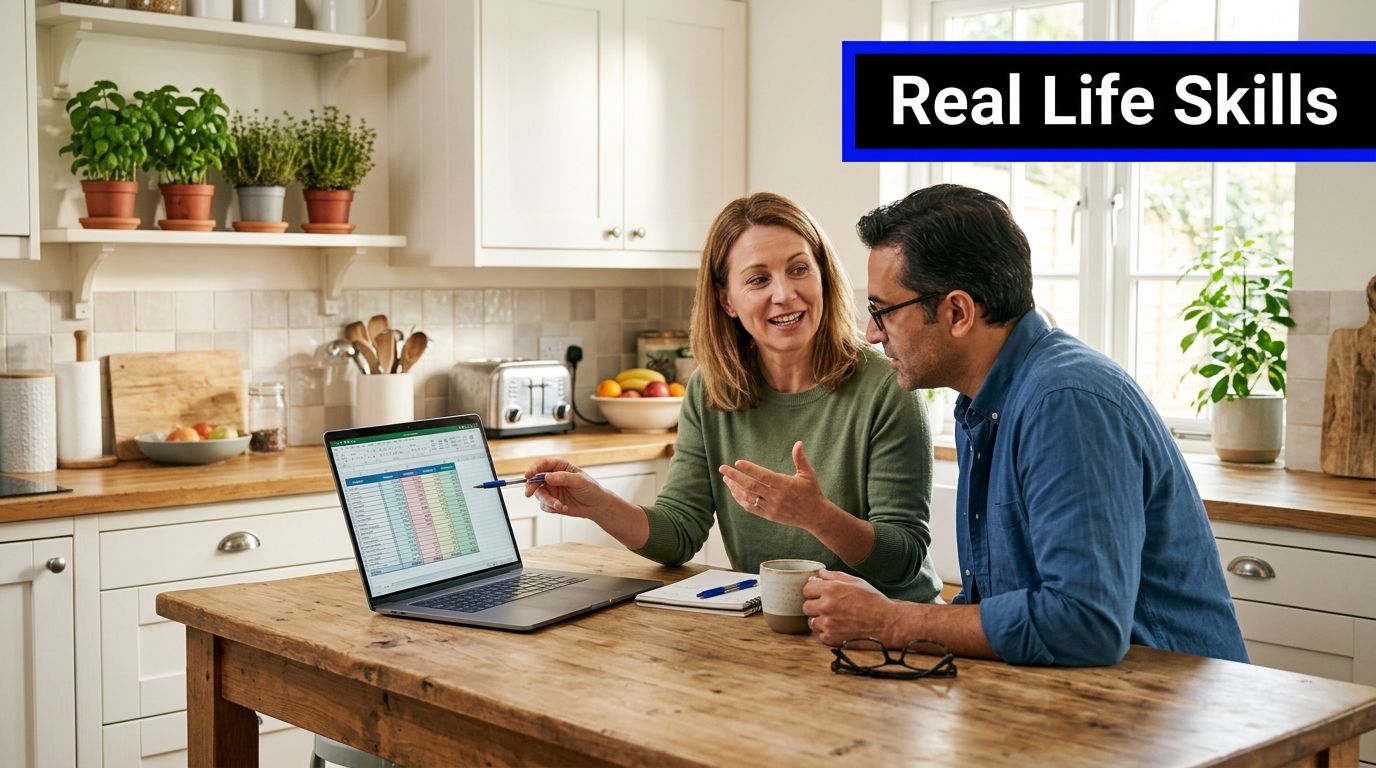
You might use these skills when checking a payslip, working out whether a discount is worth it, or planning a family budget before payday. You might use them to understand a bill, compare prices properly, or help your child with homework without feeling that knot of panic.
A typical online course gives you time to build that confidence gradually. In the UK, these courses typically require 3–6 months of flexible study to complete, and many CPD-accredited platforms offer 1-year access to interactive revision, practice questions, and topic-based learning, as described on this overview of online Functional Skills Maths Level 2 course structure. If maths is the subject you need most, this page on studying Functional Skills Maths online shows what that route can look like.
English that opens doors
English gives you a different kind of power. It helps you read instructions properly, write clearly, and speak with more confidence when something matters.
That might mean:
- Writing applications: Your CV, cover letter, or personal statement can sound clear and professional.
- Handling work communication: Emails become easier to write and easier to understand.
- Speaking up: You may feel calmer in meetings, appointments, or everyday conversations where you need to explain yourself well.
Skills that change how you see yourself
There's another benefit people don't always talk about. When you improve your English and maths, you often start trusting yourself more.
You stop avoiding certain tasks. You stop handing everything over to someone else. You begin to feel capable in rooms where you once felt small.
The qualification matters, but the confidence you build along the way changes everyday life too.
That's why Functional Skills Level 2 online can feel bigger than a course. It can become the point where you start saying yes to opportunities you used to rule out.
Taking Your Exam Online With No Stress
The word “exam” can bring back a lot of old fear. That's understandable. Adult learners often aren't scared of learning itself. They're scared of freezing on the day, travelling somewhere unfamiliar, or dealing with a process that doesn't fit family life.
That's why exam arrangements matter so much.
The hidden problem many learners don't expect
A lot of course pages talk about online study, but the full exam journey is often where people get caught out. In practice, most providers require in-person exam attendance, which can become a major barrier if you have mobility needs, childcare duties, or live far from a centre. The same verified source also notes that a fully remote exam journey is missing from 80% of online offerings, which is why checking the exam process early matters so much, as discussed in this article on exam access barriers for adult Functional Skills learners. If you're comparing options, look carefully at how the Functional Skills test process works online.
That point is easy to miss when you're new to all this. “Online” doesn't always mean every part is handled in a way that suits remote learners.
What a lower-stress exam journey looks like
A supportive exam setup should feel clear from the start. You should know:
- How the exam is booked
- Where you'll take it
- What technology you need
- What support is available if you're unsure
When those details are explained early, your brain can relax. You're not dealing with nasty surprises at the end of your course.
Practical rule: Before you enrol, ask one simple question. “Can I complete the whole exam journey in a way that works for my location and responsibilities?”
That question saves stress. It also helps you separate genuine flexibility from marketing language.
A short video can also make the process feel more human and less mysterious.
Why home matters
When learners can take assessments in a familiar setting, many feel calmer. You know where everything is. You aren't rushing for transport. You aren't trying to settle your nerves in a waiting room with strangers.
That doesn't remove all nerves, of course. It just removes the extra pressure that shouldn't be there in the first place.
And that's the main goal. Not to pretend exams are fun, but to make them manageable. Once the process feels manageable, you're far more likely to keep going and finish strong.
How To Fit Your Studies Into Your Life
Adult life rarely gives you a perfect empty schedule. There's work, family, appointments, tiredness, and all the little things that fill a week before you've even noticed. That's why your study plan needs to fit your life, not fight against it.
The most helpful approach is a realistic one.
Start small and stay steady
You don't need to become a full-time student overnight. A short study session done regularly is often better than a grand plan that leaves you exhausted.
Try building your week around moments that already exist:
- Early mornings: Some learners like quiet study before the house wakes up.
- Lunch breaks: A short revision task can be enough to keep momentum going.
- Evenings: Even a focused session after dinner can move you forward.
- Weekends: A longer catch-up block can help if weekdays are hectic.
A simple routine is easier to keep. And when a routine becomes normal, studying starts to feel less like a struggle and more like part of your life.
Make your plan work for your energy
Not every task needs the same level of focus. On tired days, you might review notes or do practice questions. On better days, you can tackle the trickier topics.
This kind of planning helps because adult learners often judge themselves too harshly. If one evening doesn't go well, that doesn't mean you're failing. It means you're human.
| Type of day | Good study choice |
|---|---|
| Low-energy day | Read notes, watch a lesson, review mistakes |
| Average day | Complete practice questions, write short answers |
| Focused day | Tackle a harder topic, sit a mock-style task |
Missing one study session doesn't end your progress. Starting again the next day is what counts.
Don't try to do it all alone
Online learning shouldn't feel lonely. The best support makes a big difference, especially when confidence is low.
Look for help like this:
- Tutor guidance: Someone who can explain a topic in simple language.
- Clear feedback: You need to know what to improve, not just whether something is wrong.
- Pastoral support: Encouragement matters when life gets busy or confidence dips.
- A clear pathway: It helps when your next step feels visible instead of confusing.
If money is on your mind, ask direct questions before you commit. Ask what is included, how long access lasts, what support you get, and whether there are finance options. Clarity reduces stress.
A good course should leave you feeling supported, not left to figure everything out in silence.
The Future You Will Build For Your Family
A qualification can change more than your CV. It can change the way your family sees what's possible.
Children notice effort. They notice when you stick with something hard. They notice when you sit down to study instead of giving up on yourself. That example stays with them.
A bigger future starts with one decision
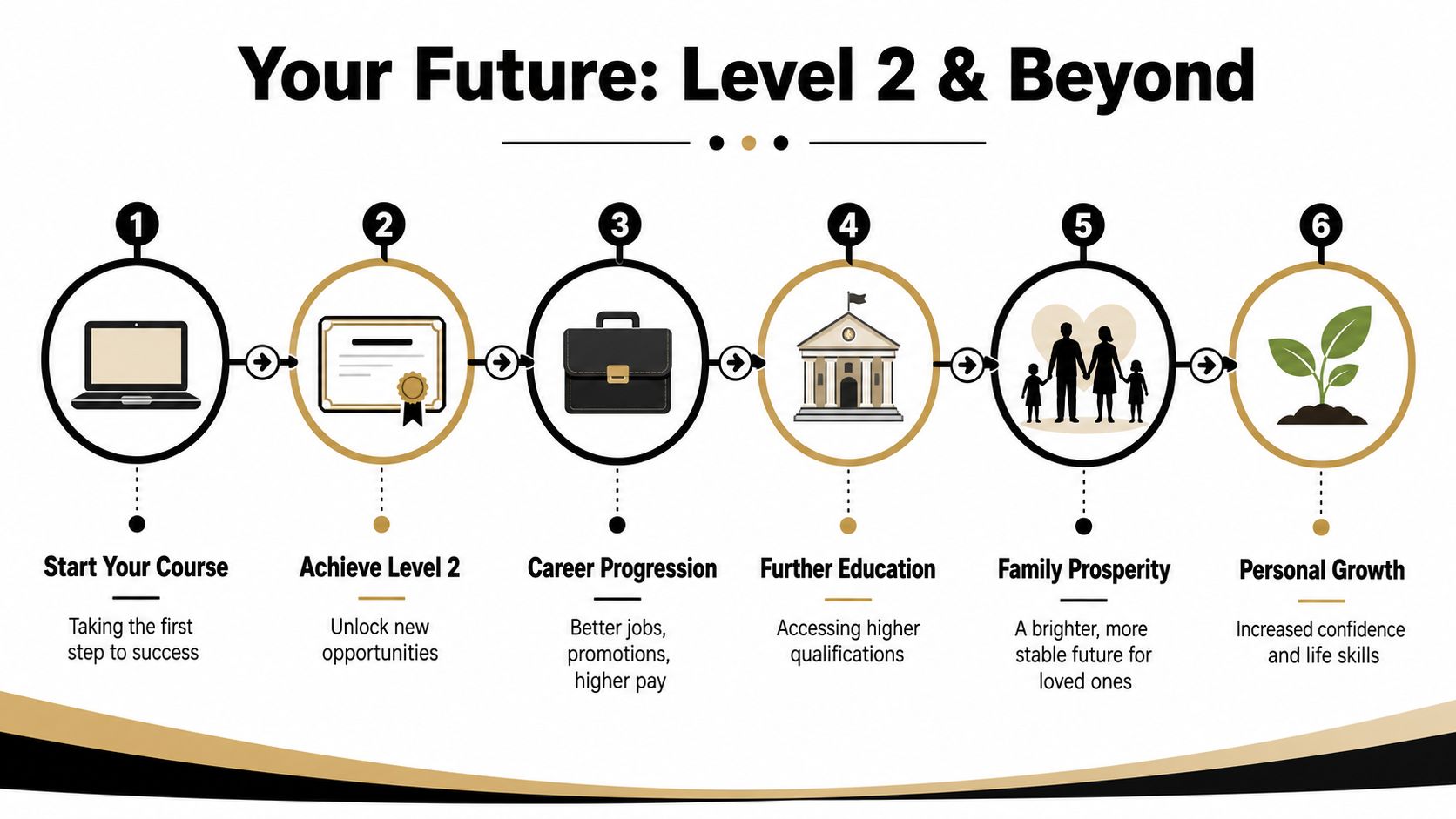
For some adults, passing Level 2 is the step that leads to a college course, a new training route, or university later on. For others, it means finally applying for jobs they used to scroll past because they didn't meet the entry requirements.
That's why this choice matters so much. It isn't only about now. It's about what comes next.
Official figures show that over 25,000 adult learners enrol in foundational English and maths courses each year to improve their grades for higher education access, according to the Department for Education statistics on adult Functional Skills participation. That matters because it shows you're not making a strange choice. You're joining thousands of other adults who have decided their future is worth working for.
What this can mean in real life
The results can be highly personal.
- More options at work: You may qualify for roles, training, or promotion paths that were closed before.
- A route into further study: Many adults use Level 2 as a step towards bigger educational goals.
- A stronger voice at home: You may feel more able to help with homework, read official letters, and make decisions with confidence.
Pride grows in quiet moments
Passing doesn't only feel good on certificate day. It shows up in smaller moments too.
It's in the way you answer when someone asks what you're studying. It's in the first form you fill out without asking for help. It's in your child seeing you revise and realising that learning doesn't stop when school ends.
Your family doesn't just benefit from the qualification. They benefit from the stronger, more hopeful version of you that grows while earning it.
That kind of progress can ripple through a home for years.
Your Simple Next Steps To Get Started
By this point, you may still feel nervous. That's normal. Brave decisions often come with nerves attached.
What matters is that you don't let those nerves make the decision for you.
Questions many adult learners ask
What if I fail?
You might not. For maths, the global pass rate is 61.3% across the UK, which means over 60 out of every 100 adult learners succeed, based on this summary of Functional Skills pass rates in the UK. That should give you perspective. This is a real challenge, but it is also a realistic goal.
How hard is the pass mark?
For Functional Skills Maths Level 2, learners need between 50% and 60% of the total marks, and one verified explanation notes that City & Guilds requires 60% to pass, as outlined in this guide to the Functional Skills Maths Level 2 pass mark. You don't need perfection. You need preparation.
Am I too old to learn?
No. Adult learners often do better than they expect because they have a reason for studying. Purpose can carry you through the days when motivation dips.
What if my confidence is low?
Low confidence doesn't mean low ability. It often means you've been carrying old doubts for a long time. Confidence usually grows after you begin, not before.
Three gentle steps
Choose the subject you need most
Start with English, maths, or both, depending on your goal.Check the study and exam setup carefully
Make sure the learning format and exam process suit your life.Commit to one small study block
Don't wait for the perfect week. Begin with one manageable session and build from there.
The main thing is to start. Not perfectly. Just honestly.
If you're ready to turn determination into action, Next Level Online College offers flexible online courses for adult learners who want recognised qualifications, caring support, and a realistic path back into education. If you want a fresh start that fits around work and family life, this could be the moment to take it.