

You're staring at the laptop after a long day, trying to work out if studying is possible with work, children, money worries, and everything else going on. You want a better future, maybe a place at university one day, but you also don't want to start something you can't finish. That's where pastoral support matters, because it gives adult learners a steady kind of help that makes study feel manageable, not overwhelming.
In UK education, pastoral support means the support around learning that helps you stay safe, confident, and able to keep going when life gets in the way. It's not therapy, and it's not just a friendly chat. It's a structured system that looks after your total welfare, a phrase linked with Marland's definition, and it protects physical and emotional wellbeing so personal difficulties don't block progress, attendance, or success. The Chartered College explanation of pastoral care and UK school guidance on pastoral support both show that this work is part of education itself, not an extra.
For adult learners, that matters a lot. If you've been out of education for years, you might need encouragement, a clear plan, someone to check in, and a safe place to say, “I'm struggling.” That is exactly the kind of support many people need before confidence can grow again.
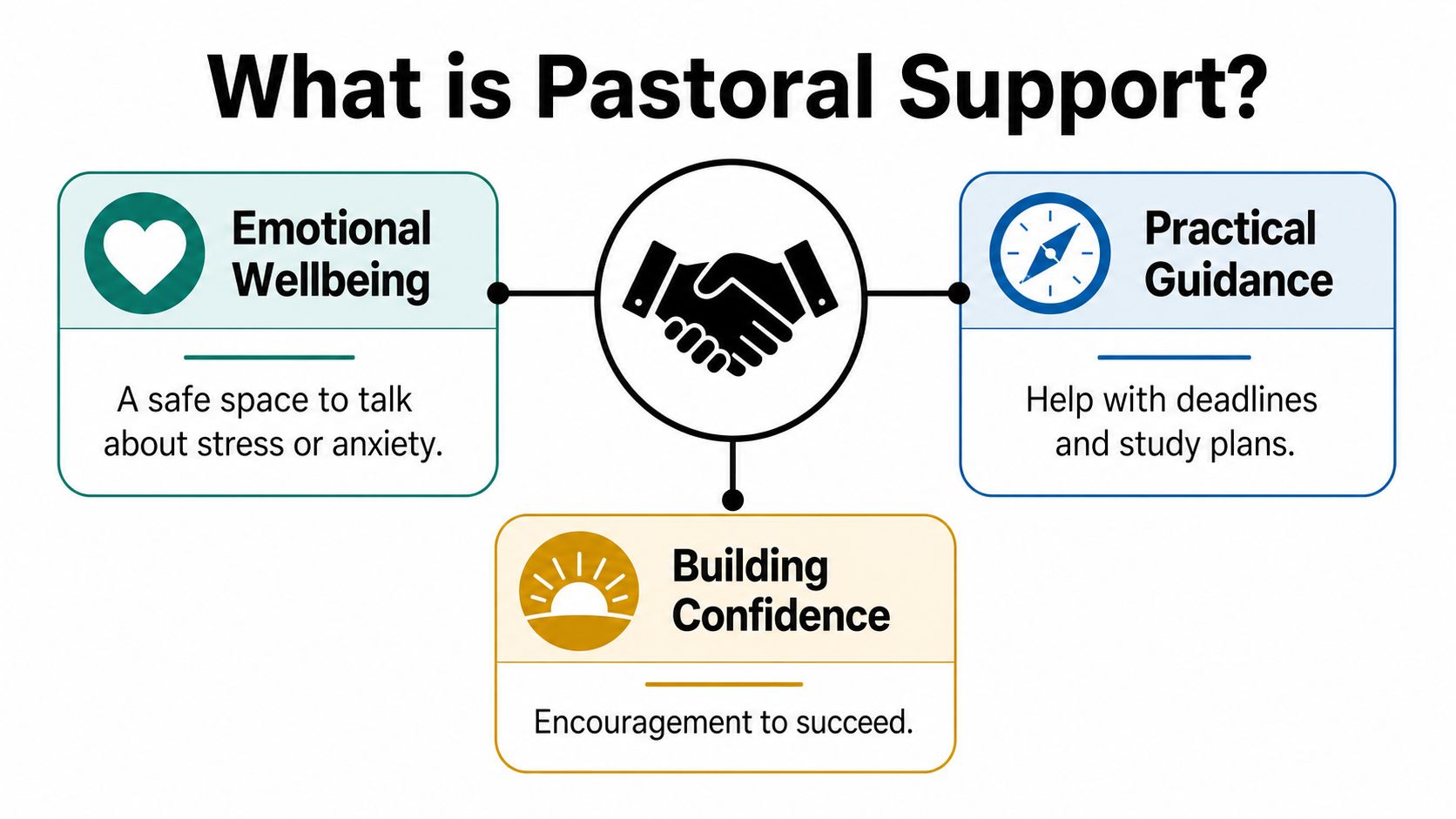
A simple way to think about it is this. Pastoral support keeps you connected to education when life feels messy. It helps you stay steady long enough to learn, progress, and finish.
If you're looking at courses and wondering whether support is built in, a useful place to start is adult education courses online. The right provider should make support feel clear, human, and easy to access.
What Pastoral Support Means for Adult Learners
A mum opens her course portal at night after the children are asleep. She wants to study, but work, house jobs, and the worry of falling behind are already on her mind before she has even started. That is the moment when pastoral support changes the experience from something fragile into something manageable.
More than kindness, it is a system
Pastoral support is not just someone saying, “Let me know if you need anything.” It is a planned support structure that helps learners deal with the pressures that sit outside the lesson itself. In schools, guidance describes pastoral support as the provision a school makes for pupils' physical and emotional welfare, and as a link between school and home that helps families through difficult periods while also removing barriers for vulnerable children so they can access education. UK school pastoral support guidance
For adults, the same idea becomes much more practical. It means someone notices when you are drifting, struggling, or losing confidence, then helps you find a way forward. That support might come from a named tutor, a mentor, a wellbeing adviser, or a clear route to the right help.
Practical rule: if a provider only talks about lessons but never explains how it helps when life gets hard, the support offer is probably thin.
Pastoral care has long been described as looking after the total welfare of the pupil, and later commentary says it can support academic outcomes too. The Chartered College's overview also points to practical purposes such as improving the learner's experience, supporting teaching and learning, and preparing learners for their next steps. The Chartered College's overview That language may sound formal, but the meaning is simple. Good pastoral support helps you feel settled enough to learn, and supported enough to keep going.
Why this matters if you are coming back after a break
Adults often carry more than school-aged learners do. There may be childcare, shift work, caring responsibilities, health worries, or the fear that you have “left it too late”. Pastoral support does not remove those pressures, but it can stop them from turning into reasons to quit.
A good provider treats your confidence as part of your learning, not something separate from it. That is why support should feel steady, respectful, and organised. You deserve more than a login and a deadline.
If you are looking at courses and want to see how support is built in, start with adult education courses online. The right provider should make the support offer clear, human, and easy to access.
The Four Key Parts of Pastoral Support
Good pastoral support works because it is not a single action. It is a set of practical supports that work together, each one easing a different pressure on the learner. When one part is missing, adults can still feel stuck, even if the course itself is well designed.
1. Emotional and wellbeing support
This is often the first part people notice. It gives learners a place to speak about stress, nerves, self-doubt, or low motivation without feeling judged. Barna's research on pastor support systems describes how isolation and weak support can leave people feeling worn down, and that helps explain why emotional support matters so much for learners who are trying to keep going.
For an adult learner, this may look like a tutor noticing that you have gone quiet and sending a kind check-in. It may also mean a few encouraging words after a poor assessment result, so one setback does not become a reason to stop. A small, timely message can work like a handrail on a steep path. It does not do the climbing for you, but it helps you keep your footing.
2. Mentoring
Mentoring means having a named person who understands your situation and checks in regularly. That person does not need to solve every problem. They do need to know your goals, your pace, and the pressures around you.
A learner returning after years away from education may need someone to say, “You are on track,” or “Let us break this into smaller steps.” That steady contact can make it easier to speak up early, rather than sitting with worries until they grow. It gives the learner a fixed point to return to, which matters when study is happening around work, family, and everything else life brings.
3. Academic guidance
This part helps with deadlines, study habits, and understanding what coursework is asking for. It is pastoral because it removes barriers that get in the way of learning, not because it replaces subject teaching.
A parent who studies after work might need help building a realistic study plan. Another learner may need support making sense of feedback so they can improve instead of feeling embarrassed. For adult online learners, this kind of guidance can also make home study feel more manageable, especially when the day is already full and concentration is thin. Support for studies at home becomes much easier to use when expectations are clear and the next step is broken down into plain language.
4. Safeguarding and referrals
Pastoral support also has boundaries. It is relationship-based and non-clinical, so it is not the same as therapy. If someone shares serious mental health concerns, financial crisis, or caring pressures that need specialist help, a good provider should point them to the right professionals or services.
Strong support feels safe. The learner is listened to, and they are also directed to the right place when the issue sits outside what the course team can handle. That is part of safeguarding in education, and it helps adults feel taken seriously without being left to manage everything alone.
Pastoral Support in Action for Online Adult Learners
A woman returns to study after years away from education. She can read the course page, but online assessments make her stomach tighten because she keeps thinking she will get everything wrong. Another learner is balancing two children, a job, and evening study, and he keeps missing his own deadlines because there is never a quiet hour.

These are the moments when pastoral support makes a practical difference. It gives people a route back in when confidence, time, or earlier experiences have made study feel far away. Support for studying at home matters here because online learning can be flexible, but flexibility still needs human support to work well.
The first learner may get a regular check-in before each assessment, not just after things go wrong. That conversation can calm panic, break tasks into smaller parts, and remind her that progress matters more than perfection. The second learner may need deadline adjustments or a fresh study plan that fits around school runs and work shifts, because a rigid timetable can quickly turn into a barrier.
A good tutor or support team also watches for the small signs that someone is slipping behind. A missed log-in, a late reply, or a short message that sounds unsure can all be early clues that a learner needs contact before they disengage. For adult online learners, that early response can make study feel manageable again, especially when the day is already full and concentration is thin.
Support works best when it arrives early, before stress turns into silence.
A third learner may carry old school memories that still sting. Maybe teachers used to dismiss them, or maybe they were told they were “not academic”. In that case, pastoral support can rebuild trust slowly, with patient feedback, encouragement, and small wins that show learning is possible again.
The boundary with mental health support still matters. Pastoral support can be warm, human, and reassuring, but it is not a substitute for clinical care. If a learner needs professional help, the right response is to refer them to the right service rather than pretend education staff can carry everything alone.
That honesty builds confidence. Adult learners usually notice when a provider is being clear and when it is being vague.
Benefits and Signs of Effective Pastoral Support
When pastoral support is working well, adult learners usually feel steadier, less cut off, and more able to carry on. That matters because isolation can wear down confidence long before a deadline is missed or a course is abandoned. For someone returning to study after a break, the benefit is practical, not abstract. Support that is easy to reach helps study fit around work, family, and everything else life keeps throwing up.
Strong pastoral support gives learners a clear path through moments that might otherwise feel too big. It can make a course feel safer, more personal, and more achievable, especially when an adult learner is balancing several pressures at once. The difference often shows up in simple ways, like asking for help sooner, keeping up with tasks, and feeling able to continue instead of dropping away.
What good support gives you
Good pastoral support helps you stay in education when life gets complicated. It works a bit like a handrail on a steep set of stairs. You still have to climb, but you have something steady to hold when the steps feel harder than expected. For adult learners, that can be the difference between stopping and taking the next step.
It also protects momentum. Once a learner feels seen and taken seriously, they are more likely to attend, submit work, and keep believing that progress is still possible. That matters for adults who want to improve their prospects, earn more, and show their children that returning to study is possible, even after a long break.
What to look for in a provider
A provider with genuine pastoral support makes that support easy to find. You should not have to guess where to go, or worry that asking for help will be a hassle. Look for these signs:
- Responsive communication. You should know who to contact and how quickly help is likely to come.
- Clear access to help. There should be a named route for wellbeing, academic, or practical concerns.
- Regular check-ins. Support should be planned, not random or only offered after a problem has grown.
- A safe, non-judgemental tone. You should feel able to say you are struggling without being made to feel small.
A provider should also notice when a learner starts to fade from view. A missed log-in, a late reply, or a message that sounds uncertain can all be early signs that someone needs contact before they disengage. That kind of early response keeps small problems from becoming bigger ones. For adults studying online, it can be the difference between feeling stuck and feeling able to continue.
Good question to ask: who notices if I start slipping behind, and what happens next?
If you want to see what that kind of support looks like in practice, expert tutor support should feel clear, personal, and easy to access. Learners should know there is a route for help before stress turns into silence. That is what makes pastoral support more than a nice idea. It becomes part of how a learner stays on track.
How Next Level Online College Delivers Pastoral Support
Next Level Online College, part of the Cambridge Online Education Ltd group, builds dedicated academic and pastoral support into its online courses. That means learners are not left to figure everything out alone. They get support from experienced subject specialists, mentors, and wellbeing advisors, which matters for adults who are fitting study around work, family, and real life.
The college's approach is practical. Learners receive a named contact, regular progress reviews, and guidance that is shaped around what they can manage. That is important because adults do not usually need vague encouragement, they need clear next steps, steady communication, and help that respects their timetable.
The college also has over 25 years' experience supporting adult returners to education. That experience shows in the way it focuses on confidence-building, motivation, and realistic progress. For someone who wants to move from Functional Skills to GCSEs, then A Levels or an Access to Higher Education diploma, that kind of support can make the whole pathway feel possible rather than intimidating.
If you want support that fits around home life as well as study goals, expert tutor support is the kind of feature worth looking for. The key point is simple. Good pastoral support should help you keep moving, even when your week is busy and unpredictable.
For adult learners, that can be life-changing. It gives you a way to study without having to pretend that work, children, or money worries do not exist.
Your Next Steps Toward Success
You do not need to have perfect confidence before you start. You just need the right support around you, because pastoral support exists to remove the barriers that make learning feel out of reach. That is how many adults move from feeling stuck to feeling proud of themselves again.
Start by naming your biggest barrier right now. It might be time, fear, memory, childcare, money, or the worry that you've been away from study for too long. Once you know that, you can look for a provider that answers that problem clearly instead of hoping it goes away.
Then read course information closely. Ask yourself whether the provider explains who supports you, how often they check in, and what happens if you struggle. If that information is hard to find, the support may not be strong enough for what you need.
Finally, take the first step. Reaching out is not a sign that you're weak, it is a sign that you're serious about your future. You can become the person your children look up to, open the door to better work, and move towards a life that feels bigger than survival.
Next Level Online College offers flexible online study with dedicated pastoral support, expert tutors, and clear progression routes that are built for adult learners. If you're ready to study with a provider that understands real life, visit Next Level Online College and see how the right support can help you move forward with confidence.