
You may be standing in a stockroom after a long shift, checking tomorrow's rota while thinking about school runs, bills and the children who need your attention. A quiet question keeps returning: could you really study again and move into retail management, or are you too rusty, too busy or too far behind?
That worry is common, but your experience already gives you a strong starting point. Courses on retail management can turn everyday knowledge of customers, products and busy shifts into recognised skills for supervising people, planning operations and making better business decisions. They can also help you become the person your children see working towards a goal, even when life feels full.
Why Retail Management Courses Could Change Your Life
A busy shift ends, but the questions continue. Could you supervise a team, earn more and show your family what steady progress looks like? If you feel rusty after time away from study, that concern is understandable. A retail management course gives you a small, practical route back into learning.
Retail can lead from shop-floor work to team leader, supervisor, department manager and store manager. A qualification cannot replace reliability or effort, but it can organise what you already know and give employers clearer evidence that you are ready for greater responsibility.
UK retail workers have often had limited access to higher-level qualifications. The government retail skills evidence report found that 78% of retail vocational qualifications were below Level 4, while 22% of retail workers held a Level 4 or higher qualification, according to the government retail skills evidence report. The figures point to a practical opportunity: study can add management knowledge where workplace experience leaves gaps.
A useful first thought: you aren't starting from nothing. You're giving names, structure and evidence to skills you've already practised.
You may practise planning rotas, coaching colleagues, reading sales figures, reducing stock problems and responding to complaints. These skills can support applications for supervisory duties and roles with broader responsibility. No course promises a particular salary, yet stronger evidence can widen the jobs you can credibly pursue and improve your earning potential.
Your progress can matter at home too. Children may see a parent return to study, keep going through uncertainty and build a future with greater choice. That example can create family pride without requiring one enormous leap. Begin by choosing the next manageable step.
Understanding the Levels and Qualifications Available
UK qualifications are structured as a ladder, so you can choose a suitable entry point, pause for work or family commitments, and return to study later. The right level depends on the responsibility you want to take on, not on how long you have been away from education.
At Level 2, short certificates can support an early move towards supervision. They introduce retail operations, customer service and basic workplace responsibilities. Level 3 diplomas cover wider duties, including team supervision, visual merchandising, stock control and daily management. A regulated Level 3 Diploma in Retail Skills (Management) has 199 guided learning hours and 430 total qualification time, according to its official learning aim details.
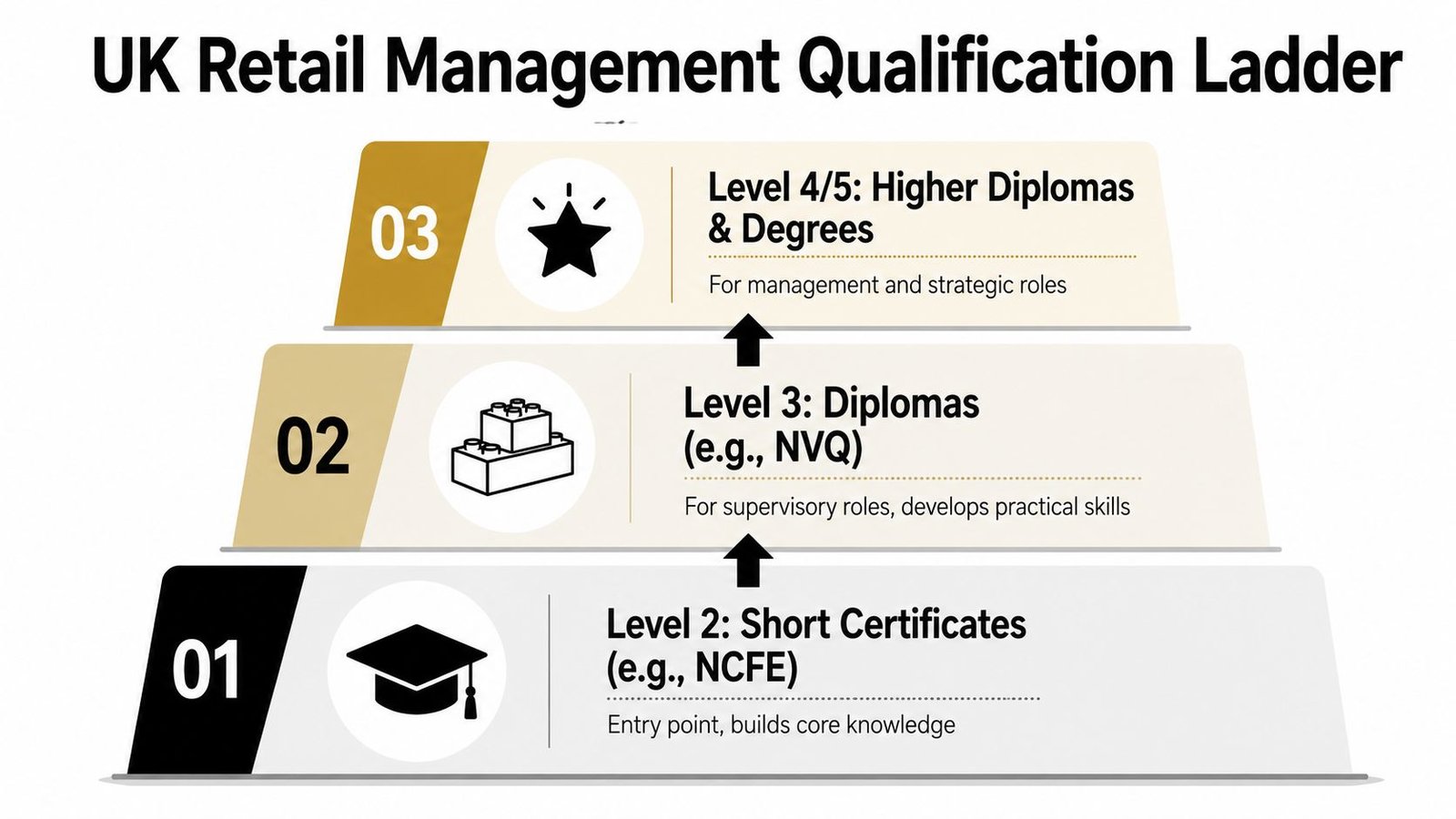
Choosing the step that matches your goal
Levels 4 and 5 include higher national certificates, higher national diplomas and foundation degrees. They can suit assistant managers, deputy managers and learners preparing for broader operational duties. SQA's HND in Retail Management is positioned at SCQF Level 8 and covers store design, marketing, consumer buying behaviour and management.
Level 6 can include undergraduate degrees in retail or business management. Level 7 can include postgraduate certificates, MBAs and senior-leadership apprenticeships. Some academic progression routes can reach Level 8.
Short CPD courses, evening workshops and weekend intensives offer a smaller starting point when a full qualification feels daunting. Reviewing accredited online course options can help you compare recognised routes before committing.
Your route might begin with a certificate, continue to a diploma and later lead to higher study. Each completed stage can strengthen your confidence, show your family that progress is possible and support applications for roles with greater earning potential.
How Online and Part-Time Study Works
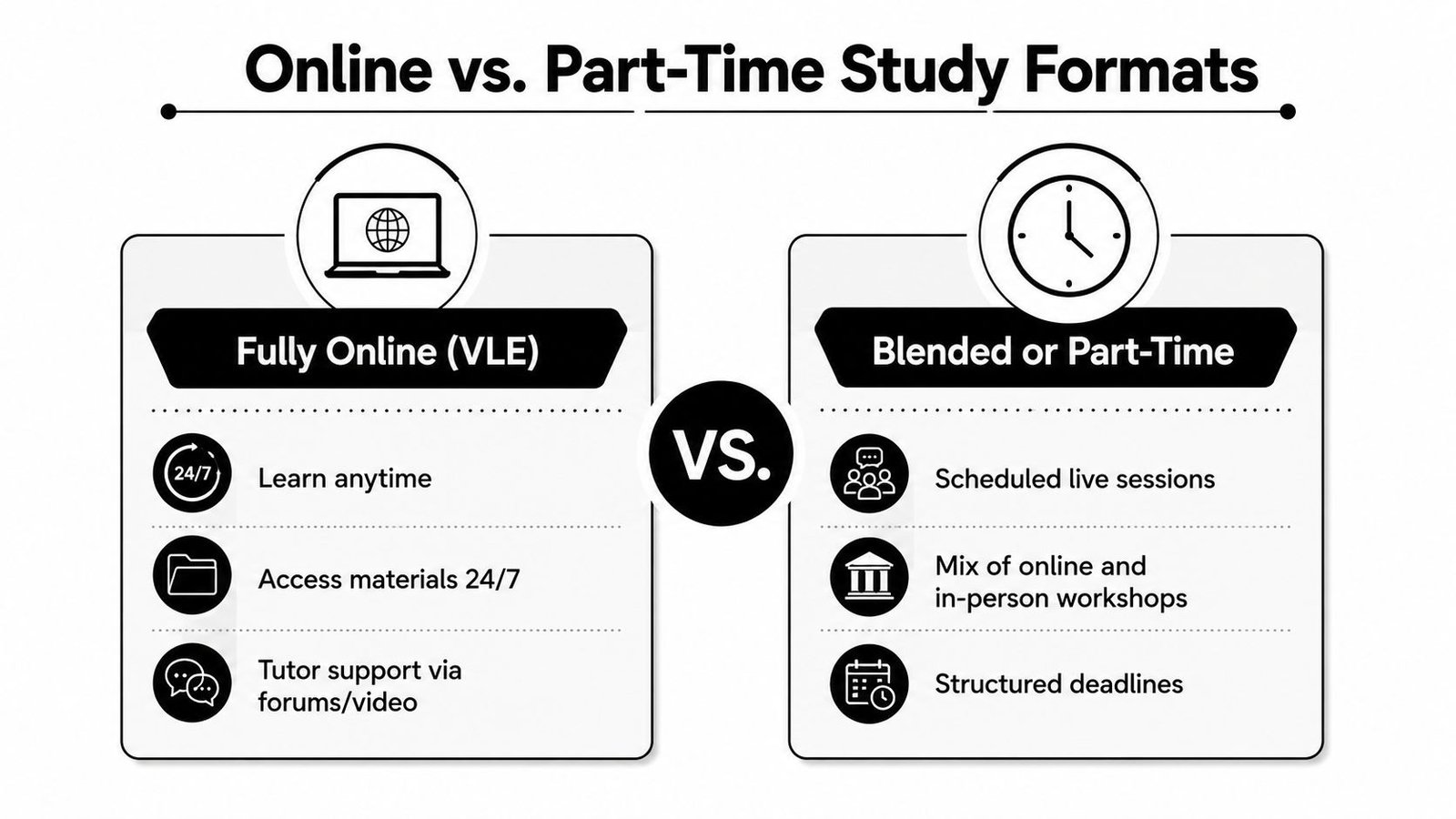
Starting online study can feel unfamiliar, especially after time away from formal education. A virtual learning environment, or VLE, works like a course folder that stays open online. You log in to find learning materials, watch short lessons, read a case study and submit tasks by agreed deadlines.
Part-time study usually means protecting six to twelve hours a week over six to twelve months, depending on the course level and provider. Treat that time like a work shift or a family appointment. One evening can be for reading, another for writing, and a short weekend session for checking your work.
Start with one: put one weekly study session in your diary before you enrol. If that time feels possible, you have useful evidence that part-time learning could fit.
Fully online learning gives you more control over when you study. Blended learning combines online lessons with occasional Saturday workshops or live sessions. Choose the format that matches your home life and learning preferences. If speaking with a tutor face to face helps you stay focused, a workshop may be worth the extra planning.
You may fear that returning to study means sitting formal exams again. Many courses use written assignments, reflective journals and workplace projects instead. Providers often offer an induction call, IT guidance and tutor support. Planned catch-up periods can also help when a child is ill or a shift changes.
Adult learning connects best with everyday responsibilities and work experience. MEDIAL adult learning insights explain how relevant, practical and supported activities can help adults learn.
What You Will Learn on a Retail Management Course
After years behind a till, a learner called Sam might ask, “What will a course add to what I already know?” Sam already understands busy periods, impatient customers and the difference a well-stocked display can make. The course adds a framework for making those decisions deliberately, explaining them clearly and improving them over time.
A typical syllabus may begin with customer experience and communication. You could practise handling a complaint, identifying what a customer needs and supporting colleagues during a difficult interaction. Lessons often move into visual merchandising, stock and inventory control, sales forecasting and loss prevention.
The work becomes more managerial as the level rises. You may study:
- Team leadership: allocating tasks, giving feedback and helping colleagues improve.
- Retail law: understanding responsibilities around customers, staff and workplace practice.
- Digital commerce: considering online orders, product information and the connection between physical and digital shops.
- Business performance: reading weekly sales figures and using them to plan stock, displays or staffing.
- Consumer behaviour: exploring why shoppers choose products, change their minds or respond to different messages.
Sam might complete a small project about a slow-selling product. Instead of saying that the item isn't popular, Sam could examine its position, presentation, stock level and customer feedback, then suggest a sensible change. That turns instinct into an evidence-based recommendation.
You don't need to arrive confident with spreadsheets or technology. Tutors can break calculations into stages and explain unfamiliar terms. Your workplace experience matters because it gives you examples to connect with the theory. If you want to explore how influence and decision-making are discussed in a wider context, this influence book overview may provide useful reading alongside your course.
How to Choose the Right Course for You
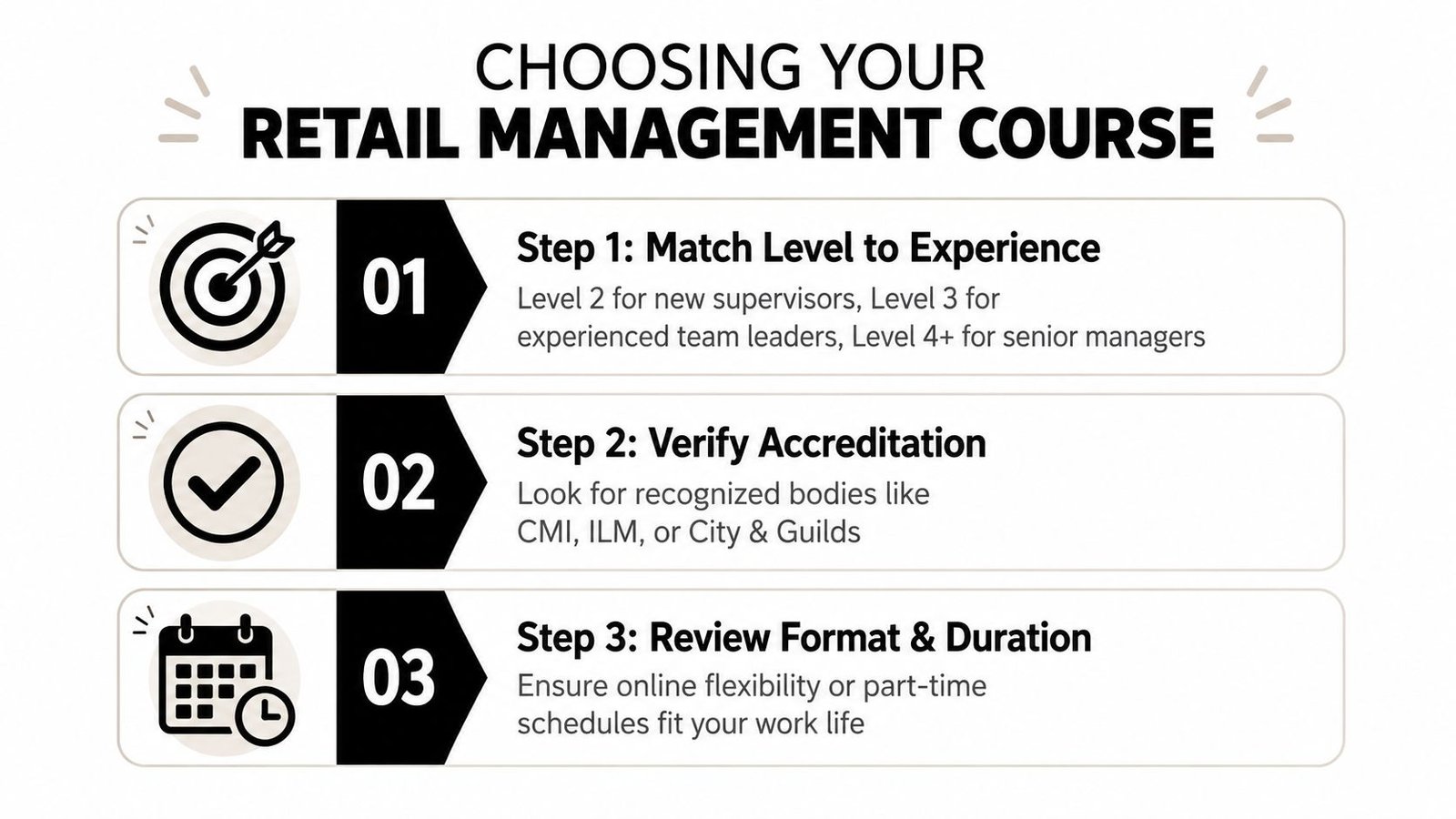
Choosing a course becomes easier when you separate the decision into manageable checks. Start with your destination, not the course advert. Do you want to become a new supervisor, strengthen your position as a team leader or prepare for wider operations management?
Use this practical checklist
First, match the level to your experience. A Level 2 certificate may suit a first move towards supervision. A Level 3 diploma can fit an experienced team leader who needs formal management skills. Level 4 and above may be more suitable for someone aiming at assistant manager, senior manager or strategic responsibilities.
Next, check recognition. Look for an awarding body and confirm whether the qualification is regulated or mapped to recognised standards. Ask the provider what the certificate allows you to progress to. Don't rely only on phrases such as “industry recognised” without asking who recognises it.
Then, examine the timetable. Compare evening classes, weekend blocks, live online sessions and self-paced learning. A flexible course is only useful if you can still reach tutor support and meet deadlines.
Finally, consider the money. Ask for the full fee, assessment costs and any extra charges. Speak with your employer about sponsorship, paid study time or apprenticeship support. Compare the cost with the roles you hope to apply for, while remembering that a qualification can't guarantee a pay rise.
A taster session can remove much of the fear. Read recent learner feedback, ask about support and speak openly with an admissions tutor about your previous work. If a longer course feels overwhelming, begin with a smaller award and build confidence gradually. You can also explore career change courses if retail management is part of a wider move.
Building Confidence and Becoming a Role Model
You may be thinking, “I'm too old,” “I won't understand the technology” or “What if I fail?” These fears don't mean you're unsuitable. They mean the decision matters to you.
Replace each large fear with one small action. If age worries you, attend a taster session and notice how many different life experiences learners bring. If technology feels difficult, watch one introductory video or ask the provider to show you the learning platform. If failure is the fear, contact a tutor and ask what help is available before you enrol.
Returning to education can change how your children see learning. They may watch you read after work, ask for help when something is unclear and keep going when an assignment takes effort. That example can matter more than a perfect result. It shows that education isn't only for people who went straight from school into university.
A qualification can also change how you see yourself. You may begin by doubting whether you belong in a management meeting, then slowly find yourself discussing staffing, stock and customer experience with greater authority. You can contribute more confidently at work, support younger colleagues and take part in decisions that affect customers and communities.
Keep the first promise small: commit to contacting one provider, not completing an entire qualification. Confidence grows from actions you can repeat.
No adult returner should feel that a classroom, lecture hall or online forum belongs only to somebody else. Your responsibilities have made you resourceful. Study can help you use that resourcefulness in a new way, opening routes towards more responsible and potentially better-paid work.
Funding Options That Make Study Affordable
Cost can feel like the biggest obstacle, especially when you have rent, food, travel and family expenses to manage. Start by asking four simple questions: what level is the course, what is the full fee, what help is available and when would repayment begin?
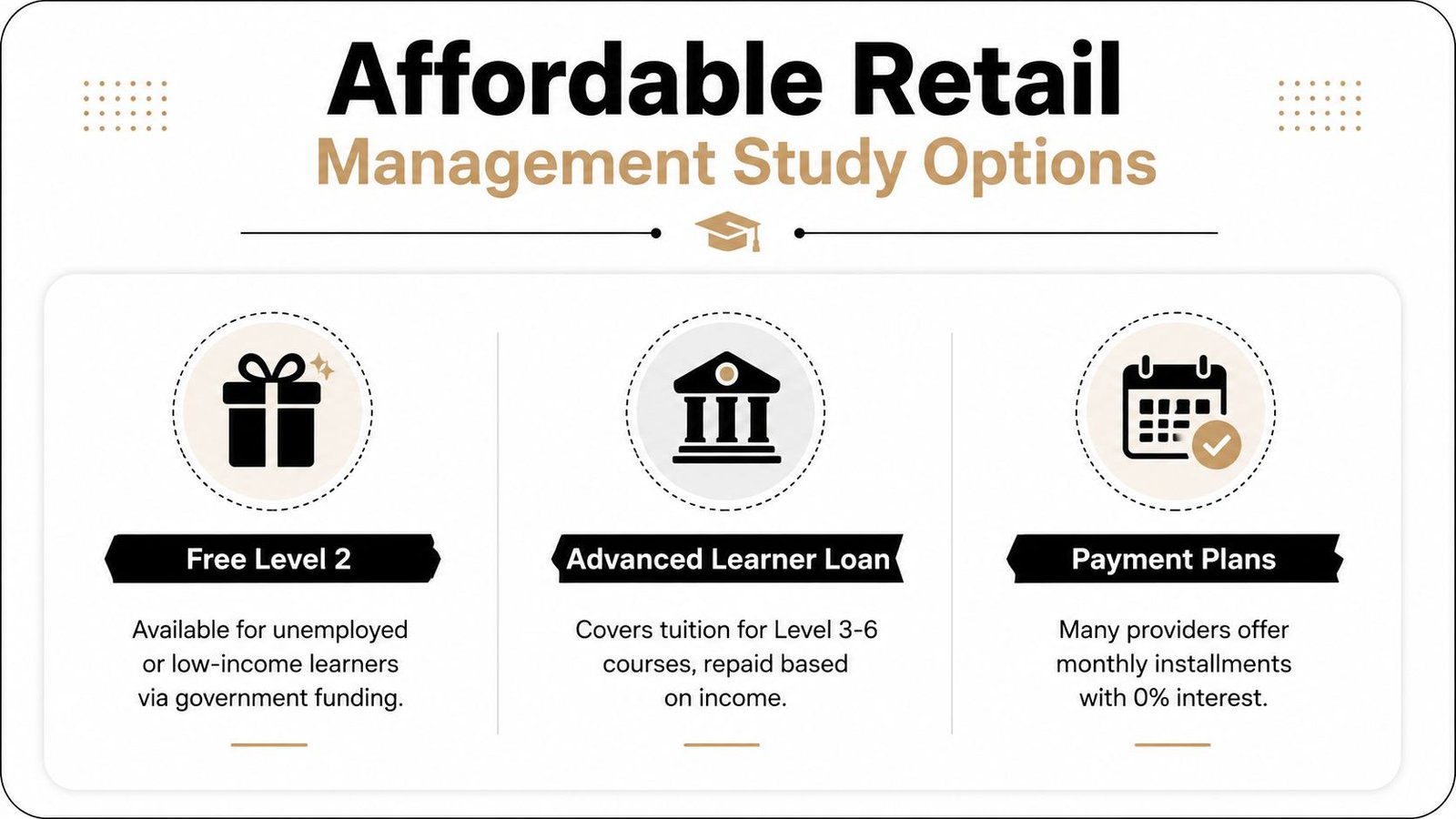
Some learners may qualify for a free Level 2 course, particularly if they're unemployed or on a low income. Eligibility can depend on income, residency, previous qualifications and the type of study, so check with the provider rather than guessing.
For eligible Level 3 to Level 6 study, an Advanced Learner Loan may cover tuition. Repayment is linked to income and starts only when earnings pass the relevant threshold. The exact terms can change, so use current government guidance or ask the college for a clear explanation before applying.
Employers may offer sponsorship, paid learning time or apprenticeship funding. This is worth discussing with a manager because the course can benefit the workplace as well as your career. Apprenticeship levy arrangements have been important in wholesale and retail, where government data recorded 227,720 levy-paying employees and expected levy spend of £235 million in 2016, as shown in the government levy evidence. That figure is historical, so ask what support exists today.
Private providers may offer instalments, and charities or local councils sometimes provide small grants. A provider should explain whether an instalment plan carries interest or extra charges.
Don't think only about the fee. Think about the skills, confidence and progression options the course may add. Treat the decision as an investment, but keep your household budget safe and never borrow without understanding the terms.
Where Retail Management Study Can Take You Next
A retail qualification can give you several routes, depending on your experience, family responsibilities and earning goals. You might start with a Level 2 award and apply for supervisor, team leader or department duties. A Level 3 diploma can prepare you for store management, while Level 4 or Level 5 study can support progression into assistant management, area management or operations.
Each level works like a rung on a ladder. You do not need to see the whole climb before choosing the next rung. Higher study may lead to a foundation degree, an undergraduate university route and, later, a postgraduate qualification such as an MBA. Apprenticeships offer another option because you remain in employment while building formal knowledge. National Careers Service guidance identifies retail management, business management and retail marketing as relevant areas, with advanced, higher and degree apprenticeships available up to Level 6.
Retail employers need people who can connect customer care with planning, digital understanding and operational control. Skills England's projected 2026 figures indicate wholesale and retail employment of about 1,720 thousand, alongside a skills-shortage-related indicator of 19%, as reported in the Skills England annual report. Because these are forward-looking figures, treat them as an indication of expected demand rather than an established historical total.
| Qualification Level | Typical Retail Role | Further Study Route |
|---|---|---|
| Level 2 | Supervisor or team leader | Level 3 diploma or apprenticeship |
| Level 3 | Department manager or store-management trainee | Higher study or management apprenticeship |
| Level 4 or 5 | Assistant manager, area or operations role | Foundation degree, HND or undergraduate progression |
| Level 6 | Store, regional or strategic management | Postgraduate study or senior apprenticeship |
| Level 7 | Senior leadership or commercial management | MBA or advanced professional development |
Before choosing a course, read real vacancies. A sales manager job listing template can help you identify the responsibilities and wording employers use. Compare those requirements with each course's modules, then mark the skills you already have and the ones you want to practise.
Adult learners can also use university routes without traditional entry qualifications. Access to HE recorded 40,855 registered students and 22,630 students accepted into higher education for September 2021 entry in 2021/22, according to Access to HE key statistics. A later release recorded 38,220 registered students and 19,320 accepted for September 2023 entry in 2022/23, as shown in the QAA Access to HE statistics. These figures show that adults use Access courses to reach university.
Your experience counts. Exploring workforce development programmes alongside the retail qualification ladder may reveal a route that fits work, family life and your earning plans. One clear next step can give your household something to celebrate and show children that learning can begin again at any stage.