
You're getting the children ready, checking work messages, and looking at the same old question in your head, is university really for someone like me? Maybe you left education years ago. Maybe you've been the one holding everything together at home, and the thought of studying again feels exciting and frightening at the same time.
That feeling is more common than you think. An Access to Higher Education Diploma online gives adults a real route back into study, without asking you to pretend your life is simple. It is built for people with responsibilities, people who want a fresh start, and people who want their children to see that learning does not stop when adult life gets busy.
Why the Access to Higher Education Diploma Online Changes Everything
A mum sits at the kitchen table after the school run, laptop open, tea going cold. She is tired, a bit unsure of herself, and wondering whether she is too late to change her life. Then she sees that the course in front of her is not a dream she has to keep putting off, it is a proper route to university that fits around the life she already has.
That matters because the Access to Higher Education Diploma gives adults a recognised way forward when A levels are not part of their story. It is built for people who want to move into higher education later in life, while still handling work, children, and everything else that fills a day. Next Level Online College offers this kind of route online, and you can see the study pathway on the online Access to Higher Education page.
More than a qualification
For many learners, this is not only about gaining a certificate. It is about becoming the person your children can look up to, the parent who shows them that setbacks do not get the final word. It also sends a clear message at home, learning is something adults keep doing, not something that stops once family life gets busy.
The diploma carries real weight because it is regulated by the Quality Assurance Agency for Higher Education. QAA describes it as a full Level 3 qualification with a credit structure that includes graded study alongside ungraded learning, and it is commonly completed in one year full-time or over two or more years part-time. That structure helps adult learners see study as something practical and manageable, not distant or out of reach. QAA
If university has felt closed to you for years, this route is designed to open that door in a calm, structured way.
When people talk about life-changing study, they often miss the human side. For adult learners, the change starts earlier. It starts when you stop saying, “That's for other people,” and begin to see that your experience, your determination, and your reasons for studying all count for something.
Understanding What the Access to HE Diploma Is
The Access to HE Diploma is a regulated Level 3 qualification designed for adult learners who want a clear route into higher education. It gives structure to a goal that can feel distant at first, especially if you are returning to study after years away or trying to show your children that education is still part of family life. Access to HE
How the credit structure works
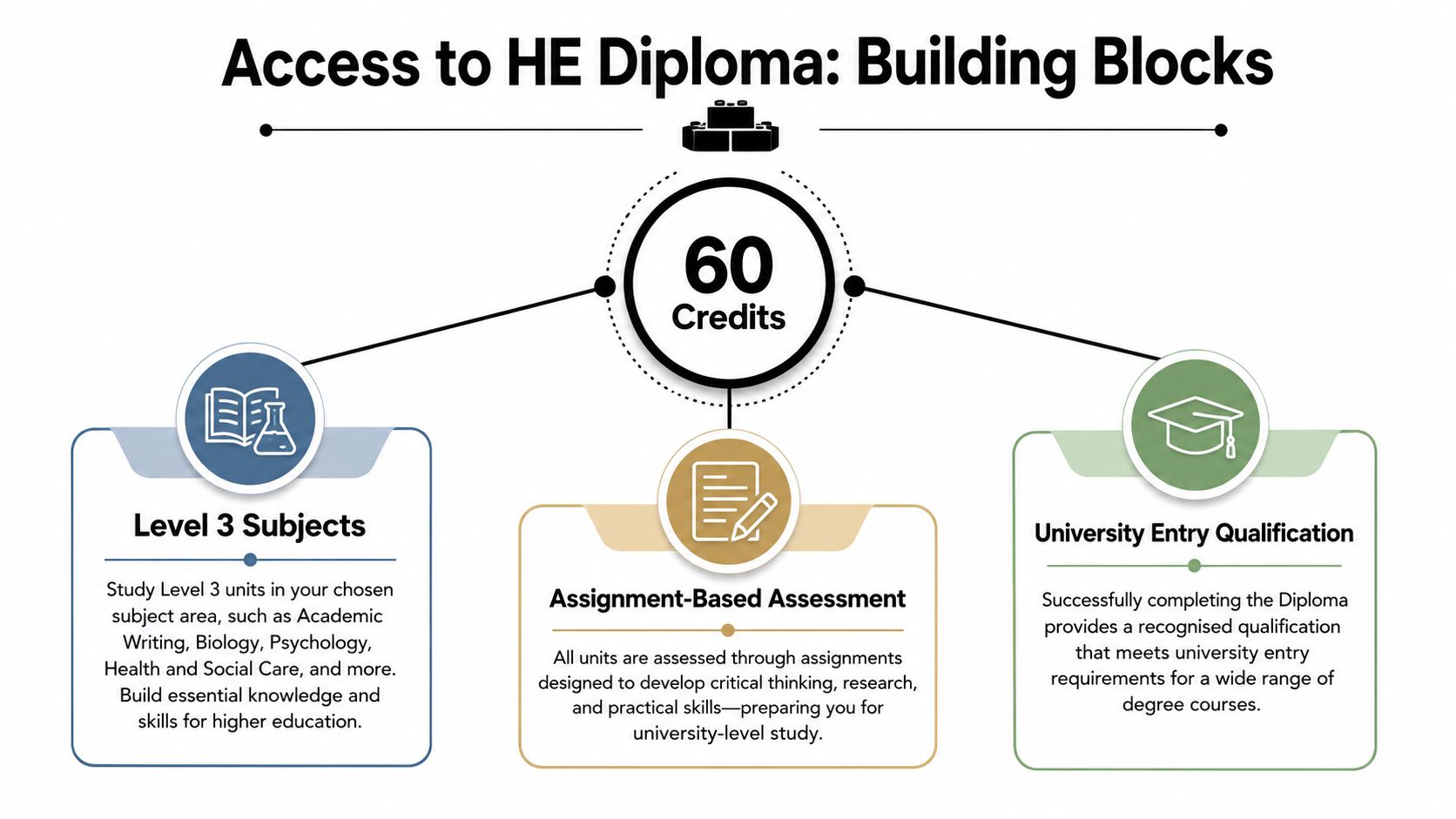
The diploma is built around a clear credit system, and that structure helps it feel manageable rather than abstract. It includes 60 credits in total. 45 credits are graded at Level 3, while 15 credits are ungraded at Level 2 or Level 3. The graded units let you show academic progress, and the ungraded units support the study habits, confidence, and subject understanding you need along the way.
That balance matters because adult learners often need more than subject knowledge. They need a route that breaks a large aim into smaller, visible parts, like following a map with marked checkpoints instead of guessing the route in the dark. The diploma does that without lowering expectations.
It also gives admissions teams a clear basis for understanding your achievement. This is a proper qualification, not a loose introduction with an uncertain outcome. QAA explains that the diploma is commonly completed in one year full-time or over two or more years part-time. QAA
Why universities treat it seriously
Universities take the diploma seriously because it is widely recognised as equivalent to three A levels, which makes it easier to compare with other entry routes. That recognition matters for adult learners who need their experience and effort to be judged against a standard framework, rather than handled as an informal case by case decision. Admissions staff can see what the qualification contains and how it relates to university entry.
A qualification feels less daunting when its parts are visible. The credit system turns a big target into smaller steps you can work through.
Many learners worry they need to understand every detail before they start. They do not. What they need is a course that shows them where to begin, what counts as progress, and how each unit moves them closer to a recognised university entry qualification. That kind of clarity can matter at home too, because it shows children that learning is built step by step, by people who keep going.
How Online Learning Fits Around Your Real Life
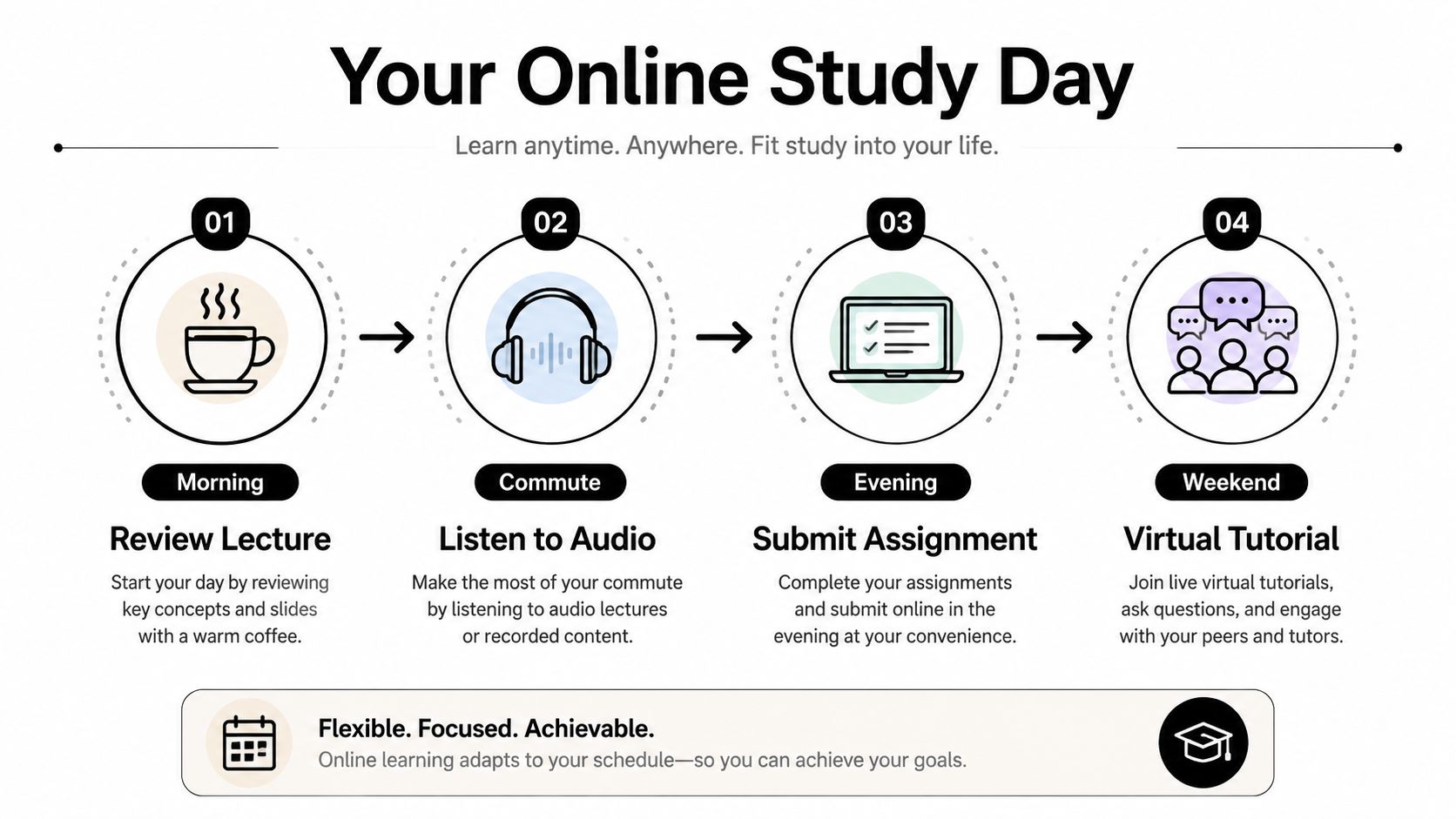
Online study looks very different from sitting in a classroom every day, and for many adults that difference is the whole point. Instead of travelling to a campus at a fixed time, you usually log in when your life allows it, read the materials, complete assignments, and send work to your tutor for feedback. That means the course can sit around childcare, shift work, caring duties, and the unpredictable bits of family life.
What a week can feel like
A typical pattern might be reading lesson notes after the children are asleep, listening to short learning clips while doing a quiet task, or using a weekend slot to finish an assignment draft. You are not expected to be a tech wizard. You do need a reliable internet connection and a dedicated device, because online study depends on being able to get in, stay in, and submit work without constant disruption.
The biggest technical problem is often not the course content itself. A study on e-learning barriers reported that technical issues accounted for 75% of the major obstacles, with unreliable internet and too few devices identified as the main causes. For adult learners, that means a calm study routine depends on the practical basics being in place. JIER study on e-learning barriers
Support still matters online
Good online learning is not lonely learning. You should expect tutor feedback, clear deadlines, and contact with other learners through the provider's systems. A strong provider also makes room for questions about workload, confidence, and how to keep going when home life gets hectic.
The best online courses do not ask adults to become different people. They shape study around the people you already are.
Some learners worry that online study means doing everything alone. It doesn't have to. The right setup gives you flexibility without leaving you stranded, and that balance is often what helps adults stay with the course long enough to reach the finish line.
Entry Requirements and Funding Your Studies
Many adults put off applying because they expect a rejection before they have even asked a question. The Access to HE Diploma is designed for people aged 19 and over in England and Wales, especially those who do not already have traditional qualifications such as A levels. It gives adult learners a route into higher education later in life, which matters for parents who want to show their children that returning to study is still possible. Complete University Guide
What you may need before starting
Providers commonly expect learners to hold or work towards GCSE English and maths, or a Level 2 equivalent, before or alongside the diploma. That does not mean everything must already be finished. It means the provider wants to see that you have the core skills that help you cope once the academic work starts, much like making sure the foundations are steady before building the next floor of a house. Learndirect guide
If you are unsure whether your current qualifications are enough, ask the provider directly. A short conversation can save a great deal of worry, because entry advice often depends on your full situation, not just one box on a form.
What the money side can look like
Fees usually apply, and course costs can be over £3,000, depending on where and how the course is studied. That can feel heavy when family budgets are tight, so it helps to ask about payment plans, finance routes, and whether the provider can explain the options in plain language before you commit. Advanced Learner Loans
For some learners, funding support is the point where the plan starts to feel real. Once the cost side is clearer, the course is easier to picture as a managed step, not a leap into the unknown.
Do not rule yourself out because the first look at the fees feels scary. First, get the facts, then decide.
The important thing is to ask about affordability early. A good provider should help you understand what you need, what you do not need, and what the next step costs before you make any final decision.
University Recognition and Your Career Pathways
A parent may return to study after years of putting everyone else first, then wonder whether universities will take the qualification seriously. They will. The Access to Higher Education Diploma is widely recognised by universities, and it carries UCAS tariff points, so admissions teams can assess it through the same kind of process they use for other qualifications. That recognition matters when you have been building your future around work, care, and family life at the same time.
How it opens the next door
The diploma turns your study into clear credit that universities can understand quickly. It works like a bridge from adult learning into higher education, especially if your earlier school route did not lead to A levels. For many learners, that bridge is the point where study stops feeling distant and starts feeling practical.
Some universities welcome Access to HE students on the same basis as applicants with A levels, and many course pages explain how tariff points are used alongside subject requirements and interview decisions. The exact route still depends on the degree, because admissions teams often look for the right subject focus as well as the qualification itself. A nursing applicant, for example, may need a different Access to HE pathway from someone aiming for business or social work.
If you want to see how a recognised online route is framed by a provider, accredited online courses in the UK can help you understand how structured study links to later university choices.
Why this matters for family life too
A qualification can change more than your employment options. It can also change the atmosphere at home. Children notice when a parent keeps reading, writing, and submitting work after a long day, and that quiet example teaches them that learning belongs to real life, not just to school.
The effect reaches beyond the household as well. Higher education can support better earning potential and more fulfilling work, which matters when you are trying to build a steadier future for your family. The Institute for Higher Education Policy also notes that higher education supports economic development, local spending power, skills, and innovation in the communities where graduates live and work. IHEP on economic benefits
The goal is not only a certificate. It is a future your children can watch you build.
That kind of progress leaves an impression. When a child sees a parent learning with discipline and hope, they learn that effort can open doors.
Choosing a Reputable Online Provider That Supports You
Not every online course feels the same once you start. Some give you content and leave you alone with it. Others build in real support, clear deadlines, and tutors who understand adult life. The difference matters, because confidence grows when the course feels structured, not scattered.
What to look for before you enrol
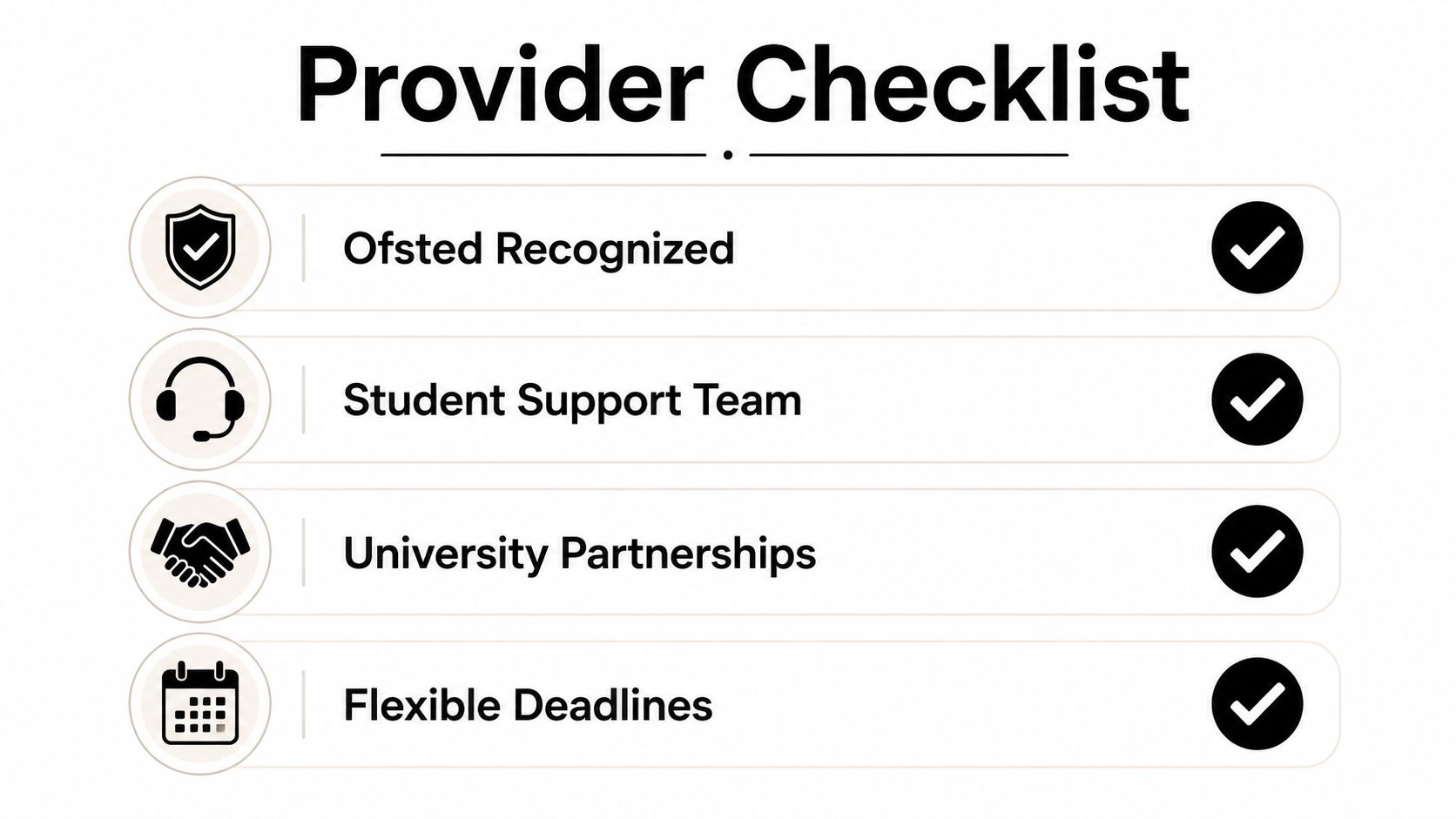
A sensible checklist starts with regulation and recognition. You want a provider with clear awarding partners and a course that leads to a recognised qualification. You also want support that goes beyond admin, because adults returning to study often need academic help and emotional steadiness at the same time.
Look for these things:
- Clear qualification status: Check that the diploma is a recognised Access to HE route and not a generic study course.
- Tutor access: You should know how and when you can ask questions.
- Pastoral support: Confidence drops and life gets messy, so help with motivation matters.
- Flexible deadlines: Adults with caring duties need room to breathe.
- University progression guidance: A good provider should help you understand what comes next.
What strong support looks like in practice
Next Level Online College, part of the Cambridge Online Education Ltd group, offers online Access to HE programmes with structured study, academic and pastoral support, and guidance from subject specialists, mentors and wellbeing advisors. It is one option for adults who want a fully supported route rather than a bare-bones online course. Next Level Online College accredited online courses
A provider should never make you feel foolish for asking basic questions. If the course is right for you, the staff will explain things clearly, not hide behind jargon.
Your Next Steps to Enrol and Start Transforming Your Future
Start with the course you want at university, then check what that course asks for. If you are aiming for a nursing degree, a teaching route, or another professional pathway, the entry requirements should guide your choice of Access to HE subject area.
A simple order to follow
- Check the university course requirements. Look at the specific degree you want and see what it needs.
- Talk to the provider. Explain your current qualifications, your work and family commitments, and what you want to achieve.
- Ask about any extra English or maths study. If you need GCSEs or Functional Skills, sort that out early.
- Review funding. Ask how fees work and what payment options are available.
- Apply once you feel clear. You do not need to know everything before you begin, you need the next step.
The first conversation is often the hardest part. After that, the path usually feels more manageable.
If you are nervous, that is normal. Most adult learners are not short on ability, they are short on confidence because life has made them doubt themselves. A proper provider helps you rebuild that confidence with clear guidance and steady encouragement.
Next Level Online College supports adults who want a flexible online route into study, and it can be a useful place to start if you want help turning uncertainty into action. Visit Next Level Online College to ask about your options, check whether an Access to Higher Education Diploma online suits your goals, and take the first step towards the future your family deserves.