

You might be sitting at the kitchen table after work, looking at a course page, a notebook, your phone calendar, and a pile of family jobs that still need doing. Part of you wants a better future. Another part wonders how on earth studying is meant to fit around school runs, shifts, bills, tiredness, and real life.
That feeling is normal.
Many adult learners come back to education carrying doubt as well as ambition. You may want better pay, a more meaningful career, or the qualifications that open the door to university. You may also want your children to see you try, persist, and succeed. A study planner template can help with that, not because it makes life perfect, but because it gives your week some shape when everything feels a bit scattered.
Your First Step Towards a Brighter Future
A planner often sounds like one more thing to keep up with. For adult learners, it can feel like another test before serious studying even begins. But a good planner isn't there to judge you. It's there to help you see what is possible.

In England, there were more than 4 million adult learners taking part in government-funded further education and skills in the 2022/23 academic year, which shows that many people are walking this path with you (adult learner participation data referenced here). You are not starting from behind. You are joining a huge group of adults who decided their story was not finished.
That matters when confidence is low. If you've been out of education for years, it's easy to think everyone else is more organised, cleverer, or more ready than you. Usually, they aren't. They just started by putting one small structure in place.
A planner is proof that you mean it
A study planner template is not about making your week look tidy. It's about making your goal feel real. When you write down one study session, one assignment step, or one revision target, you're telling yourself, "I'm doing this now."
Small truth: confidence usually grows after action, not before it.
For many adult learners, the first win is not finishing a course. The first win is seeing a plan on paper and realising there is room to begin.
That might mean:
- One hour on Tuesday night after the children are in bed
- A short session on your lunch break with revision cards
- A Saturday morning slot before the house gets busy
- One clear deadline for a practice task instead of a vague promise to “study more”
If you're exploring flexible routes back into learning, adult education courses online can show how adults fit recognised study around existing responsibilities.
What this first step can lead to
Getting organised sounds small, but it changes how you see yourself. You stop feeling like someone who hopes to study one day. You start becoming someone who is studying now.
That change is powerful for your future and for your family. Children notice effort. Partners notice commitment. And you realize that you can still learn, still grow, and still move towards a life that feels bigger than survival.
Find a Planner That Fits Your Real Life
Not all study planner templates are built for adult life. Many are made for school or university students with long open evenings and neat weekly routines. If your week includes changing shifts, childcare, appointments, and tired days, that kind of planner can make you feel worse instead of better.
The planner is not failing because you are disorganised. The planner is failing because it doesn't match your life.
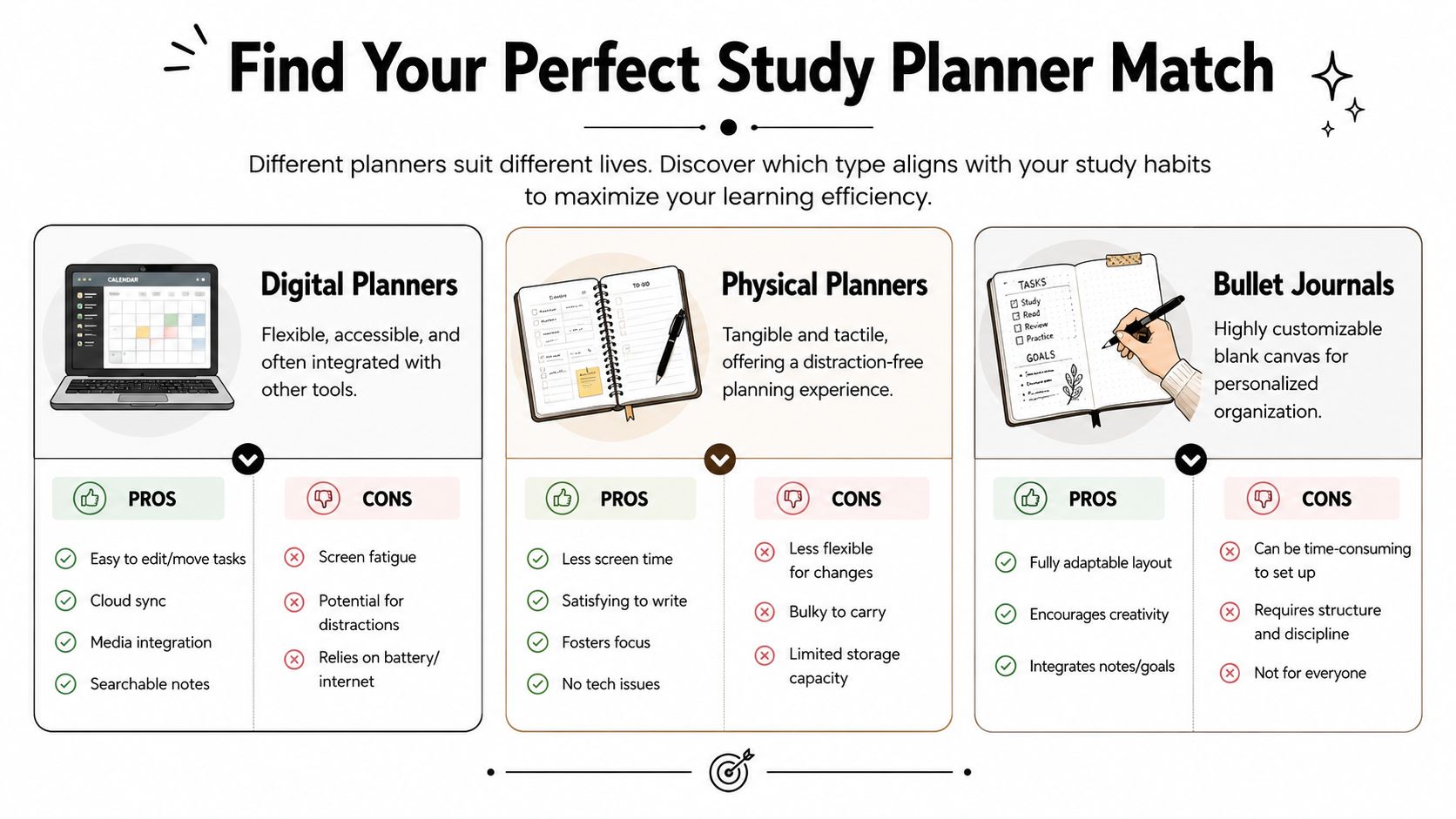
UK data shows why this matters. Standard planners often assume neat study blocks, but many adults have broken-up time. For example, women do an average of 1 hour 39 minutes of unpaid childcare each day (UK childcare time context noted here). That kind of day doesn't always leave a perfect two-hour study window in the evening.
The weekly grid versus the flexible planner
A classic weekly planner has boxes for Monday to Sunday and fixed spaces for time slots. That can work well if your routine is regular and predictable. If you work similar hours every week, it may give you a calm sense of order.
A flexible planner works better when life changes often. It focuses less on fixed slots and more on priorities, short tasks, and moveable study sessions.
Here is a simple comparison:
| Planner style | Best for | Where it struggles |
|---|---|---|
| Weekly block planner | Regular routines, fixed evenings, set days off | Shift work, changing childcare, surprise interruptions |
| Daily focus planner | Busy learners who need one day at a time | Less useful for seeing the whole week |
| Modular task tracker | Adults with irregular schedules and short study pockets | Needs discipline to review often |
Choose the planner that lowers pressure
Some learners do best with a digital planner on their phone or laptop. Others trust a printed sheet on the fridge or a notebook kept in a work bag. The best choice is not the most impressive one. It is the one you will use when you are tired.
A good fit usually has these features:
- Space for real commitments so work shifts, family tasks, and appointments are visible
- Short study options so you can use small pockets of time
- A clear priority area to show what matters most this week
- A simple review section so you can reset after a disrupted day
If your planner only works in perfect conditions, it doesn't work.
Give yourself permission to choose simple
Some adults stop before they begin because they think they need a beautiful system with colour coding, stickers, apps, and lots of sections. You don't. A plain page with today's priority, your next assignment step, and one study slot can be enough.
The right study planner template should make you feel calmer. If it makes you feel guilty before you've even started, pick a different one.
Customise Your Planner for Weekly Wins
Once you've chosen a planner style, the next step is making it yours. Many learners often get stuck at this point. They try to fill every empty space with study, then feel defeated when life gets in the way.
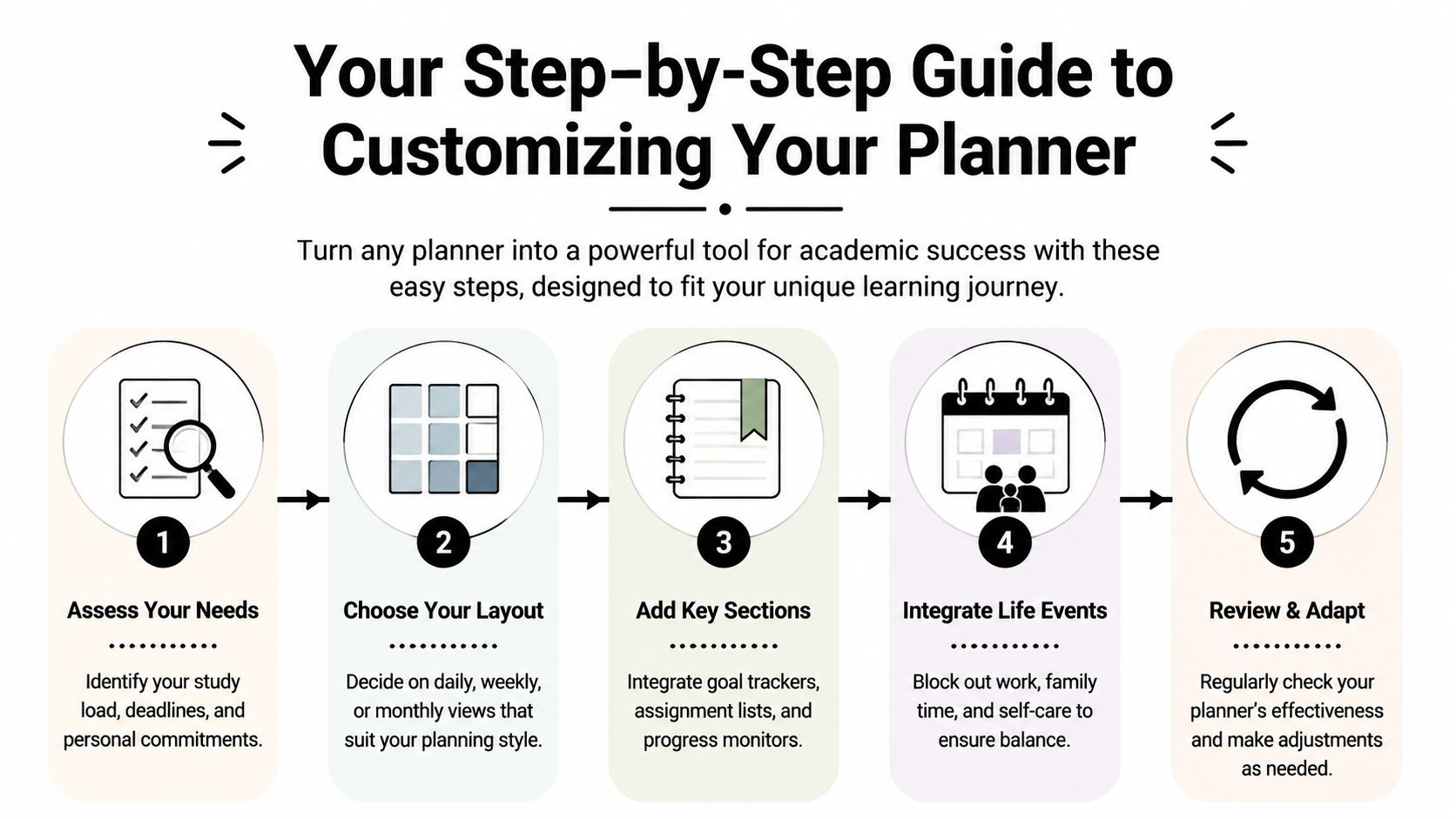
A stronger method is time blocking. That means you first map your fixed commitments, then add realistic study time, then break bigger tasks into smaller deadlines. This approach is recommended in Excelsior's study-plan method.
Start with what cannot move
Put your fixed commitments in first. These are the parts of the week that are already spoken for.
Write in things like:
- Work hours
- School runs or childcare
- Appointments
- Family routines
- Time you need for rest
To avoid building a fantasy timetable, your planner should reflect your real week, not an ideal one.
Look for study pockets, not perfect evenings
After your fixed commitments are in place, scan the week for possible study pockets. These can be much smaller than you think.
A useful pocket might be:
- Twenty minutes before work
- Half an hour at lunch
- A quiet spell after dinner
- An hour on Sunday morning
Short sessions still count. A 20 to 30 minute block can be enough to read a page of notes, complete a few questions, or organise your next assignment step. Those smaller sessions are often easier to keep than a large block that keeps getting postponed.
Practical rule: don't ask, “When can I do everything?” Ask, “Where can I make one useful step?”
Break big tasks into mini-deadlines
Confidence starts to build. Instead of writing “Finish assignment”, break it down into parts you can complete.
For example:
| Big task | Mini-deadlines |
|---|---|
| Write an essay | Choose topic, gather notes, write opening, draft middle, proofread |
| Revise for maths test | Review one topic, do practice questions, mark answers, note weak areas |
| Prepare for English exam | Read text, make quote list, plan one response, practise timed answer |
Self-imposed mini-deadlines help you stay on track before the final deadline arrives. They also create more moments where you can say, “I did that.”
If you want a learning approach built around your own responsibilities and goals, personalised learning plans show how study can be shaped around your life rather than forced on top of it.
Build one week, then adjust
Don't plan the next three months in one sitting. Start with one week. Test it. See what worked. Keep what helped and change what didn't.
Your planner is not a contract. It is a tool you improve as you go.
How to Stay on Track When Life Gets Messy
Even the best study planner templates meet the same problem. Real life. A child gets ill. A shift runs late. You feel worn out. One missed session turns into two, and your confidence drops fast.
This is why your planner must be a guide, not a rulebook.
If you miss a study block, the answer is not to give up on the whole week. The answer is to reopen the planner and decide what matters most now. Maybe one task can move. Maybe one smaller session can replace a longer one. Maybe this becomes a review day instead of a new learning day.
What to do after a disrupted day
A simple reset can help:
- Circle the top priority you still need to do
- Move one non-urgent task to another day
- Use a catch-up slot if you kept one free in the week
- Choose a short restart task such as reading notes or doing one practice question set
That last step matters. Restarting with something small is often better than waiting for the perfect window.
Track progress you can see
For adults coming back to learning after a break, visible progress helps rebuild belief. A planner should show more than deadlines. It should show milestones.
Adobe's guidance on study planning highlights the value of tracking small wins such as “complete one practice assignment” because visible milestones can support motivation better than a generic to-do list (adult learner milestone planning noted here).
Missing one session doesn't erase your progress. Returning to the plan is progress too.
Try recording wins like these:
- Booked tutor support
- Finished one chapter
- Submitted one task
- Completed one practice paper
- Studied three times this week
If managing your week feels difficult, time management for students can help you build a calmer routine without expecting perfection.
Free Study Planners Made Just for You
The most helpful study planner templates do more than hold dates. They act like a simple system for your learning. A strong template should help you note priority, estimate the time needed, update a task from “Not Started” to “Completed”, and plan reviews, as shown in Kuse's planner workflow.
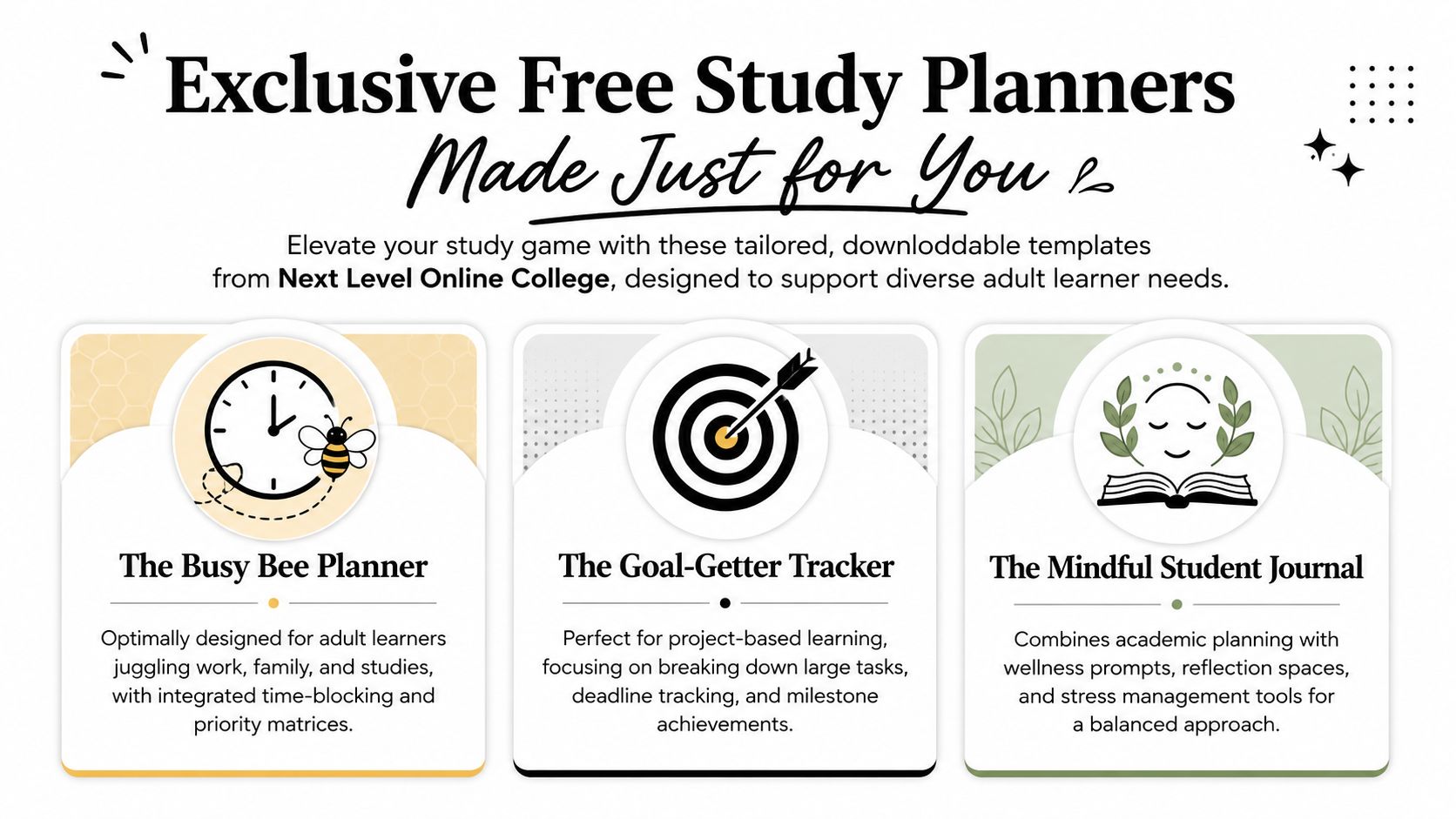
That is why it helps to choose a template based on your life, not just on appearance. Below are three practical formats that suit different kinds of adult learners.
The Weekly Wins Planner
This one suits adults who have a fairly steady routine. If you work regular hours or know roughly when you can study each week, this template gives your time a clear shape.
It works well because it includes:
- A weekly overview for work, family, and study
- A top-three priorities box so you don't overload yourself
- Mini-deadline spaces for larger assignments
- A weekend review line to note what got done
This planner is helpful when you want structure without too much detail.
The Flexible Focus Tracker
This template is better for shift workers, carers, and parents whose days change a lot. Instead of relying on fixed evening blocks, it lets you list moveable tasks and shorter study pockets.
Useful sections include:
| Feature | Why it helps |
|---|---|
| Priority rating | Shows what must be done first |
| Estimated time | Helps you match tasks to small pockets of time |
| Status tracker | Lets you see progress clearly |
| Catch-up area | Gives missed tasks a new place to go |
This format can feel kinder because it accepts that some weeks won't run neatly.
The Exam Countdown Timetable
If you're preparing for GCSEs, A Levels, Functional Skills, or another key assessment, a countdown-style planner can stop revision from becoming a last-minute panic.
It should include:
- Subjects or topics to revise
- Review slots for going back over weak areas
- Progress checks so you can mark what is done
- Confidence notes to remind you what still needs attention
The best planner is the one that helps you keep going on an ordinary week, not just a productive one.
When you choose a template, keep it simple enough to use and detailed enough to guide you. That balance is what turns planning into momentum.
You Are Ready for the Next Step
Getting organised may seem small compared with passing an exam or gaining a qualification, but it is a serious act of self-belief. It says you are willing to make space for your future. It says your goals matter.
That matters even more when you've had a break from education, or when confidence has taken a knock. You don't need to feel completely ready before you begin. You need a plan that is kind enough to fit real life and clear enough to help you move forward.
A good study planner template won't solve every problem. It won't stop busy weeks or remove every doubt. What it can do is give you a steady way to keep showing up. One session. One mini-deadline. One completed task. Those steps add up.
And they lead somewhere important. They can lead to better qualifications, new career options, higher earnings, university pathways, and the quiet pride of knowing your children saw you stick with something hard. They can help you become the person in your family who changed what seemed possible.
You are not too late. You are not starting from nothing. You are building from experience, responsibility, and determination. That is strong ground to build on.
If you're ready to turn that first bit of organisation into real progress, Next Level Online College offers flexible online courses for adult learners across the UK, with supportive teaching, recognised qualifications, and guidance that fits around work, family, and everyday life.