
You're sitting at the kitchen table with a mug going cold, a laptop open, and a quiet worry in the back of your mind: can I really return to science after all this time? Perhaps work has taken most of your energy. Perhaps your children need you, or you're trying to build a safer and more fulfilling future for your family. The thought of exams can bring back memories of struggling at school, but those memories don't decide what you can achieve now.
GCSE science courses for adults are designed around real lives. Colleges and online providers may offer part-time study, evening lessons, weekend support and tutors who expect your knowledge to feel rusty. You don't need to remember every fact about cells, atoms or electricity before you begin. You need a clear reason, a manageable plan and support when a topic feels difficult.
The main choices are Combined Science, which covers Biology, Chemistry and Physics as two GCSEs, or Separate Sciences, where you study Biology, Chemistry and Physics as distinct qualifications. Your best route depends on where you want to go next, not on the grades you achieved years ago.
Science remains a substantial GCSE pathway in the UK. The Joint Council for Qualifications recorded 8,717 UK entries for GCSE Science and 989,264 UK entries for GCSE Science Double Award in 2025, showing that adult learners are working towards a recognised qualification that further education providers and employers understand (Cornwall College's GCSE Science course information).
Starting Your Adult Science Journey With Confidence
You may be sitting at the kitchen table after work, wondering whether enrolling in GCSE Science is sensible when your school memories feel distant. Perhaps you are changing career, preparing for further study, or hoping to show your children that a fresh start is possible. That uncertainty is common, and it does not predict your result.
Adult classes bring together learners with different experiences. A tutor should not expect perfect recall on your first day. Early lessons may revisit cells, particles, forces and chemical reactions. These topics are like the building blocks of a wall: once they are secure, more difficult ideas have something solid to rest on.
Your reason matters more than your starting point
Many UK colleges offer GCSE Science as a one-year or part-time course. Providers may present it as preparation for pre-access, Access to Higher Education, healthcare or science-related progression, as described in Cornwall College's GCSE Science course information. That can suit an adult aiming for nursing, allied health, laboratory work or another technical direction, while leaving room for work and family responsibilities.
Write down the destination before choosing a course. “I want to work in healthcare” is a useful starting point, but check the entry requirements for the specific course or job. One route may accept Combined Science, while another may ask for Biology or a particular Maths grade. This check prevents you from spending time and money on a qualification that does not meet your next requirement.
A useful mindset: you are not returning to become the person you were at sixteen. You are learning as an adult, with experience, a reason and a future goal.
Let small wins count. Understanding one diagram, solving a past-paper question or attending after a tiring shift shows progress. Confidence usually follows action, so begin with the next manageable task rather than waiting to feel ready.
Choosing Between Combined Science and Separate Subjects
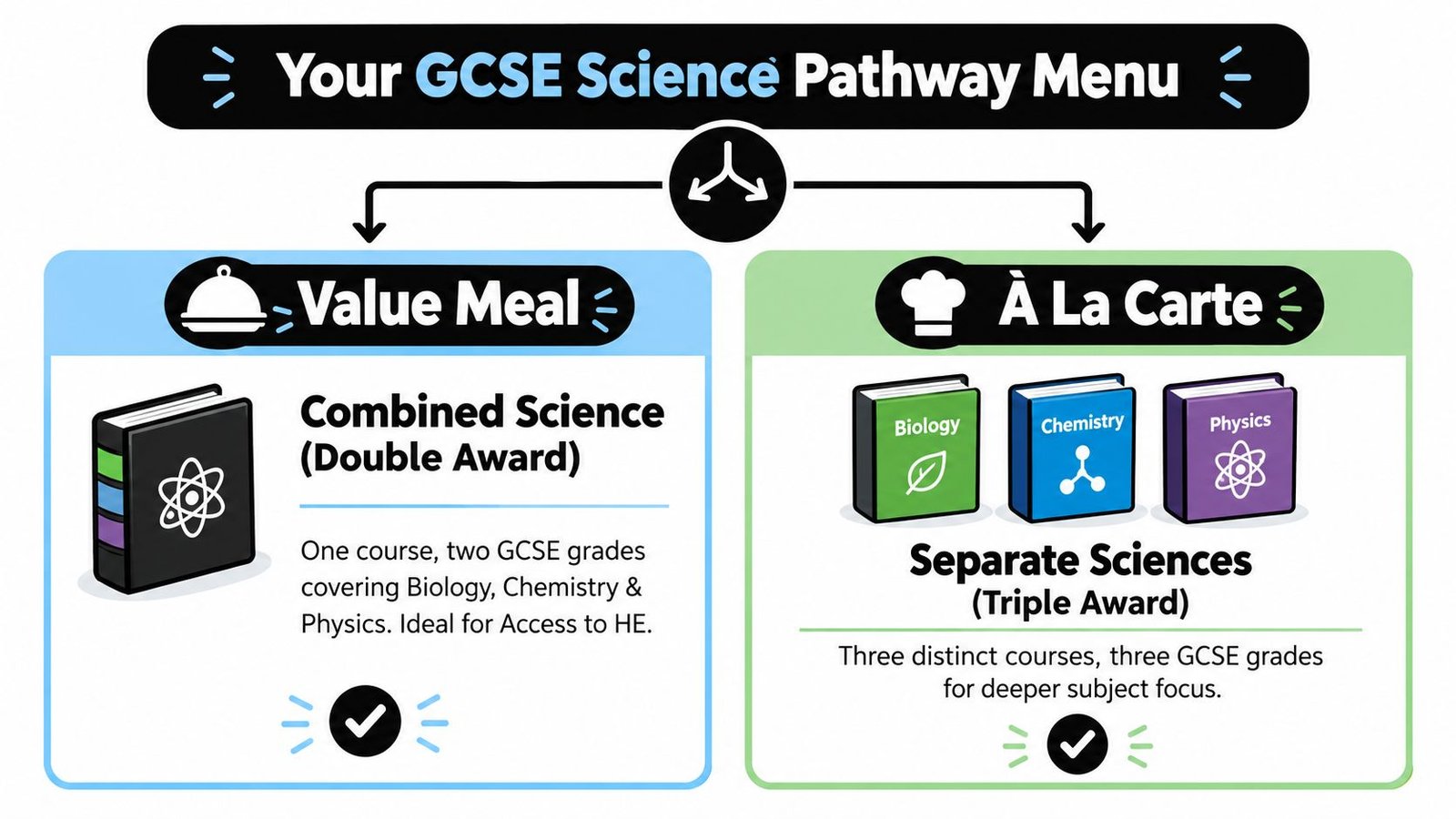
Think of the choice as a menu. Combined Science is the value meal. You study Biology, Chemistry and Physics in a balanced course and receive two GCSE grades, known as a Double Award. It gives you a broad science foundation without asking you to take three full separate subjects.
Separate Sciences are more like choosing dishes individually. You study Biology, Chemistry and Physics as distinct GCSEs, with more room to explore each subject in depth and earn three separate grades. This can suit a learner whose future route specifically asks for a particular science or who has the time and motivation for a heavier study load.
Match the menu to your destination
Combined Science may suit you if:
- You need a broad science qualification: It covers all three sciences and can support general progression.
- You're preparing for an Access course: Providers often position it as preparation for Access to Higher Education, including healthcare and science routes.
- You need a manageable workload: Two GCSEs can be a more realistic choice alongside work and family responsibilities.
You can explore the structure of an online route through this Combined Science GCSE course. If Biology is the subject that worries you most, additional practice and explanations can also help, including biology help for grades 7–12.
Separate Sciences may suit you if:
- Your target course names a science: Medicine, dentistry and some engineering pathways commonly prefer strong subject-specific preparation, so check the actual requirements before enrolling.
- You enjoy one subject: Biology may appeal if you're interested in the human body, Chemistry if you enjoy materials and reactions, or Physics if you like energy, forces and how things work.
- You can protect regular study time: More depth means more content, revision and exam preparation.
Not every college offers every separate science to adults. Timetables may clash, and an online provider may have different exam arrangements from a local further education college. Don't choose the route that sounds most impressive. Choose the qualification your next step requires and the one you can attend consistently.
How Online and Part-Time Study Works
An online GCSE Science course should give you a route through the material, not leave you alone with a textbook. A well-organised programme may combine recorded lessons, online notes, quizzes, live tutorials and tutor feedback. Some adult courses also offer evening or Saturday sessions, giving you time to ask questions while managing work and family commitments.
Most part-time courses allocate four to six guided hours each week, followed by three to five hours of independent study, reading and past-paper practice. The exact balance varies by provider. Ask how much teaching takes place live, whether recordings remain available, and how quickly a tutor responds to questions.
Fit study around the life you already have
Your routine might be a lesson after the children go to bed, a Saturday morning tutorial, or short revision tasks spread across the week. Treat these hours like appointments. A simple plan on the fridge can help your household see when you are studying and protect that time.
Common course patterns include:
- A full academic year: September starters often work towards the summer examination series.
- Fast-track study: Some providers offer intensive courses lasting around 18 to 30 weeks, particularly for learners who need a rolling start.
- Flexible online learning: You may complete teaching from home, then attend an approved exam centre for the examinations.
Small, regular sessions usually make difficult topics less intimidating. Each completed quiz or practice question gives you evidence of progress, much like marking off steps on a journey.
You can see how supported home study may be organised through an online GCSE Science course. Before enrolling, ask whether the provider supplies a weekly study plan, marks practice work and helps arrange your examination entry. Those practical details can determine whether the course fits your real week, rather than an ideal timetable.
Understanding Exams and How You Will Be Assessed
The biggest difference from many adult courses is that GCSE Science is usually a linear qualification. You work through the course and sit the examinations at the end, rather than collecting small exam results throughout the year. AQA Combined Science specifications state that certification is available only in the summer series, so you'll need a plan built around one main assessment window (Pass Learn's adult GCSE guidance).
Most assessment is through written examination at an approved centre. Papers can include multiple-choice questions, short structured answers, calculations and longer explanations. You'll need to show both knowledge and application, which is why regular past-paper practice is more useful than reading notes again and again.
Arrange the practical details early
Online teaching and the examination are separate things. You may learn at home, but you'll still need to sit the exam at an approved venue. Ask your provider who enters you, which centre you'll attend and what happens if you need to change your plans.
On exam day, bring the required identification and follow the centre's instructions. If you have dyslexia, anxiety or another support need, ask about Access Arrangements as early as possible. Depending on your situation, arrangements can include extra time, rest breaks or enlarged papers. The centre may need evidence and must approve arrangements before the exam.
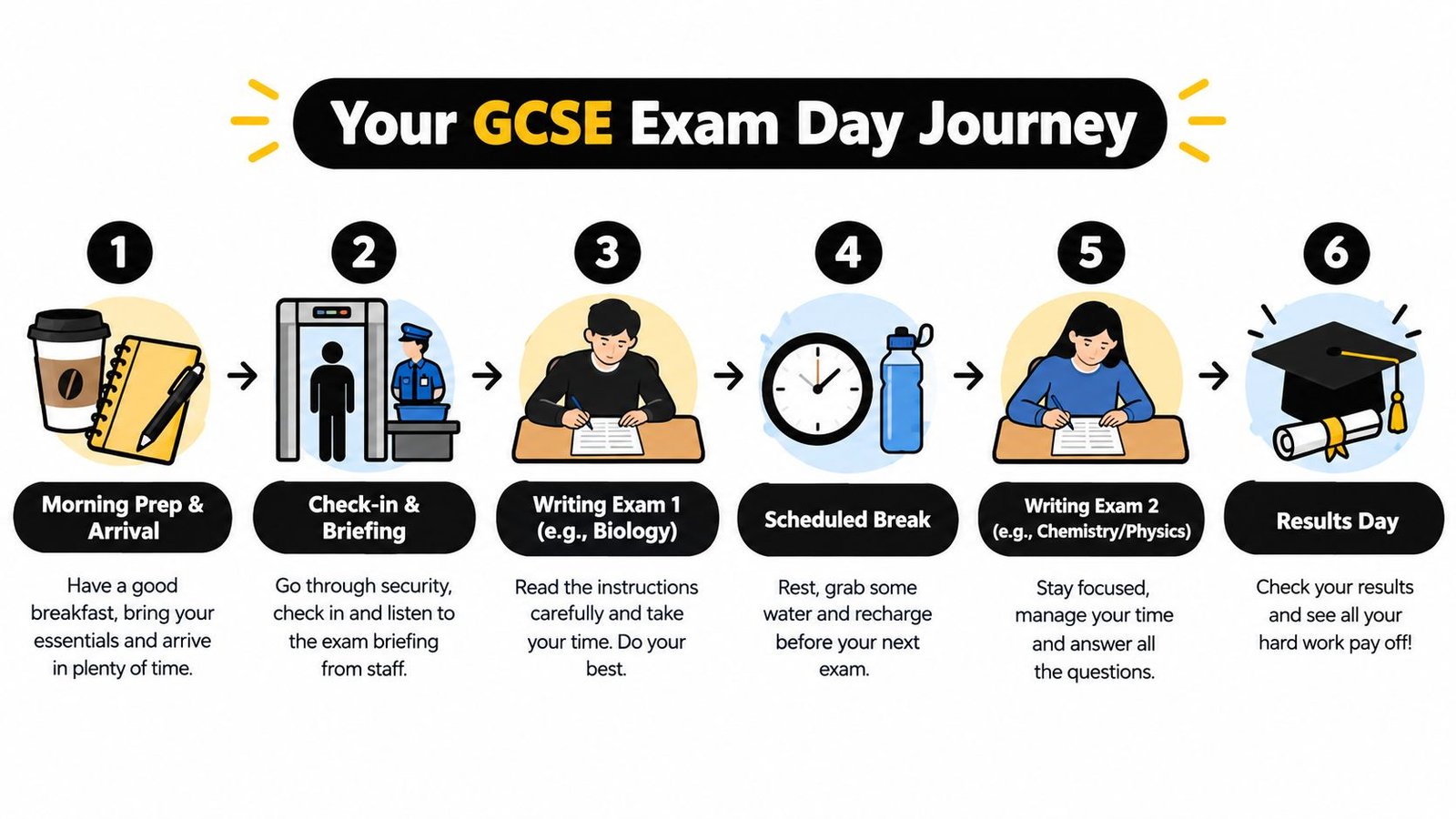
A short visual explanation can make the process feel less mysterious:
You don't have to feel calm every minute to perform well. Practise arriving prepared, reading questions slowly and moving on when one question feels difficult. One challenging question doesn't decide your whole result.
Real Costs and Funding Options for UK Adults
A course fee can look manageable until exam entry, materials or practical work appears as a separate charge. Current information for adult GCSE Science courses shows a broad range of around £250 to £720, with some providers charging extra examination or progression fees (Knowsley Community College's Combined Science GCSE information).
Before you pay, request a written cost breakdown. Check whether it covers tuition, learning materials, exam entry, practical arrangements and resits. This prevents an unexpected bill from disrupting a study plan built around work, children or other responsibilities.
| Cost item | Combined Science | Separate Sciences, per subject |
|---|---|---|
| Course tuition | Around £250 to £720, depending on provider and package | Ask each provider for a subject-by-subject quote |
| Exam entry | May be charged separately | May be charged separately |
| Materials | Check whether included | Check whether included |
| Resit or deferral | Ask for the provider's policy | Ask for the provider's policy |
Funding depends on details such as your age, residence, previous Level 2 qualifications and personal circumstances. In England, the Adult Skills Fund can fund English and Maths up to Level 2 for eligible adults aged 19 and over who have not previously achieved GCSE grade 4/C or above, or who are assessed below that level. The rules also state that learners may be fully funded when annual gross earnings are below £26,800, including people with no earnings, such as those who are unemployed or economically inactive (Adult Skills Fund funding rules for 2026 to 2027).
That rule concerns English and Maths, so do not assume it pays for GCSE Science. Scotland, Wales and Northern Ireland have different arrangements. Ask your provider about instalments, employer support, bursaries and local college funding. This student finance guide for mature students can help you prepare focused questions before you contact colleges.
Where GCSE Science Can Take You Next
A GCSE is not the final destination. For many adults, it's the missing key that allows them to apply for an Access to Higher Education Diploma, move into a technical course or prove they're ready for a new career.
Some Access and higher education providers ask for GCSE English and Maths at grade 4/C or above, or Functional Skills Level 2. A science pathway may also require GCSE Maths at grade 4/C before you start (Activate Learning's Access to Higher Education Science information). That's why it's sensible to check all the requirements together, rather than focusing on Science alone.
Build a route, not just a result
A learner might start with Combined Science, then progress to an Access course in nursing or health science. Another might use the qualification when applying for an apprenticeship connected to engineering, environmental work, laboratory support or IT. Science can also support longer routes towards healthcare support work, pharmacy technician training and laboratory technician positions, although each job and training provider sets its own requirements.
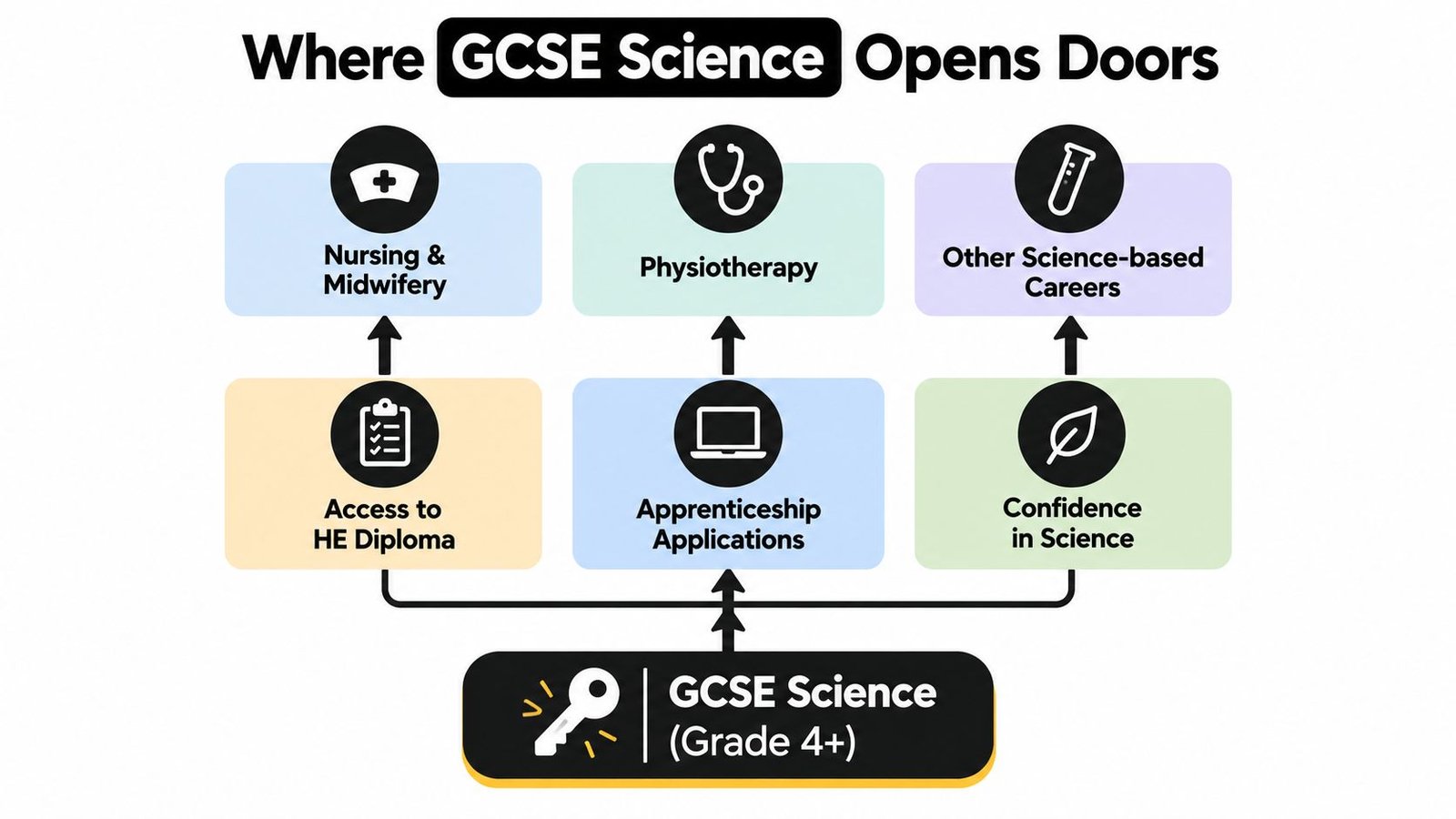
A grade 4 or above may help you meet the starting requirement for progression, but competitive university courses can ask for higher grades or additional qualifications. Some learners may therefore choose Separate Sciences if their destination needs deeper subject knowledge and they can protect the extra study time.
Your future could include A Levels, T Levels, an Access Diploma or university. It could also include a practical role where you help people, protect the environment, improve technology or support vital scientific work. The qualification won't do everything on its own, but it can move you from “I can't apply yet” to “I'm ready to take the next step.”
Picking the Right Course and Provider for You
Choosing a provider is a little like choosing a driving instructor. A recognised qualification matters, but so does the way the tutor explains things when you stall, make a mistake or ask the same question twice.
Start by comparing three broad options. A further education college may offer classrooms, laboratories and a regular timetable. An online academy may give you more control around shifts and school runs. A council or community programme may offer local support and a lower-cost route, depending on eligibility and availability.
Use this provider checklist
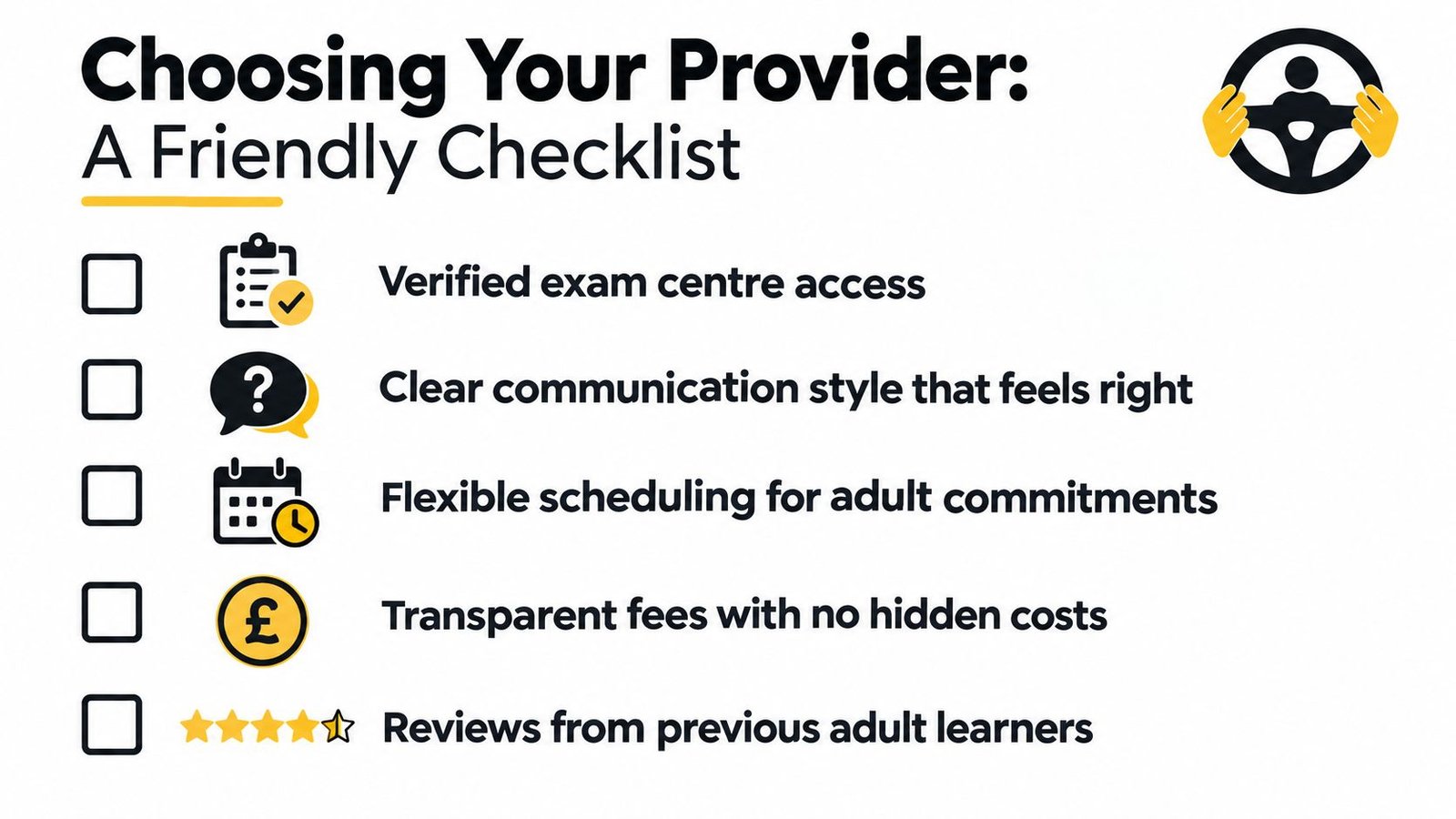
Before enrolling, ask:
- Exam centre access: Does the provider arrange your entry, or will you need to contact a centre yourself?
- Tutor support: How quickly can you expect replies, and can tutors explain topics in more than one way?
- Course flexibility: Can you watch lessons later if work or family responsibilities interrupt your plans?
- Total fees: Are learning materials, practical arrangements and exam entries included?
- Deferral and resits: What happens if illness, caring responsibilities or another serious problem prevents you from sitting the exam?
- Quality checks: Which awarding organisation issues the qualification, and is the course linked to an approved examination route?
- Learner experience: Can you read recent reviews from adults with similar responsibilities?
Ask for a sample lesson or taster if one is available. A course that looks cheap or fast may not be good value if you can't get help when you're stuck. Equally, a detailed programme may not suit you if its timetable clashes with work.
Next Level Online College is one option for adults looking for tutor-supported online GCSE study, including an International GCSE in Science Double Award, with assessment preparation and progression guidance. Compare it with local colleges and other online providers, then choose the course you're most likely to attend steadily.
Your Next Step and Common Questions Answered
Am I too old to sit a GCSE? No. Adult learners can return to education at different stages of life, and providers commonly offer part-time or one-year routes. Your age doesn't decide whether you can learn science. Your course requirements, available time and examination arrangements matter more.
Can I fail and resit? Ask the awarding organisation and exam centre about the current resit process before enrolling. Because GCSE Science is assessed through a main summer series, missing the exam or needing a different result can affect your study plan and may mean waiting for another available sitting.
Will a late pass be accepted by universities? Universities set their own entry requirements and may accept qualifications gained later in life, but you must check the course page carefully. Look at the required subjects, grades, English and Maths conditions, and any deadline for providing results.
Write down the course you want to reach. Then check whether it asks for Combined Science, Biology, another science, Maths or Functional Skills Level 2. This simple step can save you from paying for a qualification that doesn't meet your destination's rules.
This week, email two providers and ask about the exam centre, total cost, weekly study pattern, tutor access and resit policy. You don't need to solve your whole future tonight. Choose one small action, complete it, and let the next step become easier.
If you're ready to make GCSE Science fit around work and family life, explore the flexible, tutor-supported options at Next Level Online College. Visit the college to compare your route, ask about assessment preparation and take the first practical step towards further study or a new career.